KKPCB Blog – PCB & PCBA Insights, News, and Tips - KKPCB
 

Blog

Explore the KKPCB Blog for the latest PCB manufacturing and assembly news, industry insights, expert tips, and technology trends, helping you stay informed and optimize your electronics projects.
5G mmWave PCB – High Frequency Low Loss PCB for Millimeter Wave Applications

What Is a 5G mmWave PCB? A 5G mmWave PCB is a high frequency printed circuit board engineered to operate at millimeter wave frequencies (typically 24 GHz to 100 GHz and above). These PCBs are used in advanced 5G communication systems where ultra-high bandwidth, low latency, and high data throughput are required. At mmWave frequencies,...
Duroid 6002 PCB – High Stability RF PCB for Microwave and High Frequency Applications

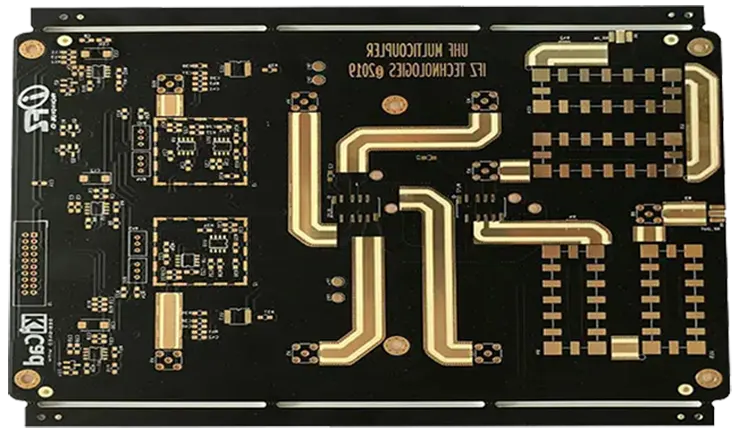
What Is Duroid 6002 PCB? Duroid 6002 PCB is a high frequency printed circuit board fabricated using Rogers RT/duroid 6002 laminate, a PTFE composite material reinforced with ceramic fillers. It is specifically engineered for microwave and RF applications requiring stable dielectric performance and low signal loss. With a dielectric constant (Dk) of approximately 2.94 and...

Load Board PCB – High Performance PCB for Semiconductor ATE Testing

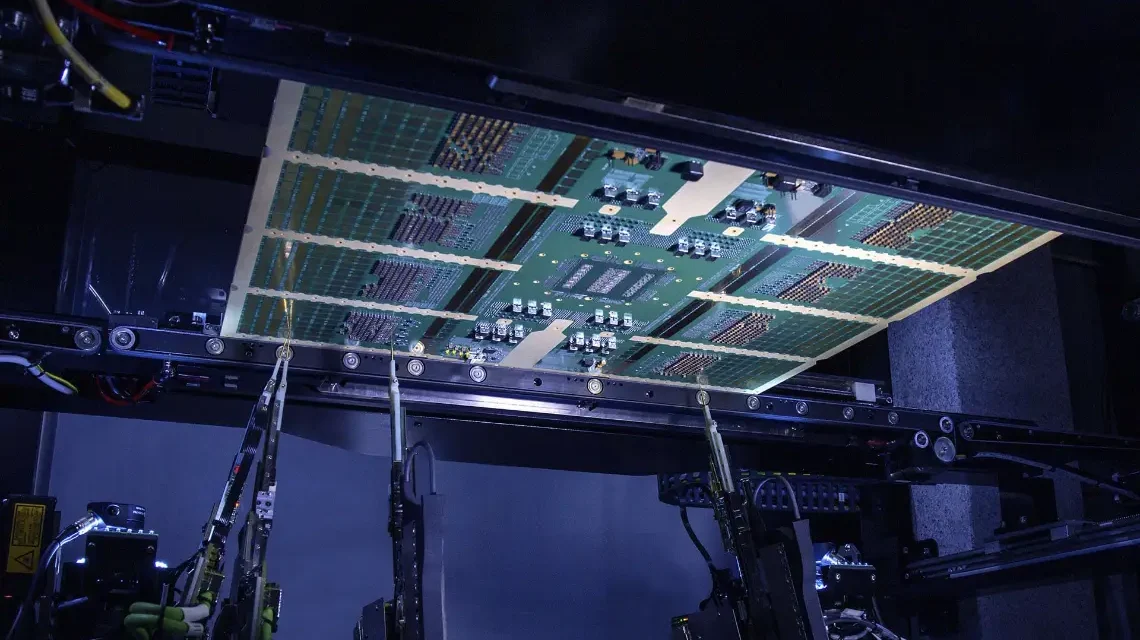
What Is a Load Board PCB? A Load Board PCB is a critical component used in Automated Test Equipment (ATE) systems for semiconductor device testing. It provides the electrical interface between the ATE tester and the device under test (DUT), enabling accurate signal transmission, power delivery, and measurement. Load Board PCB is commonly used in:...

ATE Test PCB – High Precision PCB for Automated Test Equipment Applications

What Is an ATE Test PCB? An ATE Test PCB is a specialized printed circuit board designed for use in Automated Test Equipment (ATE) systems. It acts as the electrical interface between semiconductor devices and the test platform, enabling accurate signal transmission, power delivery, and measurement during IC testing. ATE Test PCB is commonly used...

Controlled Impedance PCB – High Speed PCB for Reliable Signal Transmission

What Is a Controlled Impedance PCB? A Controlled Impedance PCB is a printed circuit board engineered to maintain a precise and consistent impedance value along specific signal traces. Impedance control is critical in high speed and high frequency electronic systems where signal integrity directly affects performance and reliability. In modern electronic designs, signals travel at...

Buried Via PCB – Advanced Multilayer PCB with Internal Interconnection Technology

What Is a Buried Via PCB? A Buried Via PCB is a multilayer printed circuit board that contains vias connecting internal layers only, without reaching the outer surface layers. Unlike through-hole vias, buried vias are completely enclosed within the board stack-up. This allows designers to: Increase routing density Optimize outer layer space Improve signal integrity...

High Layer Count PCB – Advanced Multilayer PCB for High Density and High Speed Applications

What Is a High Layer Count PCB? A High Layer Count PCB refers to a multilayer printed circuit board typically built with 16 layers or more, and in advanced applications, up to 40, 60, or even higher layer counts. High Layer Count PCB is designed to support: High density routing Complex signal distribution Controlled impedance...

Rigid-Flex PCB – High Reliability Hybrid PCB for Compact and Complex Electronic Designs

What Is a Rigid-Flex PCB? A Rigid-Flex PCB is a hybrid printed circuit board that integrates rigid PCB sections and flexible circuit layers into a single unified structure. Unlike traditional PCB assemblies that use connectors or cables between separate boards, a Rigid-Flex PCB eliminates mechanical interconnections by embedding flexible layers within the rigid stack-up. Rigid-Flex...

High TG PCB – High Glass Transition Temperature PCB for High Reliability Applications

What Is a High TG PCB? A High TG PCB is a printed circuit board fabricated using high glass transition temperature (TG) laminate materials, typically with TG values above 170°C, 180°C, or even 200°C depending on application requirements. The glass transition temperature (TG) refers to the temperature at which the PCB substrate transitions from a...

TLY-5 PCB – Low Loss PTFE PCB for High Frequency and RF Applications

What Is a TLY-5 PCB? A TLY-5 PCB is a high frequency printed circuit board fabricated using Taconic TLY-5 PTFE laminate, a low loss material engineered for RF, microwave, and high speed communication applications. TLY-5 PCB is widely used in: RF communication systems Microwave modules Automotive radar 5G infrastructure Satellite communication equipment Thanks to its...