kkpcb04 - KKPCB - Page 6 of 25
 
HomeAuthor

kkpcb04 - KKPCB - Page 6 of 25

Enable Compact, High-Reliability Interconnects with Advanced Rigid-Flex PCB Architectures for Mission-Critical Electronics

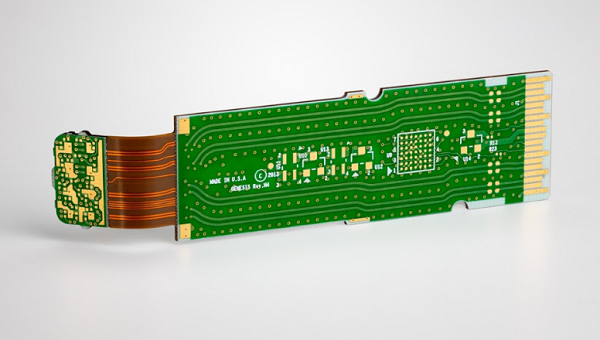
Rigid-Flex PCB: A Structural and Electrical Integration Platform A Rigid-Flex PCB is not simply a combination of rigid boards and flexible circuits. It is a fully integrated interconnect architecture that merges rigid PCB sections with flexible PCB layers into a single, unified electrical and mechanical system. By eliminating traditional connectors and cables, Rigid-Flex PCB technology...

Optimize High-Frequency Signal Integrity and Power Efficiency with Low Dissipation Factor PCB Materials

Why Low Dissipation Factor PCB Matters in High-Frequency Electronics As electronic systems evolve toward higher frequencies, faster data rates, and tighter power budgets, signal loss within the PCB itself becomes a dominant performance constraint. In RF, microwave, mmWave, high-speed digital, and satellite communication systems, even minor dielectric losses can accumulate across long signal paths, directly...

Achieve Ultra-Consistent Dk/Df Stability Using RO4835 PCB Architectures for High-Density 5G Massive-MIMO Radio Units

Next-generation 5G massive-MIMO radio units require high-density PCB designs that maintain ultra-consistent dielectric constant (Dk) and dissipation factor (Df) across all layers. Any variation in Dk/Df can lead to impedance mismatches, phase errors, and RF signal degradation, negatively affecting beamforming accuracy and spectral efficiency. RO4835 PCB laminates (Dk = 3.48 ± 0.03, Df = 0.0037...

Improve Thermal Reliability and Signal Integrity with High TG PCB Materials for High-Performance Electronic Systems

Engineering Context: Why High TG PCB Is Critical in Modern Electronics As electronic systems continue to push toward higher power density, faster signal speeds, and harsher operating environments, conventional PCB materials increasingly become a reliability bottleneck. Excessive heat, repeated thermal cycling, and dense component placement place enormous stress on standard laminates, often leading to warpage,...

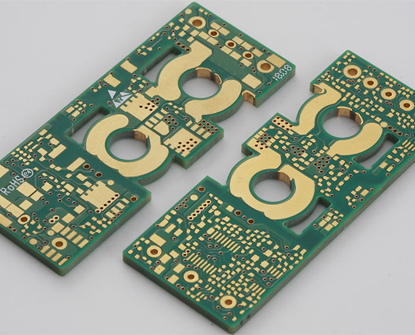
Advanced Rigid-Flex PCB Engineering for High-Density Interconnect and Dynamic Mechanical Reliability

A Rigid-Flex PCB has become a foundational architecture for next-generation electronics that demand compact form factors, high-density interconnect, long-term mechanical durability, and stable signal integrity. By integrating rigid PCB layers with flexible polyimide circuits into a single laminated structure, a Rigid-Flex PCB eliminates traditional connectors, reduces wiring complexity, and enables true 3D electronic packaging. The...

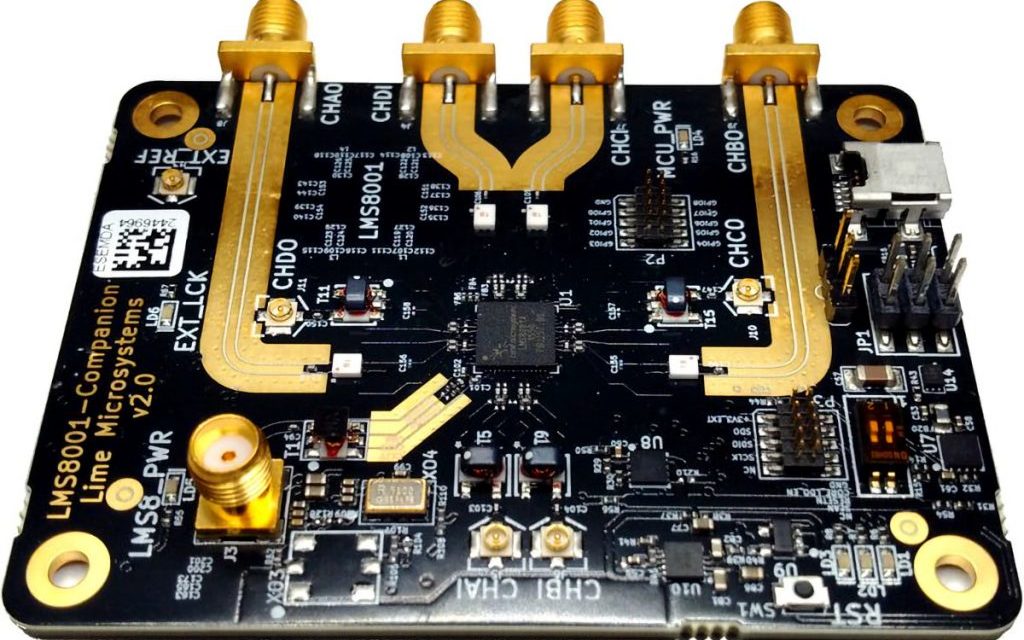
High-Stability Double Layer HF PCB Engineering for Low-Loss RF Routing and Precision High-Frequency Performance

A Double Layer HF PCB is one of the most efficient and cost-optimized architectures for high-frequency designs requiring low-loss transmission, tight impedance control, and stable RF performance up to microwave and lower mmWave ranges. Compared with complex multilayer structures, the Double Layer HF PCB offers a cleaner electromagnetic environment, reduced dielectric loading, and minimized stackup...

Low Dissipation Factor PCB Engineering for Ultra-Low-Loss High-Frequency Transmission and Stable RF Performance

Low Dissipation Factor PCB technology has become essential for next-generation high-frequency, microwave, and mmWave electronic systems. As data rates escalate, carrier frequencies enter the tens of GHz, and RF paths shrink in physical size, signal loss becomes the enemy of performance. Standard FR-4 materials introduce significant dielectric loss, phase distortion, and heat buildup under high-frequency...

High TG PCB Engineering for High-Temperature Reliability, Power Stability, and Long-Life Electronic Systems

High TG PCB technology has become a cornerstone for high-temperature, high-power, and long-duty-cycle electronic systems. As devices shrink, current density rises, and thermal loads increase, traditional FR-4 can no longer maintain stability. This is where High TG PCB materials—TG170, TG180, and beyond—deliver the thermal robustness and dimensional stability required for demanding environments. High TG (Glass...

High-Speed PCB Design & Manufacturing Guide | Signal Integrity, Materials & KKPCB Engineering Capabilities

High-Speed PCB: Engineering Principles, Core Challenges & KKPCB Capabilities High-Speed PCB technology is at the center of every modern data-intensive system—from 5G infrastructure and AI servers to autonomous machines and aerospace communication modules. As signal frequencies climb beyond 3 GHz, 10 GHz, even 28–56 Gbps, traditional PCB design rules become insufficient. High-speed PCB engineering demands...

Engineering High-Reliability Industrial Automation PCBs for Smart Manufacturing, Robotics, and High-Duty Control Systems

Introduction: Why Industrial Automation PCB Matters in Modern Manufacturing As factories advance toward full digitalization, the Industrial Automation PCB becomes the central hardware platform enabling control, monitoring, power management, robotics coordination, and real-time data acquisition.Unlike consumer electronics, an Industrial Automation PCB must operate reliably under harsh conditions—temperature extremes, vibration, electrical noise, humidity, and continuous 24/7...