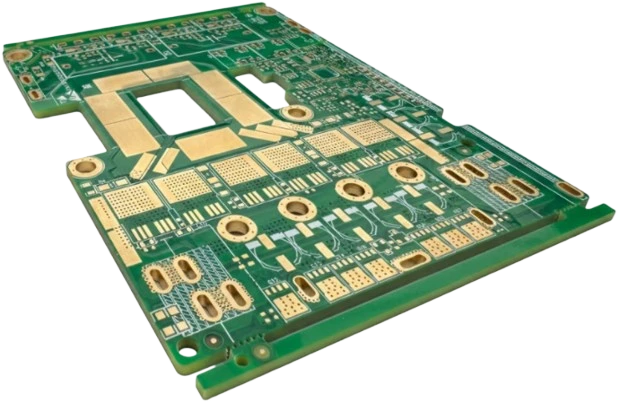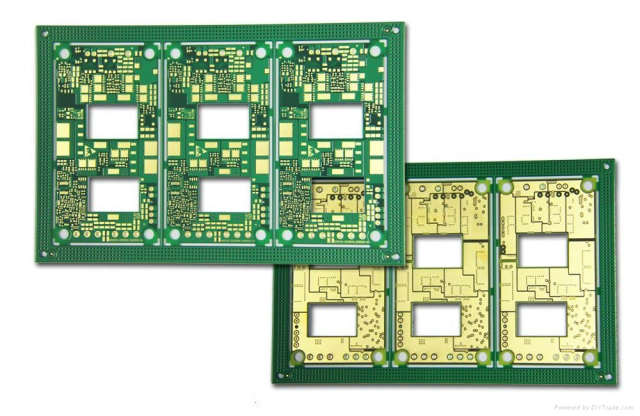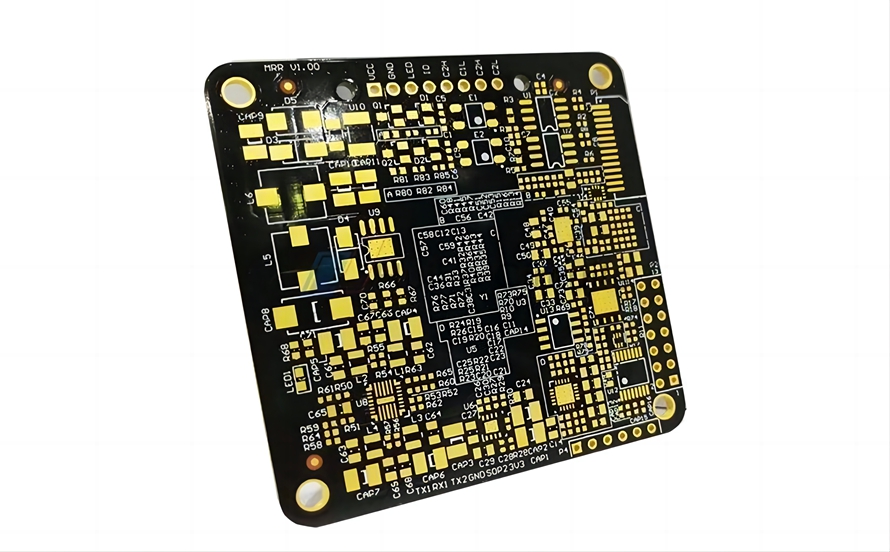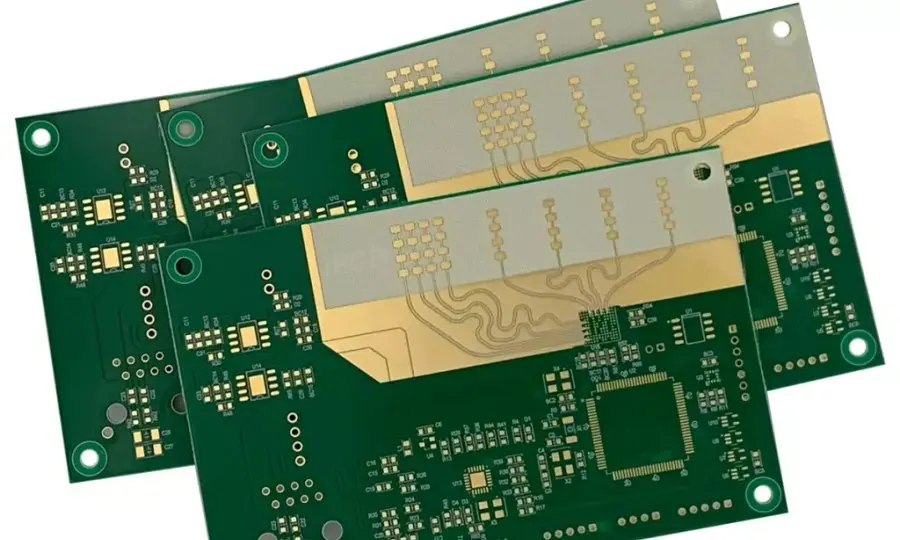
radar PCB - KKPCB
 
HomeTag

radar PCB - KKPCB

Advanced RF Engineering with Duroid 6010 PCB: Ultra-High-Dk Performance for Microwave, Radar, and Aerospace Systems

Introduction: Why Duroid 6010 PCB Is a Cornerstone of High-Frequency Engineering Rogers Duroid 6010 PCB is one of the most widely used materials for extreme high-frequency and microwave systems requiring exceptionally high dielectric constant and low loss.With a Dk of approximately 10.2, the Duroid 6010 PCB platform enables dramatic circuit miniaturization, enhanced electromagnetic coupling, and...

Duroid 6010 PCB Engineering: Ultra-High Dielectric, Low-Loss Design for RF, Microwave, and Aerospace Systems

Duroid 6010 PCB, based on Rogers RT/duroid® 6010LM material, is one of the most critical substrates used in microwave, RF, aerospace, satellite, and defense systems. Known for its ultra-high dielectric constant (Dk ≈ 10.2) and extremely low dissipation factor, Duroid 6010 PCB enables the miniaturization of RF paths, improved resonator stability, and enhanced signal precision...

Engineering Duroid 6010 PCB for Extreme High-Frequency, Low-Loss, and Ultra-Stable Microwave Applications

As microwave, satellite, radar, and millimeter-wave systems move deeper into high GHz operating regions, engineers require PCB materials with ultra-stable dielectric behavior, extremely high Dk, and exceptionally low loss. This is where Duroid 6010 PCB—based on Rogers RT/duroid® 6010LM—becomes a foundational choice for critical RF and microwave engineering. With a dielectric constant (Dk) of ~10.2,...

Enhance Electromagnetic Uniformity and Mode-Suppression Using RT/duroid 5880 PCB Stackups in Precision mmWave Routing Networks

Precision mmWave routing networks—operating from 26 GHz to beyond 90 GHz—demand exceptional electromagnetic uniformity, controlled impedance, and stable mode behavior to maintain system linearity. RT/duroid 5880 PCB materials have become a foundational high-frequency laminate for mmWave architectures because their ultra-low dielectric constant (Dk ≈ 2.20), extremely low dissipation factor (Df ≈ 0.0009), and isotropic PTFE...

Achieve Ultra-Flat Phase Response and Coherent Wideband Propagation Through Rogers 5880 PCB Laminates in High-Q RF Filters

High-Q RF filters operating in microwave, mmWave, radar, and satellite communication systems demand exceptionally stable phase behavior and predictable wideband propagation. Rogers 5880 PCB laminates have become a preferred high-frequency substrate because their ultra-low dielectric constant (Dk 2.20) and extremely low dissipation factor (Df 0.0009) enable ultra-flat phase response, low-loss signal transmission, and coherent filter...

Advanced TLY-5 PCB Technologies for Low-Loss, High-Stability RF and mmWave Communication Systems

TLY-5 PCB materials have become a core enabler in modern high-frequency electronics, especially as RF, microwave, and mmWave systems continue pushing toward higher bandwidth, lower loss, and stricter phase-stability requirements. Built on a PTFE-based low-loss dielectric platform, TLY-5 PCBs deliver exceptionally high electrical performance while supporting the reliability demands of satellite payloads, radar front-ends, high-power...

Enhance Multi-Layer Impedance Control and Low-Loss Performance Using TLY-5 PCB for mmWave Communication Systems

1. Engineering Context Next-generation mmWave communication systems—including 5G base stations, satellite payloads, and radar modules—require PCBs that provide ultra-stable impedance, low insertion loss, and phase-consistent routing. Traditional FR-4 or high-speed laminates often suffer from dielectric drift, higher Df, and thermal expansion issues, which degrade signal fidelity, EMI immunity, and system reliability in dense multi-layer RF...

Enhance Electromagnetic Uniformity and Mode-Suppression Using RT/duroid 5880 PCB Stackups in Precision mmWave Routing Networks

Precision mmWave systems increasingly depend on PCB materials that can maintain electromagnetic uniformity, suppress parasitic modes, and control insertion loss across wideband operating ranges. RT/duroid 5880 PCB stackups have become a leading choice for these environments because their low dielectric constant, low-loss tangent, and exceptional stability under thermal and mechanical stress allow engineers to design...

Maximize RF Power Handling and Phase Stability Using RO4350B PCB Laminates in High-Frequency Antenna Modulegs

Modern wireless systems—from 5G radio units and phased-array antenna modules to automotive radar and satellite communication terminals—demand PCBs that deliver high RF power handling, exceptional phase stability, and ultra-low loss. As antenna modules continue to shrink while operating at higher frequencies, selecting the correct laminate becomes a mission-critical design decision. Among all mid-frequency RF substrates,...

Optimize High-Speed Routing and EMI Control Using Advanced ADAS PCB Architectures in Next-Gen Autonomous Vehicles

Autonomous driving platforms rely on a dense constellation of cameras, radars, lidars, domain controllers, and AI accelerators. These subsystems generate enormous volumes of high-speed data, while simultaneously consuming sensitive analog information from perception sensors. The PCB that connects everything becomes a multi-domain electromagnetic battlefield, where PCIe Gen4/Gen5 lanes, multi-gig SerDes routes, sensor-fusion processors, and power...