high-reliability PCB - KKPCB
 
HomeTag

high-reliability PCB - KKPCB

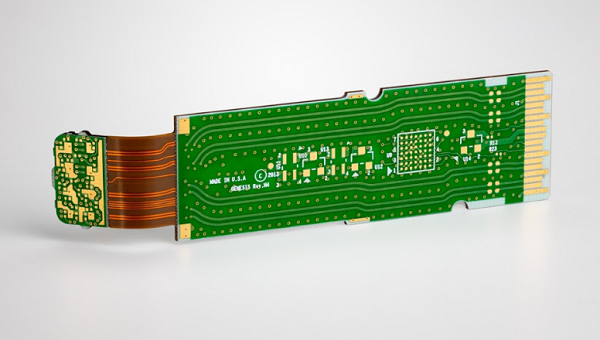
Multilayer Rigid-Flex PCB Manufacturer: Advanced Solutions for Compact and High-Reliability Electronics

As electronic products become smaller, lighter, and more functionally integrated, traditional rigid PCBs and cable interconnects often fail to meet modern design requirements. Multilayer rigid-flex PCBs combine rigid and flexible circuits into a single structure, enabling compact layouts, improved reliability, and enhanced electrical performance. Working with an experienced multilayer rigid-flex PCB manufacturer is essential to...

Accelerate Product Validation and Engineering Iteration with High-Reliability Small Batch PCB Manufacturing

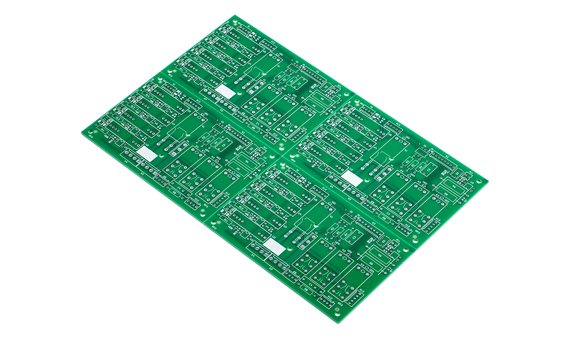
In today’s highly competitive electronics market, speed and reliability are critical during the product development stage. High-reliability small batch PCB manufacturing enables engineers to accelerate product validation, shorten engineering iteration cycles, and reduce development risk before mass production. This article explains how small batch PCB manufacturing supports rapid prototyping, design verification, and engineering optimization, helping...

Rigid-Flex PCB Engineering for Space-Saving, High-Reliability Electronic Systems

Rigid-Flex PCB as a System-Level Interconnect Architecture Rigid-Flex PCB technology integrates rigid PCB structures and flexible circuits into a single, unified interconnect platform. Compared with traditional rigid PCB assemblies connected by cables or connectors, a Rigid-Flex PCB significantly reduces interconnect interfaces while improving electrical continuity and mechanical robustness. In modern electronic systems, Rigid-Flex PCB designs...

Enable Compact Integration and High-Reliability Interconnection with Advanced Rigid-Flex PCB Architectures

Rigid-Flex PCB: Integrating Mechanical Flexibility with Rigid PCB Performance A Rigid-Flex PCB is a hybrid printed circuit board that combines rigid PCB sections and flexible circuits into a single integrated structure. By embedding flexible polyimide layers between rigid FR-4 or high-performance laminates, Rigid-Flex PCB architectures eliminate connectors, reduce interconnect failures, and enable compact three-dimensional electronic...

Enhance Routing Density and Signal Integrity with Buried Via PCB Architectures for High-Density Electronic Systems

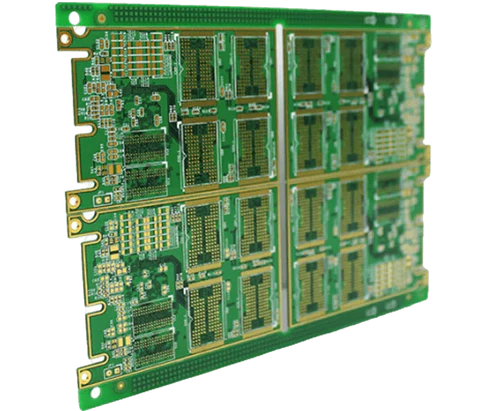
Buried Via PCB: Enabling High-Density Interconnection Beyond Conventional Multilayer Boards A Buried Via PCB is a multilayer printed circuit board in which vias connect only internal layers and do not extend to the outer layers. Unlike through-hole vias, buried vias are completely embedded within the PCB stackup, enabling higher routing density, improved signal integrity, and...

Enable Ultra-Complex Routing and Signal Integrity with High Layer Count PCB Architectures for Advanced Electronic Systems

High Layer Count PCB: The Backbone of Ultra-Complex Electronic Integration A High Layer Count PCB refers to a multilayer printed circuit board typically exceeding 12 layers and extending to 20, 30, or even 60+ layers for advanced electronic systems. High layer count PCB designs are essential for applications requiring dense routing, high-speed signal transmission, controlled...

Enable Compact, High-Reliability Interconnects with Advanced Rigid-Flex PCB Architectures for Mission-Critical Electronics

Rigid-Flex PCB: A Structural and Electrical Integration Platform A Rigid-Flex PCB is not simply a combination of rigid boards and flexible circuits. It is a fully integrated interconnect architecture that merges rigid PCB sections with flexible PCB layers into a single, unified electrical and mechanical system. By eliminating traditional connectors and cables, Rigid-Flex PCB technology...

High TG PCB Engineering for High-Temperature Reliability, Power Stability, and Long-Life Electronic Systems

High TG PCB technology has become a cornerstone for high-temperature, high-power, and long-duty-cycle electronic systems. As devices shrink, current density rises, and thermal loads increase, traditional FR-4 can no longer maintain stability. This is where High TG PCB materials—TG170, TG180, and beyond—deliver the thermal robustness and dimensional stability required for demanding environments. High TG (Glass...

Engineering High-Reliability Industrial Automation PCBs for Smart Manufacturing, Robotics, and High-Duty Control Systems

Introduction: Why Industrial Automation PCB Matters in Modern Manufacturing As factories advance toward full digitalization, the Industrial Automation PCB becomes the central hardware platform enabling control, monitoring, power management, robotics coordination, and real-time data acquisition.Unlike consumer electronics, an Industrial Automation PCB must operate reliably under harsh conditions—temperature extremes, vibration, electrical noise, humidity, and continuous 24/7...

Ultra-High-Thermal-Performance SiC PCB Engineering for Power Electronics and Wide-Bandgap Systems

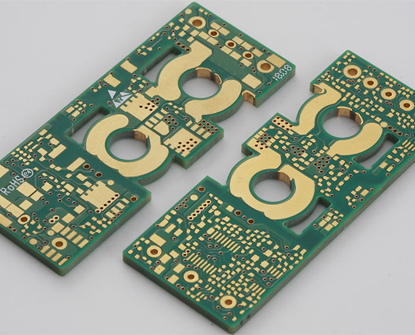
Introduction: Why SiC PCB Matters in the New Era of Power Electronics Silicon Carbide (SiC) power devices are redefining the performance limits of modern power electronics. To unlock the true efficiency of SiC MOSFETs, SiC diodes, and SiC power modules, engineers require PCB platforms that can handle extreme thermal loads, high switching frequencies, and elevated...