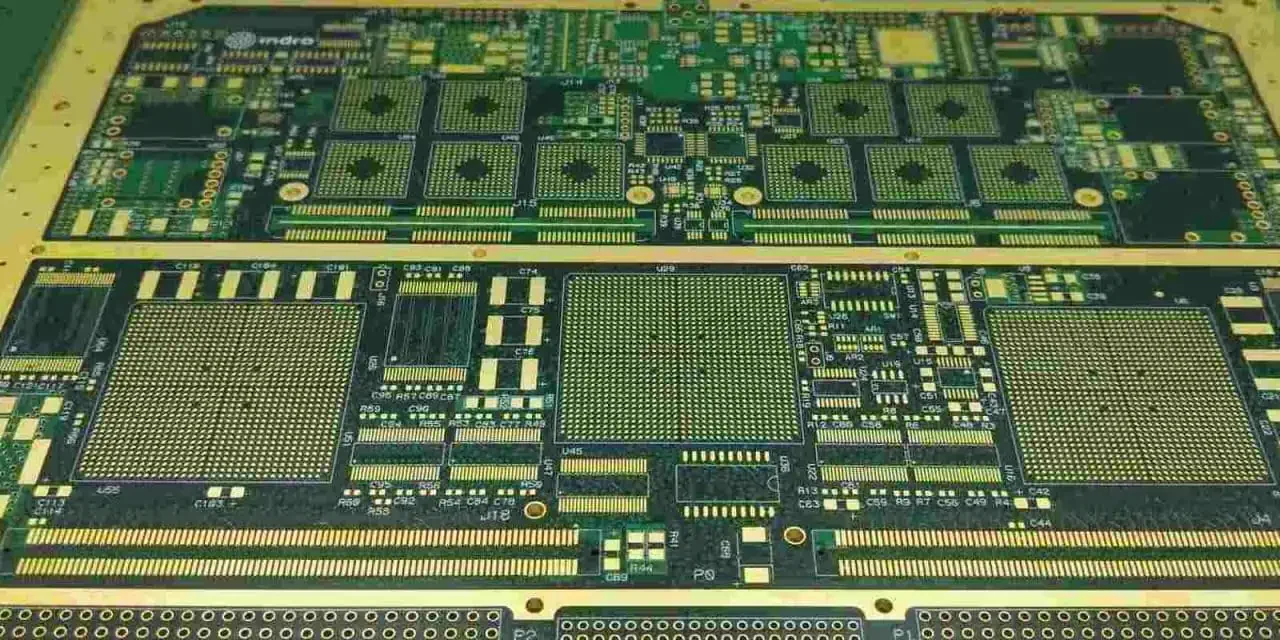
high density pcb - KKPCB
 
HomeTag

high density pcb - KKPCB

Enable Ultra-Complex Routing and Signal Integrity with High Layer Count PCB Architectures for Advanced Electronic Systems

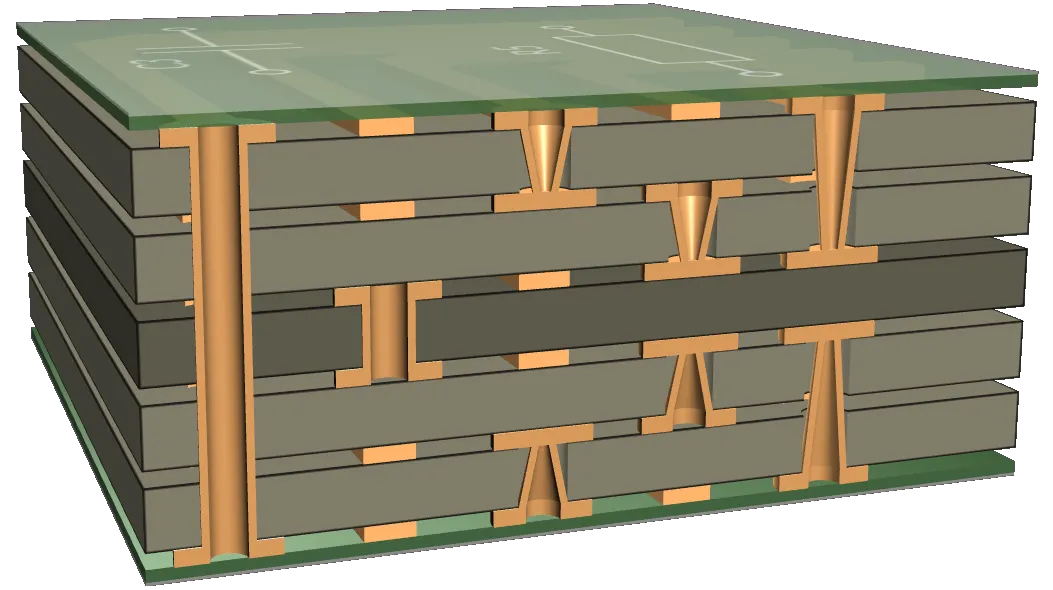
High Layer Count PCB: The Backbone of Ultra-Complex Electronic Integration A High Layer Count PCB refers to a multilayer printed circuit board typically exceeding 12 layers and extending to 20, 30, or even 60+ layers for advanced electronic systems. High layer count PCB designs are essential for applications requiring dense routing, high-speed signal transmission, controlled...

High TG PCB Engineering for High-Temperature Reliability, Power Stability, and Long-Life Electronic Systems

High TG PCB technology has become a cornerstone for high-temperature, high-power, and long-duty-cycle electronic systems. As devices shrink, current density rises, and thermal loads increase, traditional FR-4 can no longer maintain stability. This is where High TG PCB materials—TG170, TG180, and beyond—deliver the thermal robustness and dimensional stability required for demanding environments. High TG (Glass...

Robotics PCB Architecture: High-Density, High-Speed, and High-Reliability Engineering for Autonomous and Industrial Robotics

Modern robotics systems—whether industrial robots, autonomous mobile robots (AMRs), AGVs, or collaborative robots—depend on advanced Robotics PCBs as the central platform for sensing, computation, and motion control. As robotic applications expand into high-precision manufacturing, warehouse automation, healthcare, and defense, the engineering requirements for Robotics PCB design continue to escalate.This article explores the core engineering principles...

Smart Factory PCB Engineering for High-Reliability Automation, Real-Time Control, and Industrial Intelligence

Smart manufacturing pushes electronics into an environment where precision, robustness, and real-time responsiveness are mandatory. At the center of this ecosystem lies the Smart Factory PCB, the hardware foundation that drives IIoT sensor nodes, PLC control modules, autonomous robots, edge-computing gateways, and high-speed industrial communication networks. A Smart Factory PCB must deliver electrical reliability, long-term...

High-Precision Robotics PCB Engineering for Next-Generation Autonomous, Industrial, and Collaborative Robot Systems

Robotics PCB Engineering for High-Precision Autonomous and Industrial Robot Systems Robotics has evolved into a domain where mechanical precision is useless without equally precise electronics. At the center of every actuator, servo, sensor array, and AI-driven perception engine sits a Robotics PCB—a board engineered to survive vibration, deliver deterministic control, maintain signal integrity, and integrate...

Reduce Insertion Loss and Enhance Power Efficiency Using Low Loss PCB Designs for Satellite Communication Payloads

Satellite communication payloads demand high-frequency RF stability, minimal insertion loss, and optimized power efficiency across densely packed multilayer PCBs. Signal integrity degradation, EMI coupling, or thermal hotspots can compromise link margin, telemetry accuracy, and antenna performance. Low loss PCB materials, such as ceramic-reinforced laminates or PTFE-based RF substrates, provide stable dielectric constant (Dk) and low...

Improve Multi-Gigabit Transmission and Low-Loss Routing Through Impedance Controlled PCB Engineering for Data Center Switches

Modern data center switches demand high-speed, multi-gigabit transmission across densely packed PCB layers. Maintaining low insertion loss, tight impedance control, and minimal crosstalk is critical to guarantee reliable signal integrity, reduce latency, and preserve network throughput. Impedance-controlled PCB architectures provide predictable high-frequency performance for differential pair routing and dense multilayer stackups. KKPCB leverages precision lamination,...

High-Precision ATE PCBs for Semiconductor and Electronic Testing | KKPCB Advanced Manufacturing

Precision Testing for Advanced Electronics As electronic devices grow increasingly complex, reliable and efficient testing becomes indispensable. Automated Test Equipment (ATE) Printed Circuit Boards play a vital role in ensuring product functionality and performance before mass production. These highly specialized PCBs form the backbone of semiconductor and electronic testing systems, enabling engineers to validate intricate...