kkpcb04 - KKPCB - Page 5 of 25
 
HomeAuthor

kkpcb04 - KKPCB - Page 5 of 25

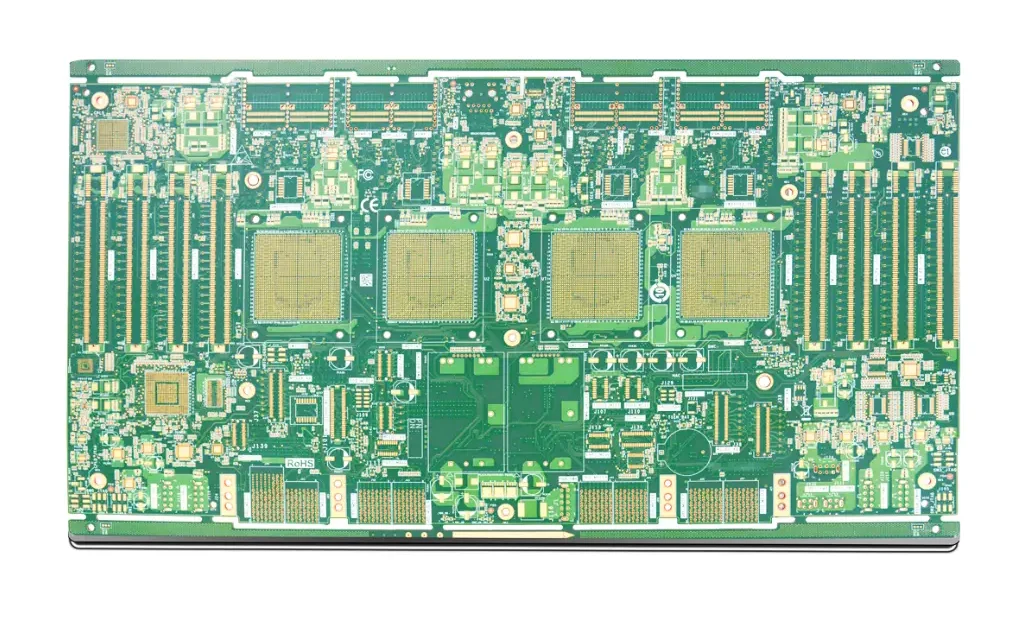
Designing High Layer Count PCBs for Complex Signal, Power, and Thermal Integrity Challenges

As electronic systems continue to integrate higher data rates, greater power density, and tighter form factors, high layer count PCBs have become a foundational platform for modern hardware architecture. Designs exceeding 16, 20, or even 30 layers are now common in data center equipment, telecommunications infrastructure, aerospace electronics, and industrial control systems. However, increasing layer...

Rigid-Flex PCB Engineering for Space-Saving, High-Reliability Electronic Systems

Rigid-Flex PCB as a System-Level Interconnect Architecture Rigid-Flex PCB technology integrates rigid PCB structures and flexible circuits into a single, unified interconnect platform. Compared with traditional rigid PCB assemblies connected by cables or connectors, a Rigid-Flex PCB significantly reduces interconnect interfaces while improving electrical continuity and mechanical robustness. In modern electronic systems, Rigid-Flex PCB designs...

Small Batch PCB Manufacturing for High-Mix, Engineering-Driven Electronics Development

Small Batch PCB manufacturing refers to low-volume PCB production typically ranging from a few pieces to several hundred units, designed to support prototype validation, pilot runs, and early-stage product commercialization. Unlike mass production, Small Batch PCB emphasizes engineering accuracy, process flexibility, and rapid iteration over scale efficiency. For modern electronics development, Small Batch PCB is...

PCB Turnkey Solutions for Integrated Design, Fabrication, Assembly, and Supply Chain Management

PCB Turnkey: A Complete Engineering-Driven Manufacturing Model PCB Turnkey refers to a fully integrated manufacturing solution that covers PCB fabrication, component sourcing, PCB assembly, functional testing, and logistics delivery under a single engineering-managed workflow. Unlike fragmented outsourcing models, PCB Turnkey services eliminate interface risk between suppliers and significantly improve quality consistency, lead time predictability, and...

Controlled Impedance PCB Engineering for High-Speed Digital and High-Frequency RF Applications

A Controlled Impedance PCB is a critical foundation for modern high-speed digital systems and high-frequency RF applications. As signal rise times shrink and operating frequencies extend into multi-GHz ranges, PCB interconnects must behave as predictable transmission lines rather than simple copper connections. Controlled Impedance PCB design ensures signal integrity, phase stability, and EMI compliance across...

Enable Ultra-High Interconnect Density and Signal Integrity with Advanced High Layer Count PCB Architectures

High Layer Count PCB: The Backbone of Complex Electronic Systems A High Layer Count PCB refers to a multilayer printed circuit board typically featuring 16 layers, 24 layers, 32 layers, or more, designed to support complex signal routing, dense interconnections, and advanced power distribution. As electronic systems continue to integrate higher data rates, tighter form...

Enable Compact Integration and High-Reliability Interconnection with Advanced Rigid-Flex PCB Architectures

Rigid-Flex PCB: Integrating Mechanical Flexibility with Rigid PCB Performance A Rigid-Flex PCB is a hybrid printed circuit board that combines rigid PCB sections and flexible circuits into a single integrated structure. By embedding flexible polyimide layers between rigid FR-4 or high-performance laminates, Rigid-Flex PCB architectures eliminate connectors, reduce interconnect failures, and enable compact three-dimensional electronic...

Enhance Routing Density and Signal Integrity with Buried Via PCB Architectures for High-Density Electronic Systems

Buried Via PCB: Enabling High-Density Interconnection Beyond Conventional Multilayer Boards A Buried Via PCB is a multilayer printed circuit board in which vias connect only internal layers and do not extend to the outer layers. Unlike through-hole vias, buried vias are completely embedded within the PCB stackup, enabling higher routing density, improved signal integrity, and...

Enable Ultra-Complex Routing and Signal Integrity with High Layer Count PCB Architectures for Advanced Electronic Systems

High Layer Count PCB: The Backbone of Ultra-Complex Electronic Integration A High Layer Count PCB refers to a multilayer printed circuit board typically exceeding 12 layers and extending to 20, 30, or even 60+ layers for advanced electronic systems. High layer count PCB designs are essential for applications requiring dense routing, high-speed signal transmission, controlled...

Enable Compact, High-Reliability Interconnects with Advanced Rigid-Flex PCB Architectures for Mission-Critical Electronics

Rigid-Flex PCB: A Structural and Electrical Integration Platform A Rigid-Flex PCB is not simply a combination of rigid boards and flexible circuits. It is a fully integrated interconnect architecture that merges rigid PCB sections with flexible PCB layers into a single, unified electrical and mechanical system. By eliminating traditional connectors and cables, Rigid-Flex PCB technology...