
What Is a Low Loss PCB?
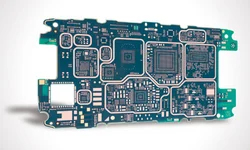
A Low Loss PCB is a high frequency printed circuit board designed with materials that minimize dielectric loss and signal attenuation at GHz-level frequencies. These PCBs are essential for RF communication, microwave circuits, 5G modules, and high speed digital applications, where every fraction of signal loss affects performance and reliability.
Low Loss PCB ensures:
-
High signal integrity
-
Stable impedance control
-
Minimal insertion loss
-
Reliable operation in high frequency environments
Compared with standard FR-4 PCB, low loss PCB materials maintain better performance at GHz frequencies, making them ideal for advanced electronics.
Key Properties of Low Loss PCB Materials
Low loss PCBs rely on specialized laminates with the following characteristics:
-
Dielectric Constant (Dk): Stable across frequency and temperature
-
Dissipation Factor (Df): Extremely low to reduce signal loss
-
High TG: Suitable for multilayer lamination and thermal cycling
-
Dimensional Stability: Precise trace width and layer alignment
-
Low Moisture Absorption: Ensures long-term electrical performance
Common low loss materials include RO4350B, RO4003C, RF-35, PTFE, and high TG FR-4 hybrids.
Advantages of Low Loss PCB
1. Excellent Signal Integrity
Low loss PCB minimizes signal reflection and attenuation, ensuring:
-
Accurate high speed data transmission
-
Reliable RF and microwave performance
-
Reduced crosstalk and noise
This is critical for 5G modules, radar systems, and high speed computing boards.
2. Stable Impedance Control
Low loss PCB enables precise controlled impedance, which is essential for:
-
Microstrip and stripline differential pairs
-
High speed serial communication lines
-
RF transmission lines in radar and antenna modules
Consistent impedance ensures predictable performance and repeatable manufacturing results.
3. High Frequency Performance
With low Df and stable Dk, low loss PCB materials support:
-
GHz and mmWave frequency operations
-
Microwave filters, amplifiers, and antennas
-
RF front-end modules for automotive, 5G, and IoT devices
High frequency performance allows compact design without sacrificing signal quality.
4. Thermal and Mechanical Reliability
Low loss PCB materials are designed for:
-
Thermal cycling resistance
-
High copper adhesion and lamination strength
-
Vibration and shock tolerance for automotive or industrial applications
This ensures stable operation in harsh environments.
Applications of Low Loss PCB
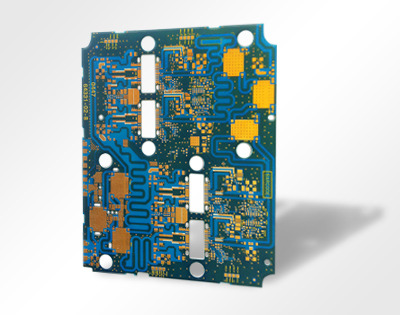
Low loss PCB is widely used in:
-
5G communication modules and base stations
-
Automotive radar and ADAS modules
-
IoT high frequency sensor modules
-
High speed computing and networking equipment
-
Satellite and aerospace RF systems
-
Microwave amplifiers and antenna feed networks
These applications demand high performance, reliable, and low loss signal transmission.
Low Loss PCB vs Standard FR-4 PCB
| Feature | Low Loss PCB | Standard FR-4 PCB |
|---|---|---|
| Frequency Range | GHz / mmWave | Low / Medium Frequency |
| Signal Integrity | High | Moderate |
| Impedance Control | Precise | Limited |
| Dielectric Loss | Low | Higher |
| Thermal Performance | High TG / Stable | Moderate |
Low loss PCB is essential for high frequency, high speed, and RF applications, whereas FR-4 is only suitable for lower speed circuits.
Manufacturing Considerations
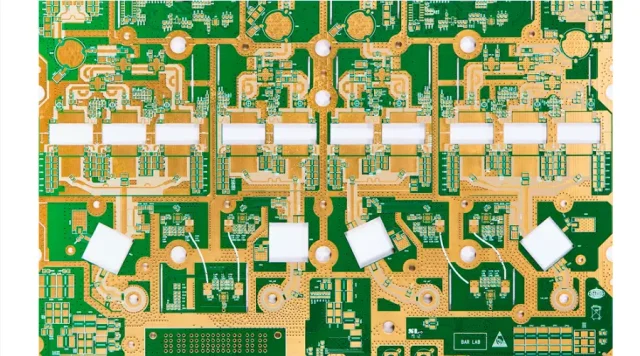
Producing reliable low loss PCBs requires:
-
Accurate multilayer lamination
-
Tight impedance and trace width control
-
Use of low loss materials with stable Dk and low Df
-
Electrical and RF testing for quality verification
-
Experienced manufacturer for high frequency PCB fabrication
Professional manufacturers ensure consistent performance and repeatable production yield.
Conclusion
Low Loss PCB provides high frequency performance, controlled impedance, and superior signal integrity for RF, microwave, and 5G applications. By selecting high quality low loss materials and working with an experienced PCB manufacturer, engineers can ensure stable, high performance, and reliable PCB solutions for modern high speed and RF electronic systems.
