
With the rapid advancement of automotive radar systems and 5G antenna technology, the demand for high-performance RF PCB materials has significantly increased. Among these materials, RO3003 PCB laminates have become a preferred choice for engineers designing high-frequency PCBs due to their low dielectric loss, stable dielectric constant, and excellent thermal reliability.
In automotive radar PCB design and 5G antenna PCB systems, RO3003 PCBs play a critical role in ensuring low-loss transmission, high-frequency stability, and superior signal integrity.
What Are RO3003 PCBs?
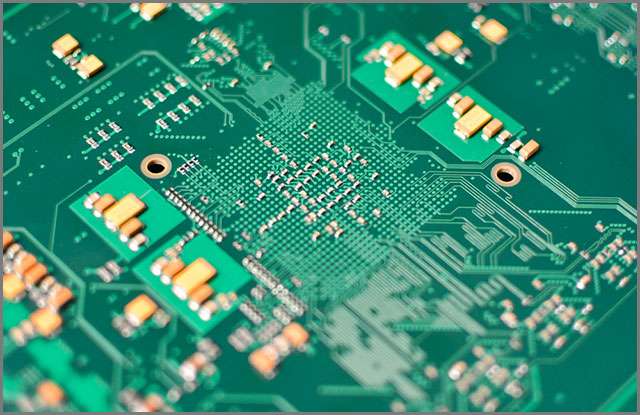
RO3003 PCBs are fabricated using Rogers RO3003 laminates, a high-frequency material specifically engineered for RF and microwave PCB applications. Compared to standard FR4, RO3003 PCB materials offer significantly improved electrical performance at high frequencies.
Key properties of RO3003 PCB laminates:
- Low dielectric constant (Dk ≈ 3.0) for precise impedance control
- Low dissipation factor (Df) for low-loss RF signal transmission
- Excellent thermal stability for harsh environments
- Tight tolerance for consistent high-frequency PCB performance
These characteristics make RO3003 PCBs ideal for automotive radar and 5G antenna PCB design.
Role of RO3003 PCBs in Automotive Radar Systems
In modern vehicles, automotive radar systems (such as 24 GHz and 77 GHz radar) are essential for ADAS (Advanced Driver Assistance Systems), including collision avoidance and adaptive cruise control.
1. High-Frequency Signal Transmission
RO3003 PCBs enable efficient high-frequency signal transmission with minimal loss, ensuring accurate radar detection and signal processing.
2. Stable Dielectric Performance
The stable dielectric constant of RO3003 laminates ensures consistent impedance control, which is critical for radar signal accuracy.
3. Low Signal Loss for Long-Range Detection
Low dissipation factor reduces signal attenuation, improving the performance of automotive radar antennas.
4. Thermal and Environmental Reliability
Automotive environments require materials that withstand temperature fluctuations and vibration. RO3003 PCBs provide excellent thermal stability and mechanical reliability.
Application of RO3003 PCBs in 5G Antenna Systems
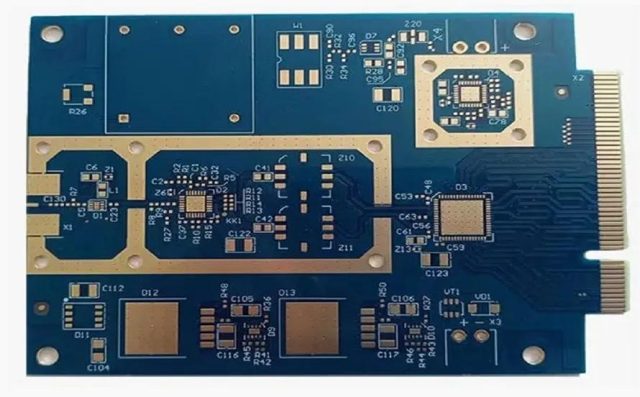
In 5G communication systems, antennas operate at high frequencies (sub-6 GHz and mmWave), requiring advanced RF PCB design.
1. Low-Loss RF Signal Transmission
RO3003 PCBs minimize insertion loss, ensuring efficient signal propagation in 5G antenna PCB design.
2. Precise Impedance Matching
Accurate controlled impedance PCB design is essential for antenna performance. RO3003 laminates support tight impedance tolerance.
3. High-Frequency Stability
Stable material properties ensure consistent performance across wide frequency ranges in 5G RF PCB systems.
4. Support for Compact Antenna Design
The excellent electrical performance of RO3003 PCBs enables compact, high-density antenna array designs.
Key Design Considerations for RO3003 PCB Applications
1. Controlled Impedance and Stack-Up Design
Proper multilayer PCB stack-up is essential for maintaining signal integrity in RO3003 PCB design.
2. RF Trace Optimization
- Minimize trace length
- Avoid sharp bends
- Maintain consistent impedance
3. Grounding and Shielding
Effective grounding reduces EMI and improves RF PCB performance.
4. Via and Interconnect Design
Optimize via structures to minimize parasitic effects in high-frequency PCB layout.
5. Thermal Management
Ensure proper heat dissipation in automotive and 5G PCB applications.
Advantages of RO3003 PCBs in High-Frequency Systems
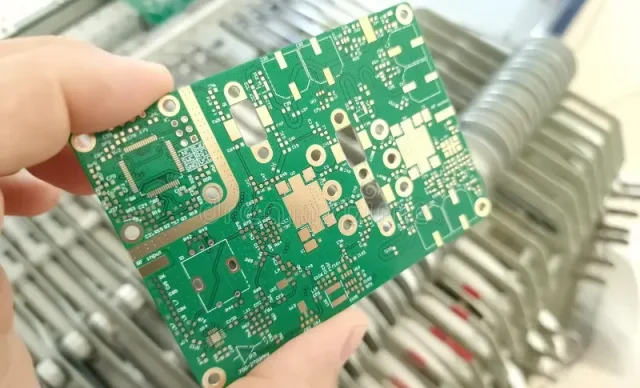
- Excellent low-loss RF performance
- Stable dielectric properties for high-frequency PCB design
- Superior signal integrity in RF PCB applications
- High reliability in automotive and communication environments
- Compatibility with advanced multilayer PCB fabrication
Applications of RO3003 PCBs
- Automotive radar systems (ADAS, collision detection)
- 5G base station antennas
- RF communication modules
- Satellite communication systems
- Microwave and millimeter-wave devices
Conclusion
RO3003 PCBs are a key enabler of modern automotive radar and 5G antenna systems, providing the low-loss transmission, high-frequency stability, and signal integrity required for advanced wireless applications. By leveraging RO3003 PCB laminates and applying optimized RF PCB design techniques, engineers can achieve superior performance in high-frequency environments.
