
Industrial PCB Production
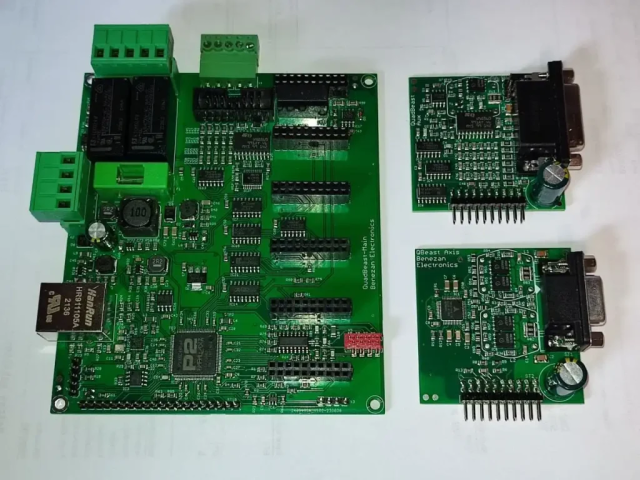
In today’s rapidly evolving industrial landscape, Printed Circuit Boards (PCBs) serve as the critical backbone of automation systems, control equipment, heavy machinery, robotics, and smart manufacturing solutions. Industrial PCB production demands far higher standards than consumer electronics. Boards must deliver exceptional reliability, durability under extreme conditions (vibration, temperature fluctuations, humidity, and dust), long service life, and consistent performance in mission-critical applications.
At KKPCB, we specialize in high-precision industrial PCB manufacturing and one-stop PCBA services. We support customers from prototype validation through to mass production, ensuring every board meets the rigorous requirements of industrial control, automation, new energy, and related sectors.
Why Industrial PCBs Require Specialized Production
Industrial environments pose unique challenges:
- Harsh operating conditions — Wide temperature ranges (-40°C to +125°C or higher), mechanical stress, and exposure to chemicals or moisture.
- High reliability and safety — Zero tolerance for failures that could halt production lines or compromise equipment safety.
- Complex designs — Multilayer boards (up to 40+ layers), heavy copper for high current, HDI for dense integration, and support for high-frequency or high-speed signals.
- Compliance and traceability — Strict adherence to standards such as IPC, UL, RoHS, ISO, IATF, and industry-specific certifications.
These factors make industrial PCB production a sophisticated process involving advanced materials, precision engineering, and multi-stage quality control.
Key Steps in Industrial PCB Production
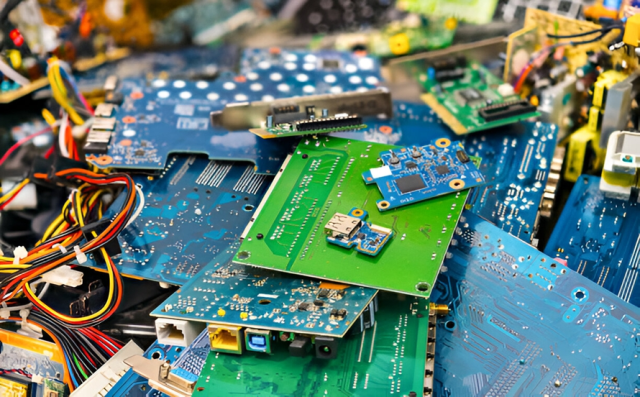
The manufacturing process transforms design files (Gerber, ODB++, etc.) into robust, functional boards through the following core stages:
- Design Review & DFM Analysis Engineers perform a thorough Design for Manufacturability (DFM) check to optimize the layout for yield, cost, and reliability. This step catches potential issues early, especially important for complex industrial designs involving heavy copper, blind/buried vias, or rigid-flex structures.
- Material Selection Industrial boards often use high-Tg FR4, high-frequency materials (Rogers, Megtron, PTFE), metal-core substrates for heat dissipation, or ceramic materials for extreme environments. KKPCB supports a wide range of substrates to match specific application needs.
- Inner Layer Processing Copper-clad laminates receive dry film imaging, exposure, development, and etching to create precise circuit patterns. Automated Optical Inspection (AOI) verifies accuracy at this stage.
- Lamination & Multilayer Stack-up Inner layers are bonded with prepregs and outer copper foils under high temperature and pressure to form multilayer boards. Precise alignment is critical for high-layer-count industrial PCBs.
- Drilling & Plating High-precision mechanical and laser drilling create through-holes, blind vias, and buried vias. Electroless copper deposition followed by electrolytic plating ensures reliable electrical connections, especially vital for heavy copper and HDI designs.
- Outer Layer Imaging, Plating & Etching Similar to inner layers, but with additional focus on trace integrity for high-current or high-speed applications.
- Solder Mask, Surface Finish & Silkscreen Protective solder mask, various surface finishes (ENIG, HASL, OSP, etc.) for corrosion resistance and solderability, and silkscreen for component identification. Industrial boards often require thicker or more durable masks.
- Routing, Testing & Inspection Boards are profiled, electrically tested (E-test), and undergo final AOI, X-ray (for vias/BGA), and functional verification. KKPCB maintains strict quality controls throughout to achieve near-zero defect rates.
- Assembly (PCBA) for Full Turnkey Solutions For complete industrial systems, we offer SMT, DIP, enclosure assembly, cable/harness, and box-build services with 14+ SMT lines and dedicated workshops.
KKPCB’s Advantages in Industrial PCB Production
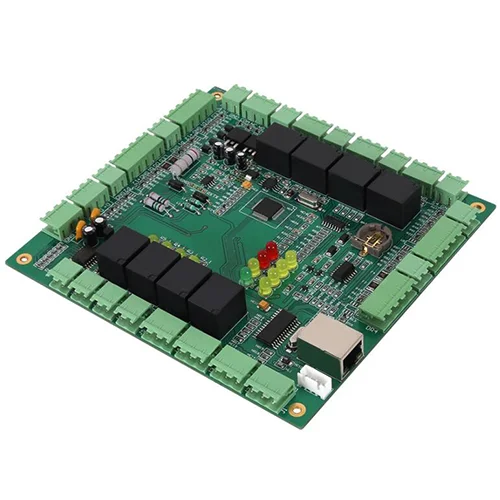
- Advanced Capabilities — Single to 80-layer boards, HDI, rigid-flex, heavy copper, high-frequency, ceramic substrates, and ATE/probe cards.
- One-Stop Service — From PCB fabrication and component sourcing to full PCBA, testing, and global delivery.
- Quality Certifications — IPC, UL, RoHS, ISO, IATF16949, AS9100, ISO13485 — ensuring compliance for industrial, automotive, medical, and aerospace-grade applications.
- Flexible Production — Rapid prototyping, small-batch, and high-volume mass production with fast turnaround.
- Proven Track Record — Trusted by industrial control manufacturers for durable, high-performance boards that operate reliably in demanding environments.
Whether you need robust control boards for factory automation, power management PCBs for new energy systems, or high-reliability boards for harsh-condition equipment, KKPCB delivers precision and consistency that minimizes downtime and maximizes product lifespan.
Future Trends in Industrial PCB Production
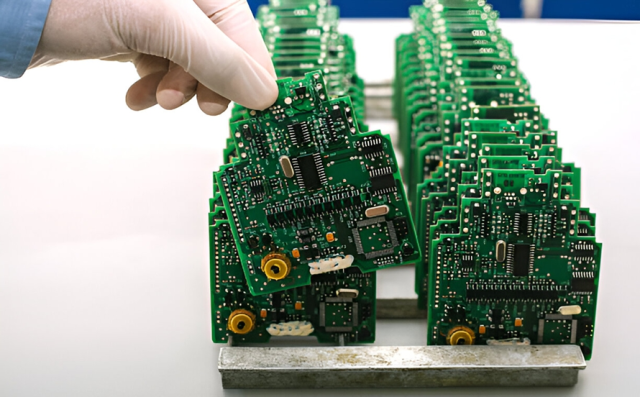
Looking ahead, industrial PCBs are evolving toward greater integration with AI-driven monitoring, higher power density, improved thermal management, and sustainable manufacturing practices. Miniaturization through HDI and advanced materials, combined with enhanced traceability via digital twins, will further strengthen smart factories and Industry 4.0/5.0 applications.
At KKPCB, we continuously invest in technology and processes to stay at the forefront of these trends, helping our partners bring reliable industrial electronics to market faster and more cost-effectively.
Ready to start your next industrial project? Contact our team today with your Gerber files or specifications. We provide expert DFM feedback, competitive quotes, and seamless production support from prototype to volume.
