
Introduction: Why High Temperature PCB Materials Matter
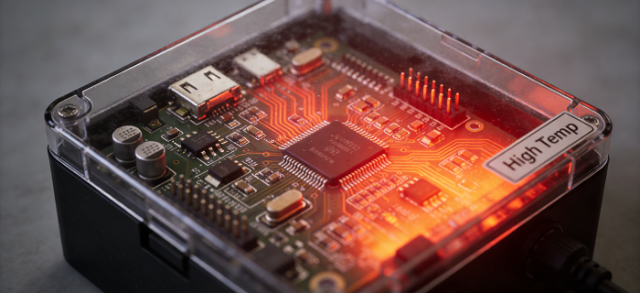
In demanding electronic applications, high temperature PCBs are essential for ensuring stable performance, long-term reliability, and safe operation under extreme thermal conditions. Industries such as automotive electronics, aerospace systems, power electronics, and industrial automation require PCB materials that can withstand elevated temperatures without degradation.
Choosing the right materials for high temperature PCBs is critical to preventing thermal failure, maintaining signal integrity, and extending product lifespan.
What Defines a High Temperature PCB Material?
A high temperature PCB material is designed to maintain structural and electrical stability under high thermal stress. Key parameters include:
- Glass Transition Temperature (Tg) – the temperature at which the material begins to soften
- Thermal Decomposition Temperature (Td) – the point at which the material starts to break down
- Coefficient of Thermal Expansion (CTE) – affects dimensional stability
- Thermal Conductivity – determines heat dissipation capability
Materials used in high temperature PCB design must offer high Tg, low CTE, and strong thermal resistance.
Common Materials for High Temperature PCBs
1. High Tg FR4 Materials
High Tg FR4 is an upgraded version of standard FR4 with improved thermal resistance.
Key Features:
- Tg typically above 170°C
- Cost-effective compared to advanced materials
- Suitable for moderate high-temperature applications
Applications:
- Industrial control systems
- Power supplies
- Automotive electronics
2. Polyimide (PI) Materials
Polyimide PCB materials are widely used in high temperature and high-reliability applications.
Key Features:
- Excellent thermal stability (Tg > 250°C)
- Strong mechanical durability
- Good resistance to thermal cycling
Applications:
- Aerospace electronics
- Military systems
- Flexible and rigid-flex PCBs
3. PTFE (Teflon-Based) Materials
PTFE materials are primarily used in high-frequency and high-temperature environments.
Key Features:
- Low dielectric loss
- Excellent thermal resistance
- Stable performance at high frequencies
Applications:
- RF and microwave circuits
- High-frequency communication systems
4. Ceramic-Based PCB Materials
Ceramic PCBs offer outstanding performance in extreme conditions.
Key Features:
- Very high thermal conductivity
- Excellent heat resistance
- Low CTE for dimensional stability
Applications:
- Power electronics
- LED modules
- High-power industrial systems
5. Metal Core PCB (MCPCB) Materials
Metal core PCBs, especially aluminum-based PCBs, are widely used for thermal management.
Key Features:
- Superior heat dissipation
- Strong mechanical strength
- Cost-effective for thermal applications
Applications:
- LED lighting systems
- Power conversion modules
- Automotive lighting
Material Comparison for High Temperature PCB
| Material | Tg / Thermal Resistance | Thermal Conductivity | Cost | Typical Use |
|---|---|---|---|---|
| High Tg FR4 | Medium | Moderate | Low | General industrial |
| Polyimide | Very High | Moderate | High | Aerospace, military |
| PTFE | High | Low–Moderate | High | RF applications |
| Ceramic | Extremely High | Excellent | Very High | Power electronics |
| Aluminum PCB | High | Excellent | Medium | Thermal management |
Key Factors in Selecting High Temperature PCB Materials
When choosing materials for high temperature PCBs, engineers should consider:
1. Operating Temperature Range
Ensure the material can withstand both continuous operating temperature and peak thermal loads.
2. Thermal Management Requirements
Applications with high heat generation require materials with high thermal conductivity.
3. Electrical Performance
For high-speed or RF designs, materials must support stable signal integrity.
4. Mechanical Reliability
Consider resistance to thermal expansion, vibration, and mechanical stress.
5. Cost and Application Fit
Balance material performance with budget constraints and application requirements.
Applications of High Temperature PCBs
High temperature PCBs are widely used in:
- Automotive electronics (engine control, EV systems)
- Aerospace and defense systems
- Industrial automation equipment
- Power electronics and converters
- Telecommunication infrastructure
These applications require durable and reliable PCB materials.
Design Best Practices for High Temperature PCBs
To maximize performance, consider the following:
- Use proper PCB stack-up design for thermal balance
- Optimize heat dissipation paths
- Select appropriate surface finishes for high-temperature environments
- Ensure high-quality soldering processes
- Work with experienced PCB manufacturers
Conclusion: Choosing the Right Material for Thermal Reliability
Selecting the right materials for high temperature PCBs is essential for ensuring performance, reliability, and longevity in demanding applications. By understanding the properties of different PCB materials, engineers can make informed decisions that optimize both thermal management and system stability.
In high-temperature environments, the right PCB material selection is not just a design choice—it is a critical factor for success.
