
What Is RO4350B PCB?
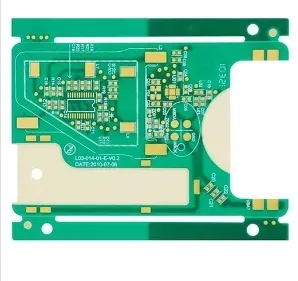
A RO4350B PCB is a high frequency printed circuit board fabricated using Rogers RO4350B laminate material. It is widely used in RF, microwave, and high speed digital applications due to its low dielectric loss, stable dielectric constant, and excellent thermal performance.
Compared with standard FR-4 material, RO4350B provides significantly improved signal integrity at high frequencies while maintaining good manufacturability and cost efficiency.
Key Properties of RO4350B Material
Rogers RO4350B is a hydrocarbon ceramic-filled laminate designed to deliver consistent high frequency performance with easier processing compared to traditional PTFE materials.
Typical properties include:
-
Dielectric constant (Dk): ~3.48 ± 0.05
-
Low dissipation factor (Df): ~0.0037 at 10 GHz
-
Low Z-axis expansion
-
High glass transition temperature (TG > 280°C)
-
Excellent thermal conductivity
These characteristics make RO4350B suitable for demanding RF and microwave designs.
Advantages of RO4350B PCB
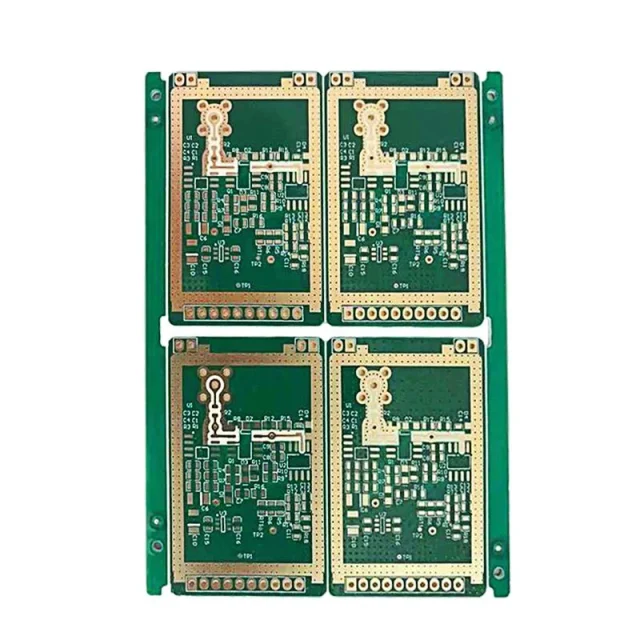
1. Low Loss Performance
RO4350B provides lower signal attenuation compared to FR-4, making it ideal for:
-
High frequency RF circuits
-
Power amplifiers
-
Antenna feed networks
-
5G communication modules
2. Stable Dielectric Constant
The stable Dk ensures predictable impedance control and consistent electrical performance across production batches.
3. Good Thermal Reliability
RO4350B exhibits low thermal expansion and strong dimensional stability, reducing the risk of warpage and improving long-term reliability.
4. Easier Fabrication Compared to PTFE
Unlike PTFE-based laminates, RO4350B:
-
Does not require special plasma treatment
-
Is compatible with standard FR-4 processing
-
Offers better mechanical stability
This results in more efficient manufacturing and lower production costs.
Applications of RO4350B PCB
RO4350B PCBs are widely used in:
-
RF power amplifiers
-
Base station equipment
-
5G communication systems
-
Microwave circuits
-
Automotive radar modules
-
Satellite communication devices
-
High speed digital backplanes
It is especially suitable for designs operating from GHz to microwave frequency ranges.
RO4350B PCB vs FR-4 PCB
| Feature | RO4350B PCB | FR-4 PCB |
|---|---|---|
| Frequency Performance | Excellent | Limited at high GHz |
| Loss Factor | Very Low | Higher |
| Impedance Stability | Highly Stable | Moderate |
| Cost | Higher | Lower |
| Application | RF & Microwave | General Electronics |
For high frequency and low loss requirements, RO4350B is a significantly better choice.
RO4350B PCB Stack-up Options
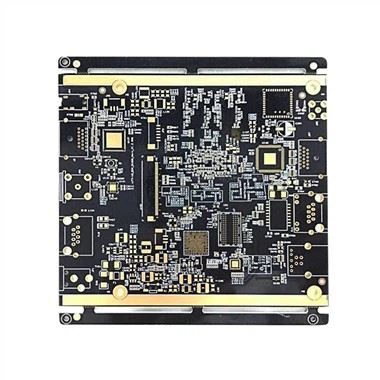
RO4350B can be used as:
-
Pure RO4350B multilayer stack-up
-
Hybrid stack-up (RO4350B + FR-4)
-
Mixed RF and digital structure
Hybrid designs allow RF performance in critical layers while controlling overall cost.
Manufacturing Considerations
Producing a reliable RO4350B PCB requires:
-
Precise impedance modeling
-
Tight dielectric thickness control
-
Proper lamination process
-
Accurate copper surface treatment
-
Strict quality inspection
An experienced high frequency PCB manufacturer ensures electrical consistency and mechanical stability.
Conclusion
RO4350B PCB offers an ideal balance between high frequency performance, manufacturing stability, and cost efficiency. It is widely used in RF, microwave, and high speed communication systems where low loss and impedance control are critical.
Choosing a professional RO4350B PCB manufacturer ensures optimized material usage, precise fabrication, and stable long-term performance.
