
Introduction to RF-35 PCB

RF-35 PCB is a specialized high-frequency laminate from Taconic, optimized for low-loss, high-speed, and high-frequency circuits. Unlike general-purpose PCBs, RF-35 is engineered to support multilayer stack-ups, stable impedance, and efficient thermal management in demanding RF and 5G systems.
It is widely applied in 5G base stations, satellite communication, radar modules, and IoT RF devices.
Why RF-35 PCB Is Essential
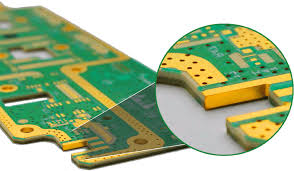
High-frequency designs face challenges such as:
-
Signal attenuation over long traces
-
Crosstalk and electromagnetic interference (EMI)
-
Thermal stress in power RF modules
-
Maintaining impedance across multilayer boards
RF-35 PCB addresses these challenges with its low dissipation factor (Df ~0.0027) and stable dielectric constant (Dk ~3.5).
Key Advantages
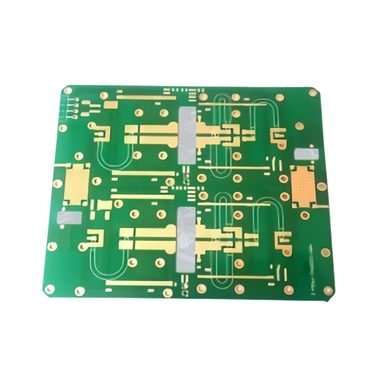
1. Low-Loss and High-Frequency Stability
RF-35 minimizes energy loss in high-frequency traces, ensuring:
-
Long trace signal integrity
-
Minimal insertion and return loss
-
Reliable performance in GHz-range circuits
This is critical for antennas, filters, and high-speed transceivers.
2. Multilayer Stack-Up Support
Modern RF systems require 4–8 layer boards to separate:
-
Signal layers
-
Ground planes
-
Power planes
-
Shielding layers
RF-35 PCB supports precise controlled impedance routing across all layers, reducing crosstalk and improving signal fidelity.
3. Thermal and Mechanical Reliability
-
High Tg and low CTE for dimensional stability
-
Resistance to thermal cycling and vibration
-
Compatible with soldering and standard PCB fabrication
These properties ensure long-term reliability in industrial and aerospace RF applications.
4. EMI/EMC Control
RF-35 PCB allows careful layer partitioning and ground plane design to reduce EMI. Techniques include:
-
Via fences and stitching vias
-
Signal/ground separation
-
Shielded RF layers
This enhances performance in dense, multi-module RF boards.
5. Applications in 5G and High-Speed Systems
RF-35 PCB is ideal for:
-
5G mmWave base stations
-
Satellite communication modules
-
Radar and microwave transceivers
-
High-speed IoT RF modules
-
Automotive radar sensors
-
Aerospace communication devices
Its combination of low-loss, thermal reliability, and multilayer compatibility makes it ideal for high-demand RF environments.
RF-35 PCB vs Standard FR4 PCB
| Feature | FR4 PCB | RF-35 PCB |
|---|---|---|
| Dielectric Loss (Df) | 0.02–0.03 | 0.0027 |
| Dielectric Constant (Dk) | 4.2–4.5 | 3.5 |
| High-Frequency Performance | Limited | Excellent |
| Multilayer Impedance Control | Moderate | High |
| Thermal Reliability | Moderate | High |
| EMI/EMC Performance | Basic | Advanced |
RF-35 PCB is selected when signal integrity, multilayer high-frequency design, and thermal management are critical.
Conclusion
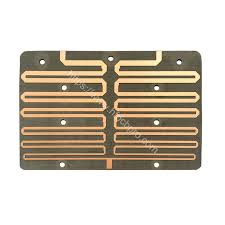
RF-35 PCB provides advanced multilayer, low-loss, and high-frequency solutions for modern communication and radar systems. With precise impedance control, thermal stability, and EMI mitigation, it ensures high-performance signal integrity in complex RF and 5G applications.
For engineers working on 5G, radar, satellite, and high-speed IoT modules, RF-35 PCB is a reliable foundation for efficient and durable RF designs.
