
With the rapid development of intelligent transportation systems, industrial automation, and smart sensing technologies, radar-based sensing solutions are becoming increasingly important for accurate detection, measurement, and environmental perception.
Among various radar technologies, 77GHz radar sensors have gained significant attention due to their high resolution, compact size, and ability to operate reliably under challenging environmental conditions.
Compared with traditional sensing technologies, 77GHz radar offers advantages such as:
- High detection accuracy
- Strong environmental adaptability
- Long-range sensing capability
- Resistance to dust, fog, and lighting conditions
These characteristics make 77GHz radar sensors widely used in:
- Automotive radar systems
- Intelligent transportation equipment
- Industrial automation
- Robotics
- Security monitoring
- Smart infrastructure
However, achieving reliable 77GHz radar performance requires careful consideration of RF circuit design, PCB material selection, antenna integration, signal integrity, and manufacturing precision.
1. Understanding Low-Power 77GHz Radar Sensor Technology
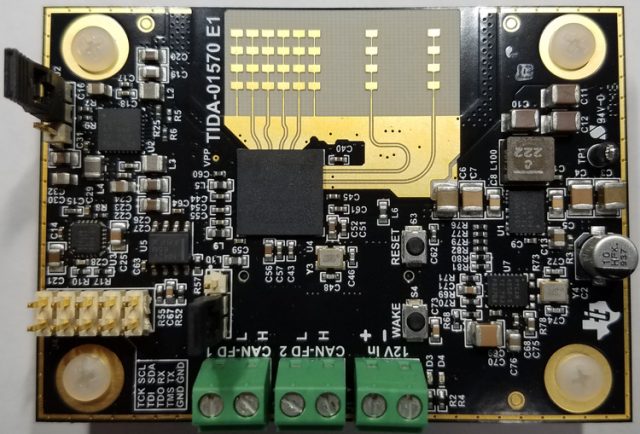
77GHz radar sensors operate in the millimeter-wave frequency range, enabling high-resolution detection with compact antenna structures.
These sensors typically include:
- RF transmitter
- RF receiver
- Antenna array
- Signal processing unit
- Power management circuit
- Communication interface
The radar system works by transmitting electromagnetic waves and analyzing reflected signals to determine:
- Object distance
- Velocity
- Position
- Movement characteristics
The high operating frequency provides improved detection resolution but also introduces stricter PCB design requirements.
2. Advantages of 77GHz Radar Sensors
2.1 High Detection Accuracy
The 77GHz frequency band allows radar systems to achieve fine spatial resolution.
This is beneficial for applications requiring accurate measurement, including:
- Vehicle detection
- Object tracking
- Industrial monitoring
2.2 Strong Environmental Adaptability
Unlike optical sensors, radar systems are less affected by:
- Low light conditions
- Dust
- Rain
- Fog
This makes them suitable for outdoor and industrial environments.
2.3 Compact System Integration
The shorter wavelength of 77GHz signals allows smaller antenna structures.
This supports:
- Miniaturized sensor modules
- Flexible installation
- Embedded applications
3. Applications of Low-Power 77GHz Radar Sensors
3.1 Intelligent Transportation Systems
77GHz radar technology plays an important role in modern transportation.
Applications include:
- Vehicle detection
- Traffic flow monitoring
- Collision avoidance systems
- Smart parking solutions
Reliable radar PCB design directly affects sensing accuracy and system stability.
3.2 Automotive Electronics
Automotive radar systems commonly use 77GHz frequency technology.
Typical applications include:
- Adaptive cruise control (ACC)
- Blind spot detection
- Autonomous driving perception systems
Automotive radar PCBs must withstand:
- Temperature variations
- Vibration
- Electromagnetic interference
3.3 Industrial Automation
Industrial environments require reliable object detection and positioning.
Applications include:
- Robot navigation
- Material detection
- Factory automation systems
Compared with optical sensors, radar provides more stable operation in harsh environments.
3.4 Smart Security and Infrastructure
77GHz radar sensors can support:
- Perimeter monitoring
- Smart buildings
- Motion detection systems
Their low-power characteristics make them suitable for long-term operation.
4. PCB Design Challenges for 77GHz Radar Sensors
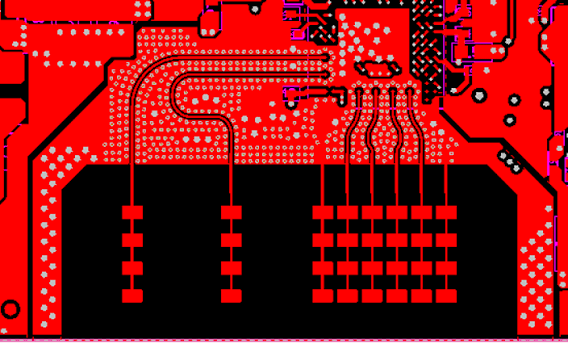
Designing PCBs for 77GHz radar applications requires advanced RF engineering considerations.
4.1 High-Frequency Signal Integrity
At 77GHz, even small PCB variations can affect signal performance.
Potential issues include:
- Signal attenuation
- Phase variation
- Impedance mismatch
- Transmission loss
Engineers must carefully control:
- Transmission line geometry
- Dielectric properties
- Copper thickness
- Manufacturing tolerances
4.2 Material Selection for Millimeter-Wave PCB Design
Traditional FR-4 materials may not provide sufficient performance for high-frequency radar circuits.
Important material characteristics include:
- Low dielectric loss
- Stable dielectric constant
- Low moisture absorption
- Consistent electrical properties
Common high-frequency PCB materials include:
- Rogers series laminates
- PTFE-based materials
- Low-loss microwave substrates
Material selection directly influences radar accuracy and signal stability.
4.3 Antenna Integration and RF Layout
The PCB layout plays an important role in antenna performance.
Key design considerations include:
- Antenna placement
- RF trace length
- Ground structure
- Isolation between RF channels
Poor layout may cause:
- Radiation loss
- Crosstalk
- Reduced detection performance
4.4 Power Integrity Management
Although 77GHz radar sensors operate at low power, stable power delivery remains critical.
Power design should consider:
- Noise filtering
- Decoupling capacitor placement
- Power distribution paths
Unstable power supply may affect:
- Signal processing accuracy
- Sensor reliability
5. Manufacturing Considerations for 77GHz Radar PCBs
High-frequency radar PCBs require strict manufacturing control.
5.1 Controlled Impedance Manufacturing
Impedance variation can directly affect RF performance.
Manufacturers must control:
- Trace width
- Dielectric thickness
- Copper thickness
- Lamination accuracy
Advanced testing methods such as TDR impedance measurement help verify transmission performance.
5.2 Layer Stack-Up Optimization
A suitable multilayer stack-up helps achieve:
- Stable RF transmission
- Better grounding performance
- Reduced interference
Important factors include:
- RF layer arrangement
- Reference plane design
- Material compatibility
5.3 Surface Finish Selection
Surface treatment can influence high-frequency performance.
Considerations include:
- Surface roughness
- Signal loss
- Assembly reliability
Suitable surface finishes should balance electrical performance and manufacturing requirements.
6. Reliability Considerations for Industrial and Transportation Applications
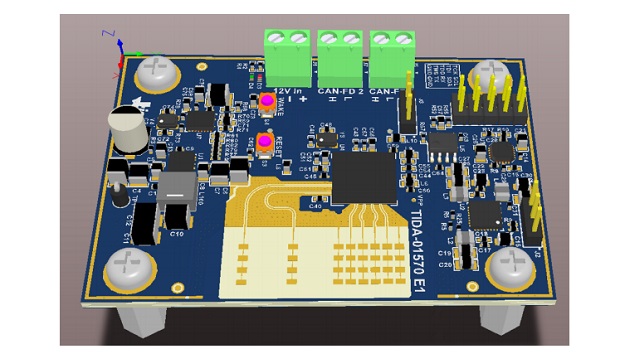
77GHz radar sensors often operate in demanding environments.
PCB reliability considerations include:
Thermal Stability
The PCB must maintain performance under:
- Temperature cycling
- Continuous operation
Mechanical Reliability
Transportation and industrial equipment may experience:
- Vibration
- Shock
- Mechanical stress
PCB structures must ensure long-term connection reliability.
Environmental Resistance
Radar modules may require resistance against:
- Moisture
- Dust
- External contamination
Proper material selection and protection design improve system durability.
7. Future Development Trends of 77GHz Radar Technology
As intelligent transportation and industrial automation continue evolving, 77GHz radar technology is expected to expand further.
Future trends include:
- Smaller radar modules
- Lower power consumption
- Higher detection accuracy
- Multi-sensor integration
- AI-based signal processing
These developments will require continuous improvement in:
- RF PCB technology
- High-frequency materials
- Advanced manufacturing processes
Conclusion
Low-power 77GHz radar sensors are becoming an important sensing technology for transportation and industrial applications due to their accuracy, reliability, and environmental adaptability.
However, successful radar system development depends not only on sensor technology but also on advanced PCB engineering, including high-frequency material selection, impedance control, RF layout optimization, and manufacturing precision.
By applying proper PCB design strategies and manufacturing control, engineers can improve radar performance, enhance system reliability, and support the next generation of intelligent sensing applications.
