
Selecting the right PCB substrate material is one of the most important decisions in electronic product development. The PCB material directly affects:
- Thermal performance
- Electrical characteristics
- Mechanical strength
- Manufacturing cost
- Product reliability
Among various PCB substrate options, aluminum PCBs and FR4 PCBs are two of the most widely used solutions. While both are common in electronic manufacturing, they are designed for different application requirements.
FR4 PCBs are the standard choice for most electronic products due to their balanced electrical performance, mechanical strength, and cost efficiency. Aluminum PCBs, also known as metal core PCBs (MCPCBs), are mainly selected for applications requiring superior heat dissipation.
This article compares aluminum PCB and FR4 PCB from the perspectives of materials, structure, performance, cost, manufacturing process, and applications.
1. What Is an Aluminum PCB?
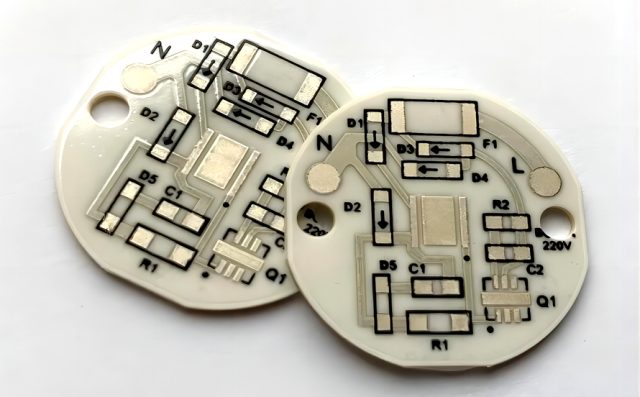
An aluminum PCB is a metal core printed circuit board that uses aluminum as the base material to improve thermal management.
Unlike conventional PCBs that use fiberglass-reinforced epoxy resin, aluminum PCBs contain a metal substrate structure.
A typical aluminum PCB structure includes:
| Layer | Function |
|---|---|
| Copper Layer | Electrical circuit conduction |
| Dielectric Insulation Layer | Electrical isolation and heat transfer |
| Aluminum Core Layer | Mechanical support and heat dissipation |
The aluminum core efficiently transfers heat away from components and distributes it across the board.
2. What Is an FR4 PCB?
FR4 is the most commonly used PCB substrate material worldwide.
FR4 stands for:
Flame Retardant 4
It is a composite material made from:
- Fiberglass reinforcement
- Epoxy resin
A typical FR4 PCB structure includes:
| Layer | Function |
|---|---|
| Copper Layer | Circuit connection |
| FR4 Dielectric Layer | Electrical insulation and mechanical support |
| Copper Layer | Additional routing or power distribution |
FR4 is widely used because it provides a good balance of:
- Cost
- Electrical insulation
- Mechanical stability
- Manufacturing flexibility
3. Material Comparison: Aluminum PCB vs FR4 PCB
| Feature | Aluminum PCB | FR4 PCB |
|---|---|---|
| Base Material | Aluminum metal core | Fiberglass epoxy resin |
| Thermal Conductivity | High | Moderate |
| Electrical Insulation | Requires dielectric layer | Naturally insulating |
| Mechanical Strength | High rigidity | Good mechanical stability |
| Weight | Higher | Lower |
| Cost | Higher | Lower |
| Flexibility | Limited | Available in various structures |
| Layer Count | Usually single/double layer | Single to multilayer structures |
4. Thermal Performance Comparison
Aluminum PCB Thermal Advantages
The biggest advantage of aluminum PCB is heat dissipation.
The aluminum core provides an efficient thermal path from heat-generating components to the surrounding environment.
Benefits include:
- Lower operating temperature
- Improved component lifetime
- Reduced thermal stress
Typical applications include:
- LED lighting
- Power converters
- Motor controllers
- Battery systems
FR4 PCB Thermal Characteristics
FR4 has relatively low thermal conductivity compared with aluminum.
Heat mainly transfers through:
- Copper layers
- Thermal vias
- Heat sinks
- External cooling structures
For high-power applications, additional thermal design may be required.
5. Electrical Performance Comparison
FR4 PCB Advantages
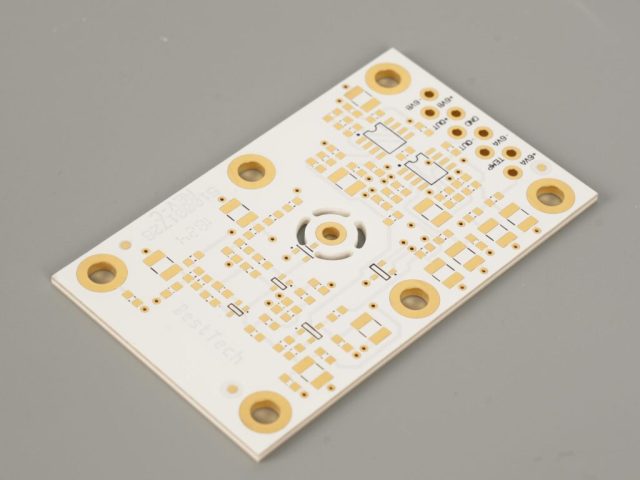
FR4 provides excellent electrical insulation and is suitable for:
- Digital circuits
- Analog circuits
- High-speed systems
- Multilayer designs
Advantages include:
- Stable dielectric properties
- Easy impedance control
- Support for complex routing
Aluminum PCB Considerations
Because aluminum is conductive, the metal core must be electrically isolated from the circuit layer.
The dielectric layer must provide:
- Proper insulation
- Reliable voltage resistance
- Good thermal transfer
Aluminum PCBs are generally not preferred for highly complex multilayer high-density circuits.
6. Mechanical Performance Comparison
Aluminum PCB
Advantages:
- High rigidity
- Excellent dimensional stability
- Good vibration resistance
Suitable for environments with:
- Mechanical stress
- Temperature variation
- Long operating periods
FR4 PCB
Advantages:
- Good strength-to-weight ratio
- Easier mechanical processing
- Available in rigid and flexible structures
FR4 is more suitable for:
- Compact electronic products
- Multilayer designs
- Complex assemblies
7. Cost Comparison
Aluminum PCB Cost
Aluminum PCBs are generally more expensive due to:
- Metal substrate cost
- Specialized manufacturing processes
- Thermal dielectric materials
However, the higher initial cost may be justified when thermal performance is critical.
FR4 PCB Cost
FR4 is usually more cost-effective because:
- Raw materials are widely available
- Manufacturing processes are mature
- Large-scale production is highly optimized
For most consumer and industrial electronics, FR4 provides the best cost-performance balance.
8. Manufacturing Differences
Aluminum PCB Manufacturing
Key manufacturing considerations include:
- Metal core handling
- Dielectric bonding quality
- Thermal layer uniformity
- Mechanical processing accuracy
Challenges include:
- Limited multilayer capability
- More complex drilling and routing processes
FR4 PCB Manufacturing
FR4 supports a wider range of manufacturing technologies:
- Multilayer lamination
- HDI processing
- Blind and buried vias
- Fine-line routing
- High-speed PCB fabrication
This makes FR4 suitable for highly integrated electronic systems.
9. Application Comparison
Applications of Aluminum PCBs
LED Electronics
Examples:
- LED lighting modules
- High-power LED displays
Advantages:
- Efficient heat dissipation
- Improved LED lifetime
Power Electronics
Examples:
- Power converters
- Motor drives
- Battery charging systems
Advantages:
- Better thermal control
- Higher reliability
Automotive Lighting
Examples:
- Headlight modules
- Interior lighting systems
Requirements:
- Thermal stability
- Long operating life
Applications of FR4 PCBs
Consumer Electronics
Examples:
- Smartphones
- Computers
- Home appliances
Industrial Control Systems
Examples:
- PLC controllers
- Automation equipment
- Sensor systems
Communication Equipment
Examples:
- Network devices
- RF communication systems
- Data processing equipment
Medical Electronics
Examples:
- Monitoring devices
- Diagnostic equipment
10. When Should You Choose Aluminum PCB?
Choose aluminum PCB when the main design challenge is:
Heat Dissipation
Suitable for:
- High-power LEDs
- Power semiconductor modules
- Motor control systems
Mechanical Durability
Suitable for:
- Industrial environments
- Vibration conditions
- Outdoor applications
Thermal Reliability
Suitable when temperature control directly affects product lifetime.
11. When Should You Choose FR4 PCB?
Choose FR4 PCB when the design requires:
Complex Circuit Routing
Examples:
- High-layer-count PCBs
- HDI structures
- High-density components
High-Speed Signal Transmission
Examples:
- High-speed processors
- Communication systems
- Data acquisition equipment
Cost Efficiency
Suitable for:
- Large-scale production
- General electronic products
12. Hybrid Solutions
Some advanced products combine different PCB technologies.
Examples include:
- FR4 control boards + aluminum power boards
- Metal core PCBs with high-performance dielectric materials
- Aluminum PCB modules integrated with flexible circuits
Hybrid approaches allow designers to optimize:
- Thermal performance
- Electrical performance
- Manufacturing cost
13. DFM Considerations
Before selecting aluminum or FR4 PCB materials, engineers should evaluate:
- Power consumption
- Operating temperature
- Component density
- Signal speed
- Mechanical requirements
- Production volume
A proper Design for Manufacturability (DFM) review helps determine:
- Suitable material selection
- Stack-up feasibility
- Manufacturing limitations
- Reliability risks
Conclusion
Both aluminum PCBs and FR4 PCBs have their own advantages and application areas.
Aluminum PCBs are ideal for applications requiring:
- Excellent thermal management
- High mechanical stability
- Reliable heat dissipation
such as LED systems, power electronics, and automotive lighting.
FR4 PCBs remain the preferred choice for most electronic products because of:
- Lower cost
- Better design flexibility
- Support for multilayer and high-density PCB technologies
The correct PCB material selection depends on balancing electrical performance, thermal requirements, mechanical conditions, and manufacturing considerations. By evaluating these factors early in the design stage, engineers can achieve better reliability, cost control, and production efficiency.
