
1. Introduction: The Role of Satellite PCB in Space Technology
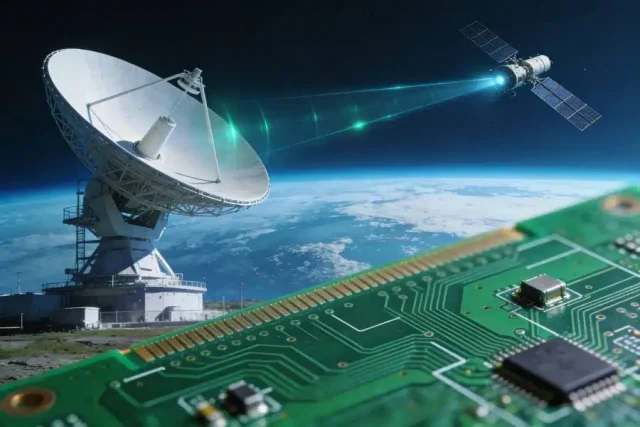
Satellite systems operate in one of the most extreme environments in engineering, including:
- Vacuum conditions
- Extreme temperature cycling
- High radiation exposure
- Long-term mission lifetimes without maintenance
Because of these conditions, Satellite PCB design must meet extremely strict reliability, thermal, and electrical performance requirements.
Modern satellite systems rely heavily on PCBs for:
- Communication payloads
- RF and microwave transceivers
- Power distribution systems
- Navigation and control electronics
- On-board computing systems
At KKPCB, satellite PCB solutions are designed for extreme environment durability and long-term mission stability.
2. What Is a Satellite PCB?
A Satellite PCB is a high-reliability printed circuit board designed specifically for space and satellite applications.
It must ensure:
- Long operational lifetime (often 5–15+ years)
- High resistance to radiation effects
- Stable performance under thermal cycling
- Reliable high-frequency RF operation
Satellite PCBs are widely used in:
- Communication satellites
- Earth observation satellites
- Navigation systems (GNSS)
- Deep space exploration systems
3. Key Design Challenges in Satellite PCB Engineering
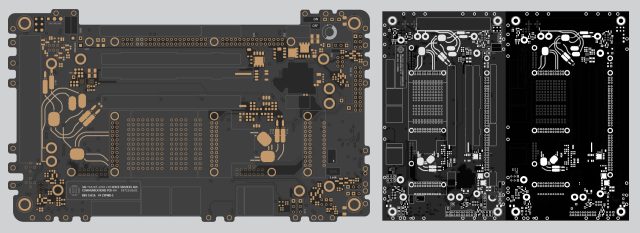
3.1 Radiation Effects in Space Environment
Satellite PCBs must withstand:
- Total ionizing dose (TID)
- Single event effects (SEE)
- Displacement damage
Radiation can lead to:
- Signal degradation
- Component failure
- Material aging
Therefore, radiation-tolerant PCB materials and design strategies are essential.
3.2 Extreme Thermal Cycling
Satellites experience severe temperature variation between:
- Sunlight exposure
- Earth shadow conditions
This leads to:
- Material expansion and contraction
- Solder joint fatigue
- Layer delamination risks
Thermal reliability is critical for long mission success.
3.3 High-Frequency RF Performance
Satellite communication relies heavily on RF and microwave systems requiring:
- Ultra-low signal loss
- Stable impedance control
- Minimal phase distortion
4. Satellite PCB Material Selection
Selecting the right materials is one of the most critical aspects of satellite PCB design.
Common materials include:
- PTFE-based RF laminates
- Ceramic-filled hydrocarbon materials
- High-reliability polyimide substrates
- Radiation-resistant composite materials
Key requirements:
- Low dielectric loss
- High thermal stability
- Radiation resistance
- Low moisture absorption
5. Signal Integrity and Impedance Control in Satellite PCB
Satellite systems operate at high frequencies where signal integrity is critical.
Proper impedance control helps:
- Reduce signal reflection
- Improve RF efficiency
- Maintain communication stability over long distances
6. Thermal Management in Satellite PCB Design
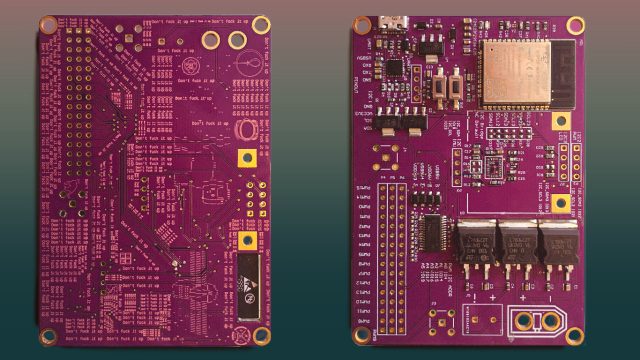
Thermal control is essential in space electronics due to:
- Lack of convection cooling
- Extreme external temperature differences
Thermal strategies include:
- High thermal conductivity materials
- Metal core or hybrid PCB structures
- Thermal via arrays
- Radiation-balanced thermal design
These approaches ensure:
- Stable component operation
- Reduced thermal stress
- Improved system lifetime
7. Reliability Requirements for Satellite PCB
Satellite PCBs must meet extremely high reliability standards, including:
- Zero-failure tolerance in mission-critical systems
- Long-term electrical stability
- Mechanical durability under vibration and launch stress
Key reliability tests include:
- Thermal cycling tests
- Vibration and shock testing
- Radiation simulation testing
- Vacuum environment testing
At KKPCB, advanced testing systems ensure:
- Space-grade reliability
- Long-term performance stability
- High manufacturing consistency
8. Manufacturing Challenges of Satellite PCB
Satellite PCB manufacturing requires extreme precision.
Key challenges include:
- Tight dimensional tolerance control
- High-reliability lamination processes
- Defect-free multilayer alignment
- Advanced inspection and testing
Manufacturing standards are significantly higher than commercial PCB production.
9. Applications of Satellite PCB
Satellite PCBs are used in:
- Communication satellites
- Earth observation systems
- Space exploration missions
- GPS and navigation systems
- Military and defense satellites
- Deep space probes
These systems require:
- Ultra-high reliability
- Long operational lifetime
- Stable RF and power performance
10. Future Trends in Satellite PCB Technology
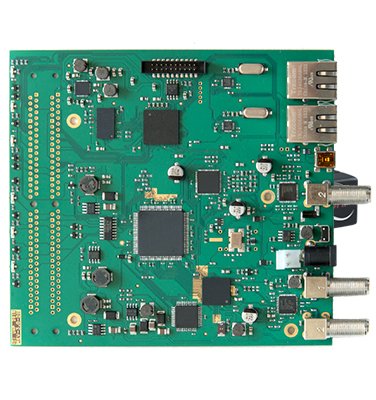
Future satellite PCB development is moving toward:
- Miniaturized satellite systems (CubeSats, nanosatellites)
- Higher-frequency RF communication (Ka-band and beyond)
- Integrated RF and antenna systems
- Radiation-hardened advanced materials
- Lightweight high-density PCB structures
These advancements enable:
- Lower launch costs
- Higher data transmission rates
- More complex space missions
11. Conclusion
Satellite PCB technology is a cornerstone of modern space systems, requiring:
- Radiation resistance
- Thermal cycling stability
- High-frequency RF performance
- Extreme reliability engineering
Through advanced materials and precision manufacturing, engineers can achieve:
- Long-term mission stability
- High-performance communication systems
- Robust space electronics
With strong expertise in aerospace electronics, KKPCB delivers reliable satellite PCB solutions for next-generation space applications.
