
What Is a Rogers PCB?
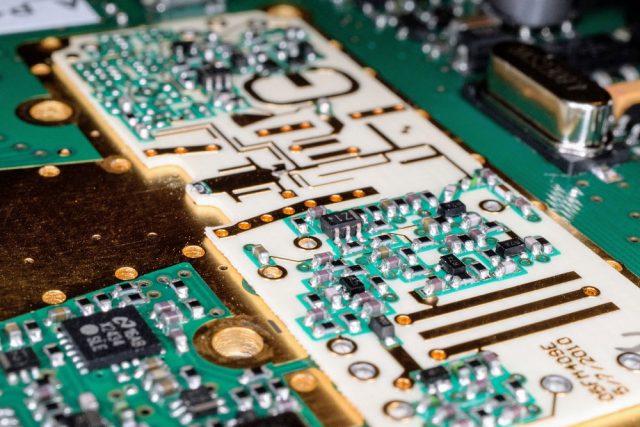
A Rogers PCB is a high-frequency printed circuit board manufactured using Rogers laminate materials, which are engineered for RF, microwave, and high-speed signal applications. Compared with standard FR-4, Rogers materials offer lower dielectric loss, more stable dielectric constant (Dk), and better electrical performance at high frequencies.
Because of these advantages, Rogers PCBs are widely used in 5G communication systems, RF modules, antennas, radar, satellite devices, and high-speed electronics, where signal loss and impedance stability are critical.
Why Choose Rogers PCB Instead of FR-4?
Standard FR-4 PCB materials work well for general electronics, but at high frequency, FR-4 often causes:
-
Higher insertion loss and attenuation
-
Larger Dk variation over frequency and temperature
-
Poor impedance consistency for RF traces
-
Reduced performance in microwave designs
A Rogers PCB is designed to solve these problems by offering a stable dielectric platform for high-frequency transmission lines, controlled impedance routing, and low-loss RF performance.
Key Advantages of Rogers PCB
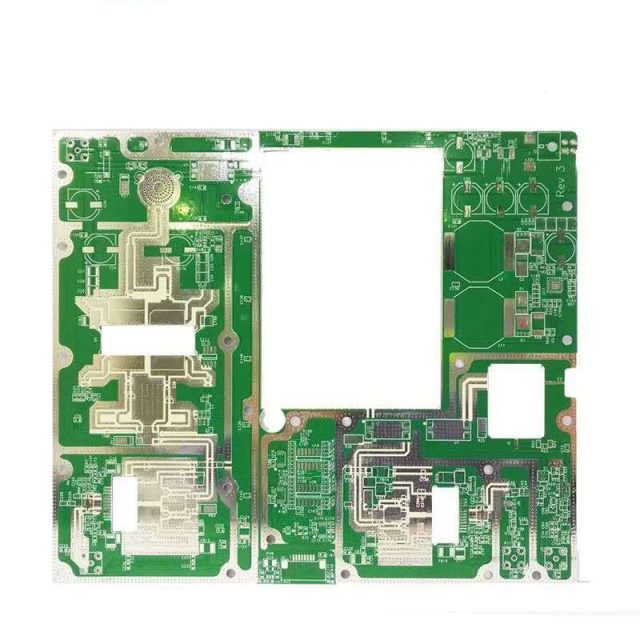
1. Low Dielectric Loss for High-Frequency Signals
One of the biggest benefits of a Rogers PCB is low loss performance. Low dissipation factor (Df) helps reduce:
-
Signal attenuation
-
Insertion loss
-
Heat generated by dielectric loss
This is essential for RF trace PCB and High Frequency Signal PCB applications.
2. Stable Dielectric Constant (Dk) for Impedance Control
Rogers laminates provide a more stable Dk compared with FR-4, supporting:
-
Accurate controlled impedance PCB routing
-
Better impedance consistency across production lots
-
Improved repeatability for RF and microwave circuits
Stable Dk is critical for 50Ω RF traces, 75Ω RF traces, and 100Ω differential pair PCB designs.
3. Excellent RF and Microwave Performance
A Rogers PCB supports high-frequency circuit performance for:
-
RF front-end modules
-
Power amplifiers (PA)
-
Low-noise amplifiers (LNA)
-
Filters and couplers
-
Antenna feed networks
These circuits require stable impedance, low reflection, and minimal loss.
4. Strong Thermal and Dimensional Stability
Many Rogers PCB materials offer improved thermal stability, which helps reduce:
-
Warpage during PCB manufacturing
-
Registration shift in multilayer lamination
-
Reliability risk in high-temperature environments
This supports more stable performance for automotive and industrial RF electronics.
5. Compatible with Multilayer and Hybrid PCB Structures
Rogers PCBs can be manufactured as:
-
Multilayer Rogers PCB
-
Hybrid PCB (Rogers + FR-4 mixed stack-up)
Hybrid Rogers PCB designs are popular because they balance:
-
High-frequency performance (Rogers layers)
-
Cost efficiency (FR-4 layers for digital/control sections)
Popular Rogers PCB Materials
Different Rogers laminates are used for different performance needs. Common options include:
-
RO4003C PCB – excellent balance of performance and cost
-
RO4350B PCB – widely used for RF and 5G designs
-
RO3003 PCB – ultra-low loss for microwave circuits
-
RT/duroid PCB – PTFE-based for very high frequency and extreme low loss
KKPCB supports multiple Rogers PCB material options based on customer requirements.
Rogers PCB Design Considerations
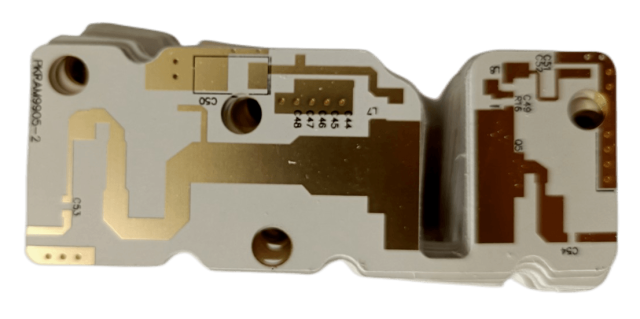
1. Controlled Impedance RF Trace Design
Rogers PCB routing must be designed as transmission lines, typically using:
-
Microstrip traces (outer layer)
-
Stripline traces (inner layer)
-
Coplanar waveguide (CPW) structures
Accurate impedance control ensures stable RF performance and reduced reflection.
2. Grounding and Shielding for RF Circuits
Rogers PCB design requires strong RF grounding, including:
-
Solid ground reference planes
-
Via stitching around RF traces
-
Ground fences for isolation
-
Short return paths
This helps reduce EMI and improve RF stability.
3. Via Transitions and Connector Launch Optimization
At high frequency, vias and connector launches must be carefully designed to reduce discontinuities. Rogers PCB best practices include:
-
Minimizing via stubs
-
Using backdrill if needed
-
Keeping symmetrical transitions
-
Maintaining consistent reference planes
This improves insertion loss and return loss performance.
4. Manufacturing Accuracy and Process Control
Rogers PCB fabrication requires stable control of:
-
Trace width and spacing tolerance
-
Lamination and registration accuracy
-
Plating uniformity
-
Controlled impedance verification
This ensures each Rogers PCB meets performance requirements for RF and high-frequency applications.
Applications of Rogers PCB
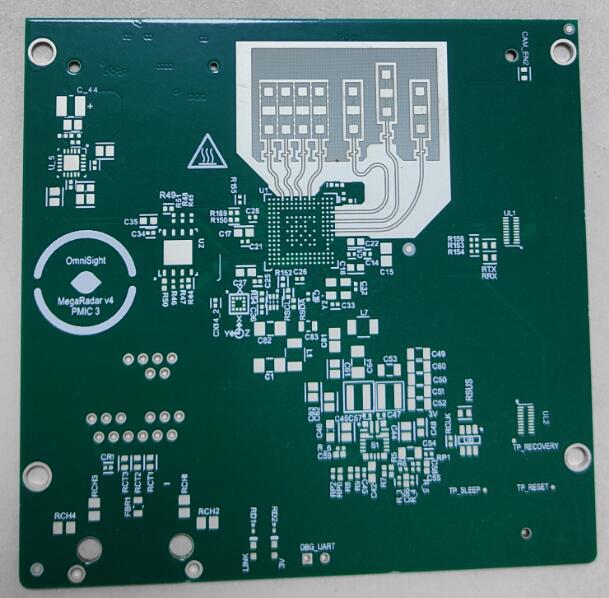
Rogers PCBs are widely used in:
-
5G base stations and RF modules
-
WiFi and Bluetooth wireless devices
-
GPS positioning and navigation systems
-
Automotive radar and ADAS electronics
-
Satellite communication systems
-
Microwave antennas and RF front-end boards
-
High-speed networking and telecom equipment
-
RF test boards and high-frequency measurement systems
KKPCB Rogers PCB Manufacturing Capabilities
KKPCB provides reliable Rogers PCB manufacturing services from prototype to mass production, including:
-
Rogers PCB fabrication with stable process control
-
Controlled impedance PCB manufacturing and testing
-
Multilayer Rogers PCB and hybrid Rogers + FR-4 stack-up support
-
Fine line PCB manufacturing for dense RF modules
-
HDI PCB and microvia PCB options for compact layouts
-
High reliability PCB inspection and quality assurance
-
Engineering support for RF trace PCB and high-frequency signal PCB projects
We help customers achieve consistent RF performance, stable impedance, and reliable product quality.
Conclusion
A Rogers PCB is the ideal solution for RF, microwave, and 5G applications that require low loss, stable dielectric constant, and controlled impedance routing. Compared with FR-4, Rogers laminates deliver improved high-frequency performance, better signal integrity, and more reliable RF transmission.
KKPCB provides professional Rogers PCB manufacturing with advanced capability and high-reliability quality control, supporting next-generation wireless and high-speed electronics.
