
Introduction: Why High Frequency PCB Matters
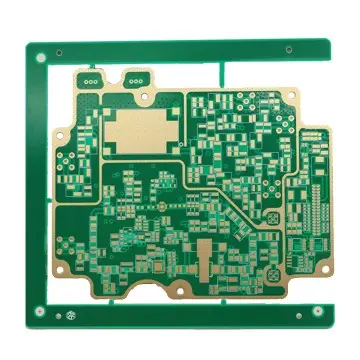
As modern electronics continue to evolve toward high-speed communication and high-frequency signal transmission, the demand for High Frequency PCBs has grown significantly. Applications such as 5G communication, radar systems, and satellite technology require circuit boards that can handle high-frequency signals with minimal signal loss and excellent signal integrity.
Understanding what a High Frequency PCB is and how it differs from standard PCBs is essential for engineers and businesses working in advanced electronic design.
What is a High Frequency PCB?
A High Frequency PCB is a type of printed circuit board specifically designed to operate at frequencies typically above 1 GHz. These PCBs are optimized to maintain stable electrical performance, reduce signal attenuation, and ensure reliable high-speed data transmission.
Unlike standard FR4 PCBs, high-frequency PCBs use specialized materials and design techniques to handle RF (radio frequency) and microwave signals.
Key Characteristics of High Frequency PCBs
1. Low Dielectric Loss
One of the most critical features of a High Frequency PCB is its low dielectric loss (Df), which minimizes signal attenuation and ensures efficient signal transmission over high frequencies.
2. Stable Dielectric Constant (Dk)
A stable dielectric constant (Dk) is essential for maintaining consistent impedance control. This is crucial in RF PCB design and high-speed circuits.
3. Excellent Signal Integrity
High Frequency PCBs are designed to preserve signal integrity by reducing:
- Signal reflection
- Crosstalk
- Electromagnetic interference (EMI)
4. Controlled Impedance Design
Precise impedance control is required to ensure reliable performance in high-frequency applications such as antennas and communication systems.
Common Materials Used in High Frequency PCBs
Material selection is critical in high-frequency PCB design. Common materials include:
- Rogers materials (e.g., Rogers 4350B, Rogers 6010)
- PTFE (Teflon-based laminates)
- Ceramic-filled hydrocarbon materials
Compared to standard FR4, these materials offer better electrical performance, lower signal loss, and improved thermal stability.
Design Considerations for High Frequency PCBs
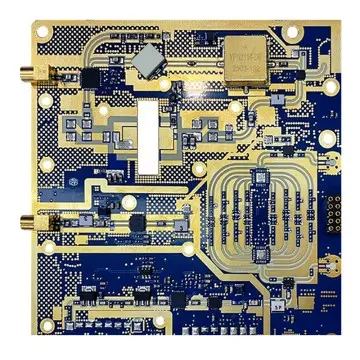
Designing a High Frequency PCB requires careful attention to multiple factors:
1. PCB Layout and Routing
- Minimize trace length to reduce signal loss
- Use proper trace width for impedance control
- Avoid sharp corners in high-speed signal paths
2. Grounding and Shielding
Effective ground plane design and shielding techniques help reduce EMI and improve overall signal stability.
3. Layer Stack-Up Optimization
A well-designed multilayer PCB stack-up ensures:
- Stable signal reference planes
- Improved power integrity
- Reduced noise coupling
4. Thermal Management
Although focused on signal performance, high-frequency PCBs also require efficient heat dissipation to maintain reliability.
Applications of High Frequency PCBs
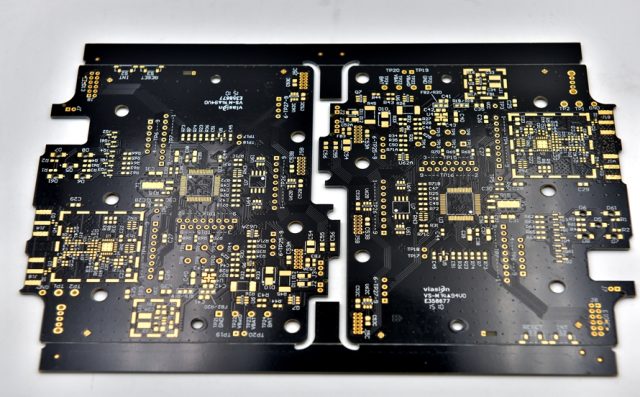
High Frequency PCBs are widely used in advanced electronic systems:
- 5G and wireless communication systems
- RF and microwave circuits
- Radar and satellite systems
- Antenna modules
- High-speed networking equipment
These applications demand high-performance PCB solutions with excellent signal integrity.
High Frequency PCB vs Standard PCB
| Feature | High Frequency PCB | Standard FR4 PCB |
|---|---|---|
| Frequency Range | >1 GHz | <1 GHz |
| Signal Loss | Low | Higher |
| Material | Rogers, PTFE | FR4 |
| Cost | Higher | Lower |
| Application | RF, 5G, Radar | General electronics |
This comparison highlights why High Frequency PCBs are essential for advanced communication technologies.
Conclusion
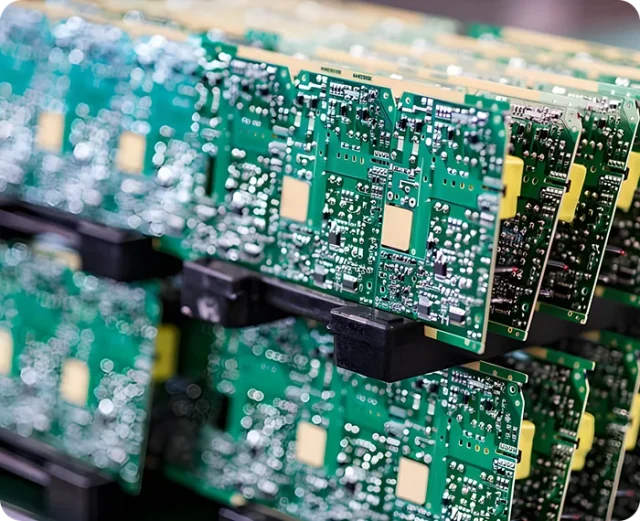
A High Frequency PCB is a specialized printed circuit board designed for high-speed and high-frequency applications where signal integrity and low loss are critical. By using advanced materials, precise PCB design techniques, and optimized manufacturing processes, these PCBs enable reliable performance in modern communication and electronic systems.
As technologies like 5G, IoT, and AI hardware continue to evolve, the importance of high-frequency PCB design will only increase.
