
What Is RO4003C PCB?
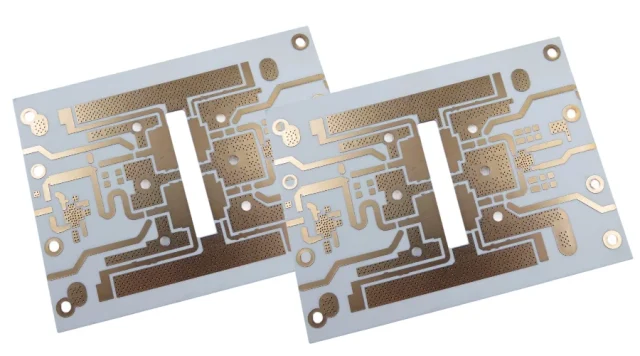
A RO4003C PCB is a high-frequency printed circuit board manufactured using RO4003C laminate material developed by Rogers Corporation.
RO4003C is a hydrocarbon ceramic-filled laminate designed for RF and microwave applications that require low dielectric loss, stable electrical performance, and reliable manufacturability. It provides many of the electrical benefits of PTFE materials while offering easier fabrication and better dimensional control.
RO4003C is commonly selected for GHz-range applications where signal integrity and impedance accuracy are critical.
Electrical Characteristics of RO4003C
RO4003C offers a well-balanced set of electrical properties:
-
Dielectric constant (Dk ≈ 3.38)
-
Low dissipation factor (Df ≈ 0.0027 at 10GHz)
-
Stable Dk over frequency
-
Good thermal stability
These characteristics allow consistent impedance control and reduced signal attenuation in RF transmission lines.
Why Use RO4003C Instead of FR4?
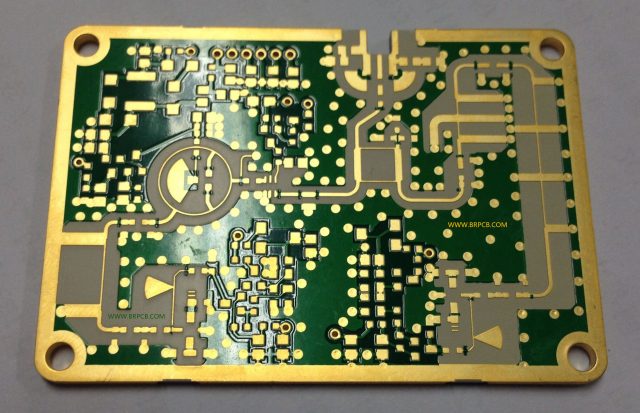
At higher frequencies, standard FR4 substrates may exhibit:
-
Higher dielectric loss
-
Increased insertion loss
-
Greater Dk variation
-
Reduced phase stability
RO4003C helps minimize these issues by providing:
-
Lower insertion loss
-
More predictable impedance behavior
-
Improved signal transmission efficiency
-
Better high-frequency performance
This makes it suitable for circuits operating above 1GHz.
Structural Options for RO4003C PCB
RO4003C PCBs can be manufactured in various configurations:
-
Single-layer RF boards
-
Double-layer microwave circuits
-
Multilayer RF stack-ups
-
Hybrid constructions (RO4003C + FR4)
-
Controlled impedance multilayer designs
Hybrid stack-up structures are commonly used to balance performance and cost by applying RO4003C only in critical RF layers.
Manufacturing Advantages
Compared with PTFE-based laminates, RO4003C provides several fabrication benefits:
-
Compatible processing similar to FR4
-
Easier drilling and plating
-
Good dimensional stability
-
Reduced lamination complexity
These characteristics help improve production yield and consistency.
Applications of RO4003C PCB
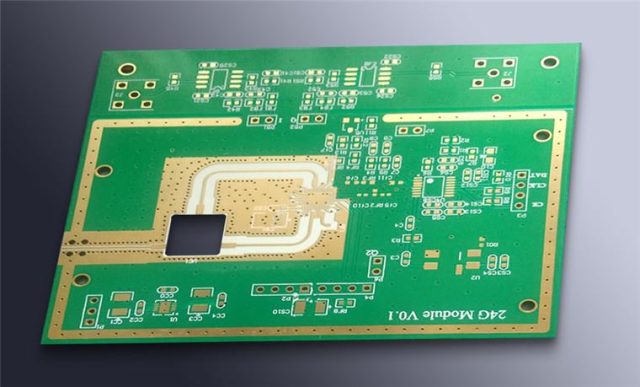
RO4003C PCBs are widely used in:
-
5G communication modules
-
RF front-end circuits
-
Antenna feed networks
-
Automotive radar systems (24GHz / 77GHz)
-
Satellite communication equipment
-
RF filters and couplers
-
High-frequency test boards
Its stable dielectric performance makes it suitable for medium-to-high frequency RF designs.
RO4003C PCB vs PTFE PCB
| Feature | RO4003C PCB | PTFE PCB |
|---|---|---|
| Dielectric Loss | Low | Very Low |
| Fabrication Difficulty | Moderate | Higher |
| Dimensional Stability | Good | Moderate |
| Processing Similarity to FR4 | High | Low |
| Cost | Medium | Higher |
RO4003C is often selected when designers need high-frequency performance without the full complexity of PTFE processing.
Conclusion
RO4003C PCB provides a reliable balance between electrical performance and manufacturability. With stable dielectric properties, low insertion loss, and good processing compatibility, it is a practical solution for RF and microwave applications in the GHz range.
For communication, radar, and high-frequency system designs requiring consistent impedance and efficient signal transmission, RO4003C remains a widely trusted material platform.
