
As modern electronics demand faster data rates and higher frequencies, maintaining signal integrity becomes critical. PTFE PCBs (Polytetrafluoroethylene-based printed circuit boards) are specialized boards designed for low-loss, high-frequency, and microwave applications, making them indispensable in RF communication, satellite, 5G, and high-speed digital systems.
PTFE’s low dielectric constant, minimal dissipation factor, and excellent thermal stability ensure that signals propagate efficiently, even at GHz frequencies.
What is a PTFE PCB?
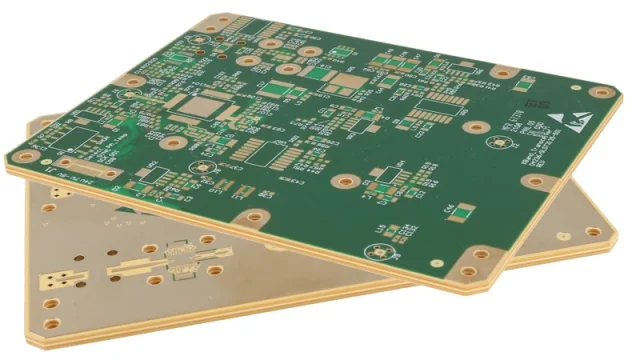
A PTFE PCB is a printed circuit board fabricated using PTFE (Teflon) substrates, often reinforced with glass fiber (FR-4 or ceramic fillers) for mechanical stability. PTFE is widely recognized for:
-
Low dielectric constant (Dk): Typically 2.1–2.3, minimizing signal delay.
-
Low dissipation factor (Df): Less than 0.0015, reducing insertion loss.
-
High thermal stability: Tg above 260°C in reinforced variants.
-
Excellent chemical and mechanical resistance: Stable under high temperature and environmental stress.
These properties make PTFE PCBs ideal for RF, microwave, and high-speed digital applications where signal quality is paramount.
Advantages of PTFE PCBs
Low Signal Loss
PTFE’s extremely low dissipation factor minimizes energy loss in high-frequency signals, maintaining signal integrity over long traces and high-speed circuits.
High-Frequency Performance
PTFE’s stable dielectric constant ensures consistent impedance control, critical for RF, microwave, and antenna applications.
Thermal and Mechanical Reliability
Reinforced PTFE PCBs withstand high temperatures and thermal cycling, maintaining dimensional stability for precision multilayer designs.
Flexible Design Options
PTFE PCBs can be used in rigid, flex, or rigid-flex designs, making them versatile for various electronic applications, from satellite modules to wearable devices.
Applications of PTFE PCBs
PTFE PCBs are widely used in industries that demand high-frequency performance and minimal signal loss:
-
RF and Microwave Devices: Filters, antennas, amplifiers, and mixers
-
5G Communication Modules: Base stations, small cells, and IoT gateways
-
Satellite and Aerospace Electronics: Signal transmission boards and telemetry systems
-
High-Speed Digital Circuits: DDR memory interfaces, PCIe, and high-speed computing modules
-
Defense & Military Systems: Radar, communication, and sensor boards
By using PTFE PCBs, engineers can ensure stable signal transmission, minimal interference, and long-term reliability.
Design Considerations for PTFE PCBs
Reinforcement
Pure PTFE is soft, so glass fiber or ceramic fillers are added for rigidity and processability.
Trace and Impedance Control
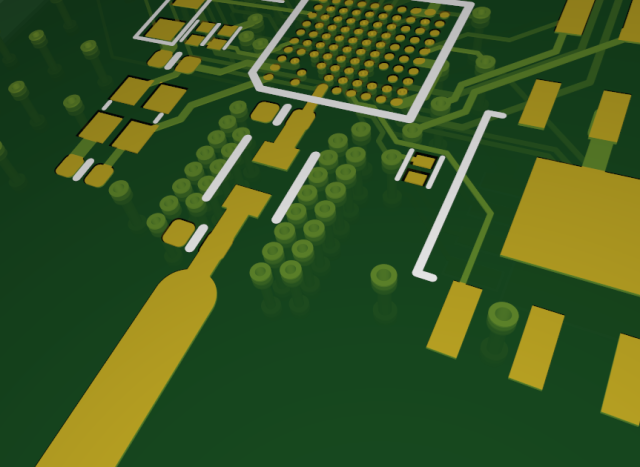
High-frequency circuits require tight impedance tolerance. PTFE PCBs support microstrip, stripline, and coplanar waveguide designs.
Surface Finishes
Surface finishes like ENIG, gold, or silver plating improve solderability and reduce contact resistance, critical for RF performance.
Multilayer and Lamination
PTFE can be laminated into multilayer boards, but specialized processes are required to prevent warping and ensure alignment.
Choosing a PTFE PCB Manufacturer
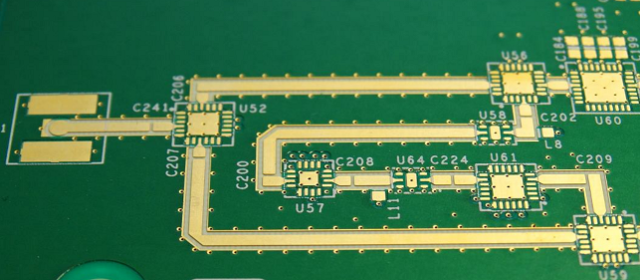
Producing PTFE PCBs requires advanced fabrication expertise. When selecting a manufacturer, consider:
-
Experience with high-frequency, low-loss PTFE materials
-
Capability in multilayer and rigid-flex designs
-
Accurate impedance control and tight tolerances
-
Thermal simulation and QA for RF/microwave applications
An experienced manufacturer ensures that your PTFE PCBs deliver consistent high-frequency performance.
Conclusion
PTFE PCBs are the ideal choice for RF, microwave, 5G, and high-speed digital electronics, offering low signal loss, stable dielectric properties, and thermal reliability. By leveraging PTFE PCBs, engineers can design advanced electronic systems with improved performance, signal integrity, and long-term reliability.
Investing in high-quality PTFE PCB design and manufacturing is essential for cutting-edge electronics that operate at high frequencies and demanding conditions.
