
The substrate and core materials are fundamental components of a printed circuit board (PCB), directly influencing its:
- Electrical performance
- Mechanical strength
- Thermal reliability
- Manufacturing capability
- Long-term stability
As electronic products continue developing toward higher speed, higher power density, miniaturization, and increased reliability, PCB material selection has become increasingly important.
Different applications require different substrate characteristics, including:
- Low dielectric loss for high-frequency circuits
- High thermal conductivity for power electronics
- High-temperature resistance for harsh environments
- Mechanical flexibility for compact electronic products
This article provides a comprehensive overview of PCB substrate and core materials, including their structures, types, properties, applications, and selection considerations.
1. What Are PCB Substrate and Core Materials?
1.1 PCB Substrate
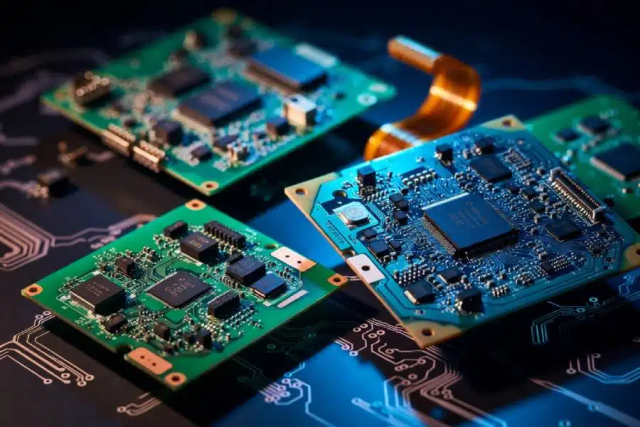
The PCB substrate is the insulating material that supports conductive copper layers and provides electrical isolation between circuits.
It typically consists of:
- Reinforcement material
- Resin system
- Copper foil layers
The substrate determines many important PCB characteristics, including:
- Dielectric properties
- Thermal performance
- Mechanical stability
- Manufacturing compatibility
1.2 PCB Core Material
A core material is a fully cured laminate sheet consisting of:
- Dielectric material
- Copper foil on one or both sides
It is commonly used as the central layer in multilayer PCB structures.
The core provides:
- Mechanical support
- Layer stability
- Controlled dielectric thickness
2. Basic Structure of PCB Materials
A typical PCB laminate structure includes:
Copper Foil
Functions:
- Electrical signal transmission
- Power distribution
Important factors:
- Copper thickness
- Surface roughness
- Conductivity
Resin System
The resin provides:
- Electrical insulation
- Bonding between layers
- Thermal protection
Common resin systems include:
- Epoxy resin
- Polyimide resin
- PTFE resin
- BT resin
Reinforcement Material
Reinforcement improves:
- Mechanical strength
- Dimensional stability
Common reinforcement materials:
- Fiberglass cloth
- Ceramic filler
3. Common Types of PCB Substrate Materials
3.1 FR-4 Substrate
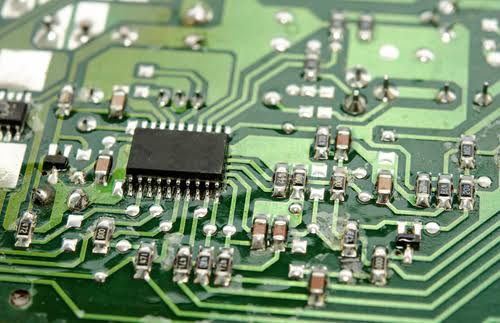
FR-4 is the most widely used PCB substrate material.
It consists mainly of:
- Fiberglass reinforcement
- Epoxy resin
Advantages
- Good electrical insulation
- Good mechanical strength
- Mature manufacturing process
- Cost-effective
Applications
- Consumer electronics
- Industrial control boards
- General multilayer PCBs
3.2 High-Tg FR-4 Material
High-Tg FR-4 is designed for higher temperature applications.
Compared with standard FR-4, it provides:
- Higher glass transition temperature
- Better thermal reliability
- Improved dimensional stability
Applications:
- Automotive electronics
- Industrial equipment
- Power control systems
3.3 High-Frequency PCB Materials
High-frequency materials are designed for RF and microwave applications.
Common materials include:
- Rogers laminates
- PTFE-based materials
- Low-loss resin systems
Key characteristics:
- Low dielectric loss
- Stable dielectric constant
- Controlled impedance performance
Applications:
- RF communication
- Radar systems
- Microwave circuits
3.4 Polyimide PCB Material
Polyimide materials are commonly used for flexible circuits.
Advantages:
- Excellent flexibility
- High-temperature resistance
- Good chemical stability
Applications:
- Flexible PCB (FPC)
- Aerospace electronics
- Wearable devices
3.5 BT Resin Substrate
BT (Bismaleimide Triazine) resin is widely used in semiconductor packaging.
Advantages:
- High thermal resistance
- Good mechanical strength
- Low moisture absorption
Applications:
- IC substrates
- Semiconductor packages
3.6 Ceramic PCB Materials
Ceramic substrates use materials such as:
- Alumina (Al₂O₃)
- Aluminum Nitride (AlN)
- Silicon Nitride (Si₃N₄)
Advantages:
- Excellent thermal conductivity
- High-temperature resistance
- High electrical insulation
Applications:
- Power modules
- Semiconductor devices
- High-reliability electronics
3.7 Metal Core PCB Materials
Metal core PCBs use metal as the base layer.
Common metals:
- Aluminum
- Copper
Advantages:
- Excellent heat dissipation
- Improved mechanical strength
Applications:
- LED lighting
- Power electronics
- Automotive lighting
4. Important PCB Material Properties
4.1 Dielectric Constant (Dk)
The dielectric constant affects:
- Signal propagation speed
- Impedance characteristics
Stable Dk is especially important for:
- High-speed PCB
- RF PCB
4.2 Dissipation Factor (Df)
Df represents dielectric energy loss.
Lower Df provides:
- Reduced signal attenuation
- Better high-frequency performance
4.3 Glass Transition Temperature (Tg)
Tg is the temperature where the resin changes from rigid to softer behavior.
Higher Tg improves:
- Thermal reliability
- Resistance to thermal cycling
4.4 Decomposition Temperature (Td)
Td indicates the temperature where material degradation begins.
Higher Td provides:
- Better thermal endurance
- Improved reliability margin
4.5 Coefficient of Thermal Expansion (CTE)
CTE describes how materials expand with temperature.
A lower and more stable CTE helps reduce:
- Via cracking
- Layer stress
- Solder joint failure
4.6 Thermal Conductivity
Thermal conductivity determines heat dissipation capability.
Important for:
- Power electronics
- High-current circuits
5. PCB Core Materials in Multilayer PCB Construction
Multilayer PCBs typically use a combination of:
- Core materials
- Prepreg materials
- Copper layers
A typical structure includes:
Copper Layer → Prepreg → Core → Prepreg → Copper Layer
Core Material Functions
The core provides:
Mechanical Stability
Maintains PCB flatness and rigidity.
Electrical Performance
Controls:
- Dielectric spacing
- Impedance characteristics
Layer Alignment
Supports accurate registration during lamination.
6. PCB Material Selection Based on Applications
Consumer Electronics
Requirements:
- Low cost
- Compact design
- Good reliability
Common materials:
- FR-4
- High-density multilayer materials
Automotive Electronics
Requirements:
- Temperature resistance
- Long service life
- Vibration resistance
Common materials:
- High-Tg FR-4
- Metal core PCB
- Ceramic substrates
RF and Communication Equipment
Requirements:
- Low loss
- Stable electrical characteristics
Common materials:
- Rogers materials
- PTFE laminates
Power Electronics
Requirements:
- Heat dissipation
- High current capability
Common materials:
- Aluminum PCB
- Copper core PCB
- Ceramic PCB
Semiconductor Packaging
Requirements:
- Ultra-high density
- Fine-line capability
Common materials:
- ABF
- BT resin
- Advanced build-up materials
7. Factors Affecting PCB Material Selection
Electrical Requirements
Consider:
- Operating frequency
- Signal speed
- Impedance requirements
- Loss tolerance
Thermal Requirements
Evaluate:
- Operating temperature
- Heat generation
- Cooling conditions
Mechanical Requirements
Consider:
- Board thickness
- Flexibility
- Vibration environment
Manufacturing Requirements
Evaluate:
- Layer count
- Via technology
- Fabrication capability
- Cost requirements
8. PCB Material Comparison
| Material | Main Advantage | Typical Applications |
|---|---|---|
| FR-4 | Balanced performance and cost | General PCBs |
| High-Tg FR-4 | Better thermal reliability | Automotive, industrial |
| Rogers | Low loss performance | RF, microwave |
| PTFE | Excellent high-frequency performance | Aerospace, communication |
| Polyimide | Flexible and heat resistant | FPC |
| Ceramic | High thermal reliability | Power electronics |
| Aluminum Core | Heat dissipation | LED, power systems |
| BT Resin | Semiconductor packaging | IC substrates |
9. Future Trends in PCB Materials
Low-Loss High-Speed Materials
Driven by:
- 5G
- High-speed computing
- AI hardware
Future materials will focus on:
- Lower dielectric loss
- Better signal integrity
High Thermal Performance Materials
Demand will increase for:
- Ceramic substrates
- Advanced metal core materials
Applications:
- EV power systems
- SiC/GaN devices
Environmentally Friendly Materials
Future development includes:
- Halogen-free materials
- Improved recyclability
- Lower environmental impact
Conclusion
PCB substrate and core materials are critical factors determining PCB performance, reliability, and application suitability.
Different materials provide different advantages:
- FR-4 offers a balanced solution for general applications.
- High-Tg materials improve thermal reliability.
- Rogers and PTFE materials support high-frequency performance.
- Ceramic and metal core materials provide advanced thermal management.
- BT resin and advanced materials support semiconductor packaging.
Selecting the right PCB substrate requires comprehensive evaluation of:
- Electrical performance
- Thermal conditions
- Mechanical requirements
- Manufacturing capability
- Application environment
As electronic technologies continue advancing, advanced PCB materials will remain essential for enabling higher-performance and more reliable electronic systems.
