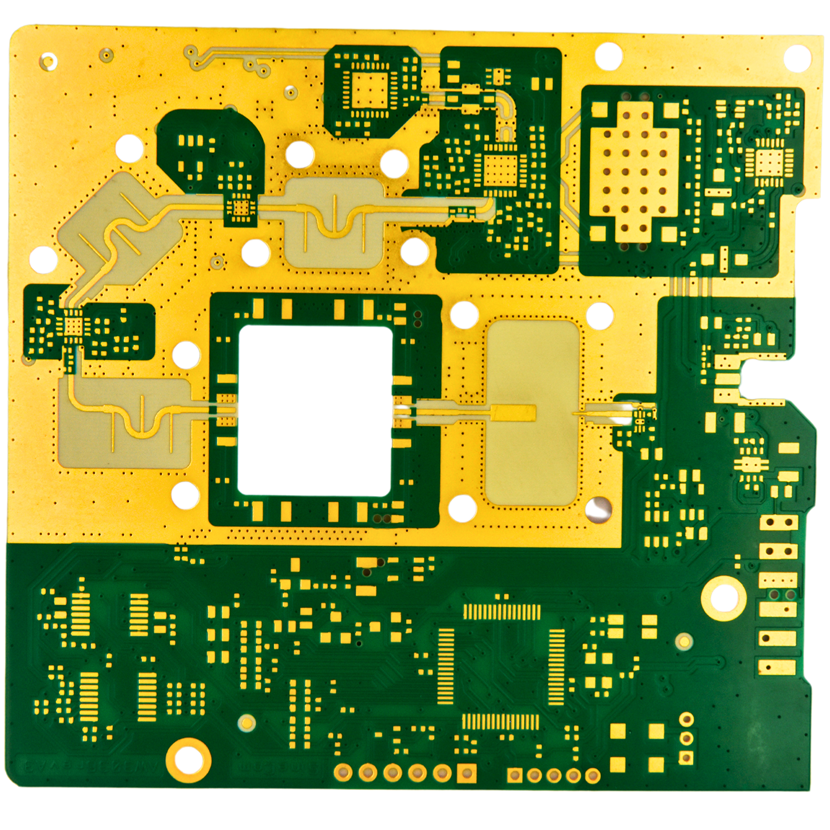
When conventional FR-4 materials are no longer enough for demanding RF and high-speed applications, Rogers PCB materials provide the low-loss electrical performance and dielectric stability required by advanced electronic systems.
KKPCB is a professional Rogers PCB Manufacturer in China, specializing in high-frequency PCB manufacturing, RF PCB fabrication, multilayer PCBs, controlled-impedance boards and complex mixed-material constructions.
We support demanding applications from RF and microwave circuits to automotive radar, 5G communications, aerospace electronics and high-speed digital systems.
From material selection and stack-up engineering to PCB fabrication, impedance control and final testing, KKPCB provides a complete manufacturing solution for technically demanding PCB projects.
What Is a Rogers PCB?
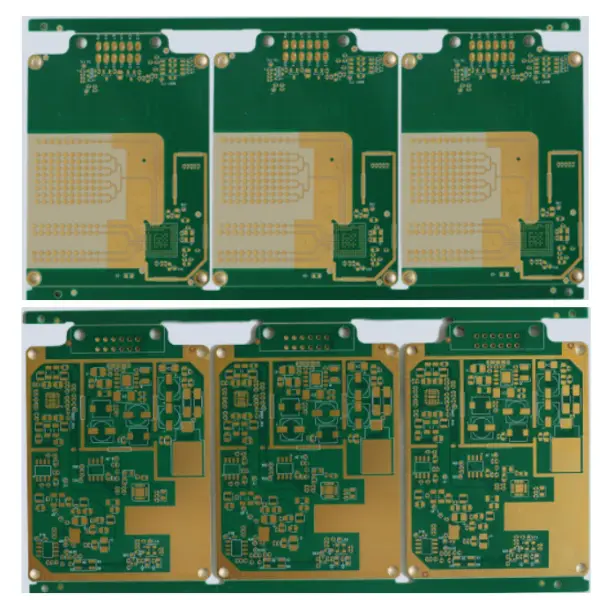
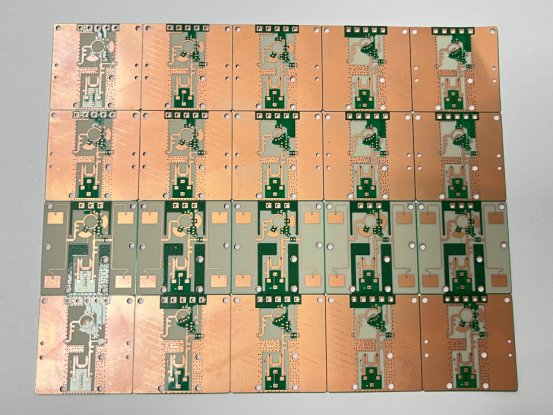
A Rogers PCB is a printed circuit board manufactured using high-frequency laminate materials developed by Rogers Corporation.
Compared with conventional FR-4, Rogers high-frequency materials offer more predictable dielectric characteristics, lower signal loss and better electrical stability at high frequencies.
These characteristics make Rogers PCBs particularly suitable for:
- RF PCB applications
- High-Frequency PCB circuits
- Microwave electronics
- 5G communication equipment
- Automotive radar and ADAS
- Satellite communications
- Aerospace and defense electronics
- High-speed digital systems
- Wireless communication equipment
- RF power amplifiers and modules
The dielectric material beneath the copper plays a critical role in signal integrity, impedance control and overall PCB performance.
For this reason, selecting the right Rogers PCB material is an important part of the PCB engineering process.
Key Advantages of Rogers PCB Materials
Low Dielectric Loss
One of the most important advantages of Rogers high-frequency laminates is their low dissipation factor (Df).
Lower dielectric loss helps reduce signal attenuation when high-frequency signals travel through the PCB.
This is particularly important for RF PCB manufacturing, microwave circuits and millimeter-wave applications where signal loss can directly affect system performance.
For demanding applications, material selection should consider Dk, Df, operating frequency, copper structure and the overall PCB stack-up.
Stable Dielectric Constant (Dk)
Stable dielectric properties are essential for controlled impedance PCB designs.
Rogers materials provide predictable dielectric performance across frequency and temperature ranges. This helps engineers maintain more consistent impedance and reduce deviations between PCB simulation and actual production results.
For a high-frequency PCB, accurate material data alone is not enough. The PCB manufacturing process must also maintain tight control over dielectric thickness, copper thickness and trace dimensions.
Thermal Stability
High-frequency and high-power electronic systems can generate significant thermal stress.
Rogers high-frequency laminates are designed to maintain stable electrical performance under demanding operating conditions.
Proper material selection, stack-up design and lamination control can help improve the long-term reliability of Rogers PCBs used in demanding environments.
Low Moisture Absorption
Moisture absorption can affect dielectric performance and signal integrity.
Many high-frequency laminate systems provide low moisture absorption characteristics, helping maintain stable electrical performance in demanding operating environments.
This makes Rogers PCB materials suitable for applications where electrical consistency and long-term reliability are important.
Rogers PCB vs. Standard FR-4
FR-4 remains an effective and economical material for many conventional PCB applications.
However, as operating frequencies increase, the electrical characteristics of standard FR-4 may become a limitation.
Rogers PCB materials are generally selected when a design requires:
- Lower insertion loss
- Stable dielectric constant
- Predictable impedance
- Controlled RF performance
- High-frequency signal transmission
- Consistent electrical performance
- Better control at microwave and RF frequencies
However, not every layer of a multilayer PCB necessarily requires Rogers material.
This creates an opportunity for a Rogers + FR-4 hybrid PCB construction.
Rogers + FR-4 Hybrid PCB Manufacturing
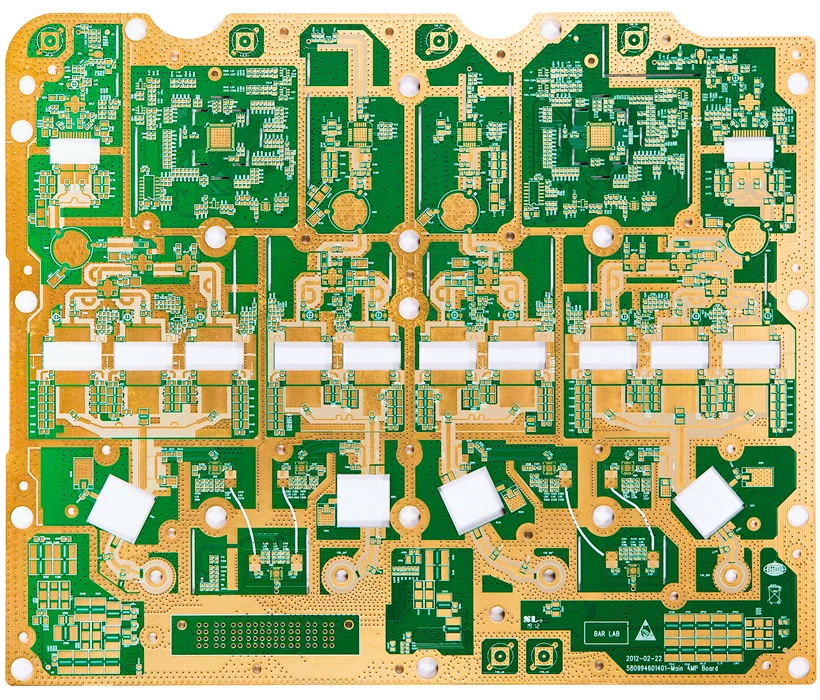
A hybrid PCB combines Rogers high-frequency materials with conventional FR-4 within the same multilayer construction.
RF-critical signal layers can use Rogers material, while power, control or other non-RF layers can use FR-4.
This approach can provide a balance between high-frequency PCB performance and cost efficiency.
For example, a design may use Rogers material around critical RF signal layers while using FR-4 in sections where high-frequency performance is less critical.
At KKPCB, our engineering team can review the PCB stack-up, operating frequency, impedance requirements and material configuration to determine whether a hybrid construction is appropriate.
Rogers PCB Manufacturing Process
Manufacturing a reliable Rogers PCB requires more than simply replacing FR-4 with a high-frequency laminate.
Material characteristics, copper thickness, dielectric thickness, drilling parameters, lamination conditions and impedance requirements must all be considered together.
1. Rogers PCB Material Selection
The first step in Rogers PCB manufacturing is selecting the appropriate laminate.
Depending on the application, KKPCB can work with Rogers materials including:
- Rogers RO4003C
- Rogers RO4350B
- Rogers RO3003
- Other Rogers high-frequency laminate systems
Material selection depends on factors such as:
- Operating frequency
- Required Dk and Df
- Finished PCB thickness
- Copper thickness
- Layer count
- Thermal requirements
- Impedance requirements
- RF performance
- Prototype or volume production requirements
For multilayer RF PCB projects, the prepreg or bonding system must also be compatible with the selected laminate.
2. Surface Preparation
Some high-frequency materials, particularly PTFE-based materials, have surface characteristics that require specialized treatment.
Proper surface preparation helps improve adhesion between materials and supports reliable copper plating and bonding.
For complex Rogers PCB manufacturing, material compatibility and surface treatment should be evaluated during the engineering stage.
3. Lamination and Stack-Up Engineering
Multilayer Rogers PCBs require carefully controlled lamination.
Different materials may have different thermal expansion and mechanical characteristics.
This becomes particularly important when manufacturing Rogers + FR-4 hybrid PCBs.
KKPCB evaluates:
- PCB layer arrangement
- Dielectric thickness
- Copper thickness
- Material compatibility
- Stack-up symmetry
- Impedance requirements
- Lamination conditions
A properly engineered stack-up helps maintain both mechanical stability and the electrical characteristics required by the design.
4. Imaging and Etching
Many high-frequency PCBs use controlled-impedance traces where even small dimensional variations can affect electrical performance.
KKPCB uses controlled imaging and etching processes to manufacture fine RF circuitry while maintaining the dimensional accuracy required by the customer’s design.
For critical RF projects, trace geometry is evaluated together with the PCB stack-up and impedance requirements.
5. Drilling and Via Manufacturing
Rogers materials can require different drilling parameters compared with standard FR-4.
Via structures can also have a significant impact on high-frequency signal integrity.
Depending on the design, KKPCB supports:
- Through vias
- Blind vias
- Buried vias
- Laser vias
- Back drilling
- Via filling
For high-speed and RF PCB applications, back drilling can be used to remove unwanted via stubs and improve signal integrity.
6. Copper Plating
Reliable copper plating is essential for multilayer PCB reliability.
After drilling, the hole walls are prepared for copper deposition. Electroless copper is followed by electrolytic copper plating to achieve the required finished copper thickness and reliable electrical connections between PCB layers.
For high-reliability Rogers PCB manufacturing, plating quality and via reliability are closely controlled throughout production.
7. Surface Finish
The appropriate surface finish depends on the PCB application and assembly requirements.
KKPCB can provide:
- ENIG
- ENEPIG
- Immersion Silver
- OSP
- Plated Gold
For fine-pitch RF components, ENIG and ENEPIG are commonly considered because of their flat surface and good solderability.
The final finish is selected according to electrical, assembly, reliability and cost requirements.
Rogers PCB Quality Control & Testing
A high-performance Rogers PCB manufacturer must control quality throughout the entire manufacturing process.
KKPCB integrates inspection and testing into multiple stages of production.
AOI Inspection
Automated Optical Inspection (AOI) is used to identify PCB defects such as trace abnormalities, shorts, opens and other manufacturing issues.
X-Ray Inspection
X-Ray inspection can be used to inspect internal structures and multilayer features that cannot be verified through conventional visual inspection.
Electrical Testing
Electrical testing verifies circuit continuity and isolation to identify open circuits and short circuits.
Depending on project requirements, KKPCB supports flying probe and automated electrical testing.
Impedance Testing
For controlled impedance PCB projects, impedance verification is an important part of quality assurance.
The impedance requirements are considered during engineering and fabrication, with appropriate test coupons and measurement methods used for verification.

KKPCB Rogers PCB Manufacturing Capabilities
KKPCB focuses on technically demanding PCB projects, including Rogers PCB, high-frequency PCB, high-speed PCB, multilayer PCB and mixed-material PCB manufacturing.
| Specification | KKPCB Capability |
|---|---|
| High-Frequency Materials | Rogers, Panasonic Megtron, Isola and other RF/high-speed materials |
| Rogers Materials | RO4003C, RO4350B, RO3003 and other Rogers materials |
| PCB Construction | Multilayer RF, high-frequency, hybrid/mixed dielectric |
| Layer Count | Up to 80 layers* |
| Board Thickness | Approx. 0.1 mm – 8.0 mm* |
| Minimum Trace / Space | Down to approximately 3 mil for stable production* |
| Impedance Control | Engineering-controlled according to design requirements |
| Via Technology | Through, blind, buried, laser vias and back drilling |
| Surface Finish | ENIG, ENEPIG, OSP, immersion silver and other finishes |
| Inspection & Testing | AOI, X-Ray, Flying Probe, Electrical Testing and other inspection methods |
*Actual capability depends on material, stack-up, board size, copper thickness, aspect ratio and other design parameters. Engineering review is required for advanced specifications.
Why Choose KKPCB as Your Rogers PCB Manufacturer?
Selecting the right Rogers PCB manufacturer is particularly important when your project involves expensive high-frequency materials, complex multilayer structures or strict impedance requirements.
High-Frequency PCB Expertise
KKPCB specializes in technically demanding PCB manufacturing, including RF PCB, high-frequency, high-speed and complex multilayer boards.
Engineering Support
Our engineering team can review:
- Gerber files
- PCB stack-up
- Material selection
- Controlled impedance
- Copper thickness
- Via structures
- Manufacturing tolerances
Potential manufacturing risks can therefore be identified before production begins.
Global Material Sourcing
KKPCB works with leading high-frequency and high-speed material systems, including Rogers, Panasonic Megtron, Isola and other specialized PCB materials.
This enables us to evaluate different material solutions according to both technical requirements and project cost.
One-Stop PCB & PCBA Manufacturing
KKPCB provides both PCB manufacturing and PCBA services.
Customers can manage:
PCB Fabrication → Component Sourcing → SMT → DIP → Testing → Final Assembly
through one manufacturing partner.
Quality-Focused Production
Quality control is integrated throughout the production process, from incoming material inspection to PCB fabrication, AOI, X-Ray and electrical testing.
For demanding Rogers PCB projects, our goal is not simply to manufacture a board that looks correct. The PCB must also deliver the electrical and mechanical performance required by the application.
Applications of Rogers PCBs
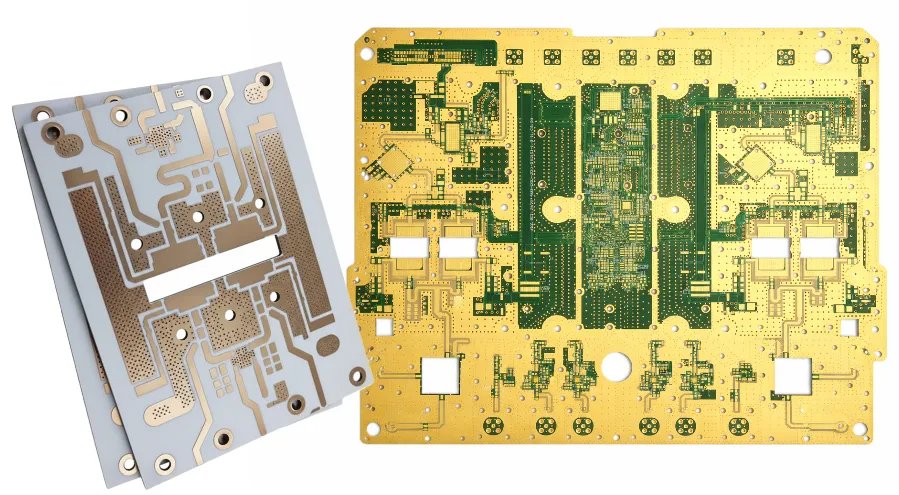
Rogers PCBs are widely used in applications where high-frequency electrical performance is critical.
Typical applications include:
Automotive Electronics
- Automotive radar
- ADAS
- 77 GHz radar systems
- Vehicle communication systems
Telecommunications
- 5G infrastructure
- RF communication equipment
- Microwave communication
- Wireless modules
Aerospace & Defense
- Radar systems
- Satellite communication
- Aerospace electronics
- High-frequency military electronics
Industrial & RF Electronics
- RF amplifiers
- Microwave modules
- Sensors
- Test and measurement equipment
Get a Quote for Your Rogers PCB
If you are developing an RF PCB, high-frequency PCB, microwave circuit or high-speed electronic system, KKPCB can help evaluate your PCB manufacturing requirements.
Send us your:
- Gerber files
- PCB stack-up
- Rogers material requirements
- Impedance specifications
- Copper thickness
- PCB dimensions
- Required quantity
Our engineering team can review your project and recommend a suitable manufacturing solution.
Whether you need a small prototype or volume production, KKPCB is ready to support your project from PCB engineering and fabrication to PCBA and final testing.