
Enabling High-Performance Industrial Wireless Networks
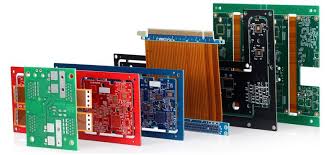
In industrial wireless sensor networks (IWSNs), PCB materials play a critical role in achieving reliable communication and efficient signal transmission. Taconic TLY-5 PCB laminates are engineered for high-frequency applications, offering exceptional dielectric uniformity, low dissipation factor, and excellent RF performance, making them ideal for industrial IoT and wireless sensor networks.
Optimizing the dielectric properties and RF efficiency of these laminates ensures signal integrity, low loss, and high system reliability across industrial environments.
Overview of Taconic TLY-5 Laminates
Taconic TLY-5 is a high-performance, PTFE-based PCB laminate widely used in:
- Industrial wireless sensor networks
- IoT-enabled automation systems
- High-frequency communication modules
Key Material Properties
- Consistent dielectric constant (Dk)
- Low dissipation factor (Df) for minimal signal loss
- Excellent thermal stability
- High mechanical durability
- Superior RF performance for high-frequency circuits
Importance of Dielectric Uniformity in IWSNs
Dielectric uniformity is crucial for industrial wireless sensor networks because:
- Ensures controlled impedance across PCB traces
- Reduces signal reflection and loss
- Maintains consistent RF performance in multilayer designs
- Supports reliable long-distance data transmission
Variations in dielectric properties can severely degrade sensor network efficiency and system stability.
Enhancing RF Efficiency with TLY-5 Laminates
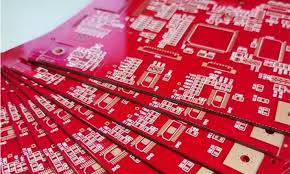
1. Minimizing Signal Loss
Low Df values in TLY-5 laminates reduce insertion loss, which is critical for:
- High-frequency sensor communication
- Reliable industrial IoT links
- Real-time monitoring systems
2. Stable High-Frequency Performance
Consistent Dk/Df ensures predictable impedance, enhancing:
- RF signal integrity
- High-speed data transfer
- Reduced error rates in sensor networks
3. Thermal and Mechanical Reliability
Industrial environments often involve temperature fluctuations and mechanical stress. TLY-5 laminates provide:
- Thermal stability under continuous operation
- Resistance to warping and mechanical degradation
- Longevity in harsh factory conditions
Design Considerations for Industrial Wireless Sensor Networks
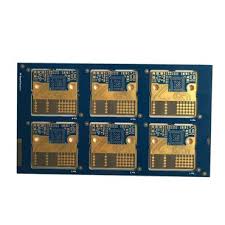
1. Controlled Impedance PCB Layout
- Proper trace geometry and spacing
- Accurate stack-up configuration
- Minimized crosstalk and EMI
2. Multilayer PCB Stack-Up Optimization
- Balanced signal and ground layers
- Reduced RF interference
- Enhanced power integrity
3. Advanced PCB Fabrication and Assembly
- Precision drilling and plating
- Optimized SMT placement
- Reflow soldering for high reliability
4. Thermal Management
- Use of thermal vias
- Optimized copper layers for heat dissipation
- Placement strategies for heat-generating components
Applications in Industrial Wireless Sensor Networks
Taconic TLY-5 PCB laminates are ideal for:
- Wireless industrial sensors for factory automation
- IoT modules for real-time monitoring
- High-frequency communication nodes
- Energy management and predictive maintenance systems
Their high dielectric uniformity and low loss tangent make them optimal for robust wireless network deployment.
Benefits of Using TLY-5 Laminates in IWSNs

- Stable and predictable RF signal transmission
- High reliability in industrial environments
- Reduced interference and signal loss
- Enhanced longevity and durability of sensor nodes
- Improved system efficiency and real-time data performance
Conclusion: Optimizing Industrial Wireless Networks
By leveraging Taconic TLY-5 PCB laminates, engineers can ensure dielectric uniformity, low signal loss, and high RF efficiency in industrial wireless sensor networks. Proper PCB design, careful fabrication, and precise assembly allow for reliable, long-term operation of high-frequency communication systems in demanding industrial environments.
