
With the increasing adoption of distributed renewable energy systems, microgrids, and decentralized power generation, small wind turbines have become an effective solution for providing clean energy in residential, agricultural, and industrial applications.
The small wind turbine inverter is a critical power conversion unit that transforms variable-frequency AC power generated by the turbine into stable electrical output suitable for grid connection or energy storage systems.
Unlike conventional power converters, wind turbine inverters must handle highly dynamic operating conditions caused by:
- Wind speed fluctuations
- Variable turbine rotation speed
- Changing load conditions
- Outdoor environmental exposure
The inverter PCBA (Printed Circuit Board Assembly) directly affects:
- Power conversion efficiency
- System stability
- Energy harvesting capability
- Long-term operational reliability
This case study presents how KKPCB supported the optimization of a small wind turbine inverter PCBA solution, addressing key challenges in power electronics design, thermal management, EMI control, and manufacturing reliability.
1. Project Background
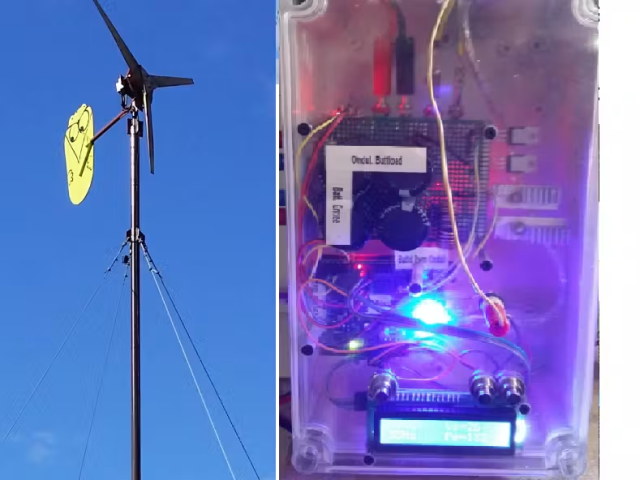
A customer developing a small wind turbine energy conversion system required a customized inverter PCBA capable of operating reliably under variable wind conditions.
The inverter module was designed to perform:
- AC-to-DC conversion
- DC voltage regulation
- DC-to-AC inversion
- Grid/load interface management
- Protection monitoring
The system requirements included:
- High conversion efficiency
- Stable output voltage and frequency
- Strong environmental reliability
- Compact installation design
- Long operational lifetime
During prototype testing, the customer identified several challenges related to power switching stability, heat accumulation, electromagnetic interference, and production consistency.
2. Key Challenges in Small Wind Turbine Inverter PCBA Development
Challenge 1: Handling Variable Input Power Conditions
Customer Pain Point
Unlike fixed power sources, wind turbines generate unstable electrical output due to changing wind conditions.
The inverter PCBA needed to handle:
- Wide input voltage range
- Variable current levels
- Rapid power fluctuations
Potential problems included:
- Output voltage instability
- Reduced conversion efficiency
- Control system errors
The design required optimization of:
- Power conversion circuits
- Feedback control loops
- Voltage regulation paths
Challenge 2: High-Power Switching Reliability
Customer Pain Point
The inverter power stage relies on switching devices such as:
- MOSFETs
- IGBTs
- Power modules
High-frequency switching can generate:
- Voltage spikes
- Switching losses
- Current overshoot
These effects may lead to:
- Component stress
- Reduced efficiency
- Premature failure
The PCB required careful optimization of:
- High-current paths
- Switching loops
- Power device connections
Challenge 3: Thermal Management During Continuous Operation
Customer Pain Point
Small wind turbine systems often operate for long periods with limited maintenance access.
Heat sources include:
- Power semiconductors
- Inductors
- Transformers
- Rectifier circuits
Poor thermal design may cause:
- Performance degradation
- Component aging
- System shutdown
The PCBA needed improved:
- Heat dissipation structure
- Copper distribution
- Component placement
Challenge 4: EMI/EMC Control in Renewable Energy Systems
Customer Pain Point
Power conversion circuits generate electromagnetic noise that may affect:
- Control signals
- Communication interfaces
- External equipment
Potential interference sources include:
- Switching circuits
- High-current loops
- Power cables
The inverter PCB required optimized:
- Grounding design
- Filtering circuits
- Signal isolation
Challenge 5: Protection and Safety Requirements
Customer Pain Point
Wind turbine systems must operate safely under abnormal conditions.
The inverter PCBA required protection against:
- Overvoltage
- Overcurrent
- Short circuit
- Overtemperature
- Reverse connection
- Surge events
Reliable protection helps prevent:
- Power device damage
- System downtime
- Safety risks
3. KKPCB Engineering Support and Solutions
3.1 PCB Design Review and DFM Optimization
Before production, KKPCB engineering team performed a detailed review focusing on:
- Power circuit layout
- Component placement
- Thermal structure
- Manufacturing feasibility
Optimization included:
- Improved component arrangement
- Enhanced assembly accessibility
- Added test points
- Reduced production risks
This helped the customer transition from prototype validation to reliable production.
3.2 Power Stage Layout Optimization
High-Current Routing Improvement
KKPCB optimized:
- Copper thickness selection
- Power trace width
- Current return paths
The improvements helped achieve:
- Lower resistance losses
- Improved current carrying capability
- Reduced heat generation
Switching Loop Optimization
The engineering team reduced:
- Loop area
- Parasitic inductance
- Switching noise
Benefits included:
- Improved switching stability
- Reduced voltage overshoot
- Better inverter efficiency
3.3 Control Loop and Feedback Optimization
Stable inverter operation depends on accurate monitoring and control.
The PCB design was optimized through:
- Shorter feedback paths
- Separation from switching noise
- Improved grounding reference
This improved:
- Voltage regulation accuracy
- System response speed
- Output stability
3.4 Thermal Management Enhancement
The PCBA thermal design was improved through:
- Larger copper areas
- Thermal via structures
- Optimized power component placement
- Better heat transfer paths
These improvements supported:
- Lower operating temperature
- Higher reliability
- Extended service life
3.5 EMI/EMC Performance Improvement
To reduce electromagnetic interference, KKPCB optimized:
Grounding Strategy
Including:
- Improved return paths
- Power/control ground separation
- Reduced noise coupling
Filtering Design
Including:
- Input filtering
- Output filtering
- Noise suppression components
These improvements enhanced:
- System stability
- Communication reliability
3.6 Protection Circuit Optimization
The inverter PCBA integrated enhanced protection functions:
- Current sensing
- Voltage monitoring
- Thermal detection
- Fault feedback
These improvements improved:
- Fault response capability
- Equipment protection
- Operational safety
4. Manufacturing and Quality Control Process
PCB Fabrication
The wind turbine inverter PCB required strict manufacturing control.
Key considerations included:
- Multilayer PCB structure
- High-Tg FR-4 material
- Heavy copper capability
- High-voltage insulation requirements
Manufacturing control focused on:
- Layer alignment
- Copper thickness consistency
- Electrical spacing
SMT and THT Assembly
The inverter PCBA combined:
SMT Components
Used for:
- Control ICs
- Driver circuits
- Sensing components
Through-Hole Components
Used for:
- Power connectors
- Large capacitors
- Inductors
- High-current components
Advantages:
- Mechanical reliability
- High-current capability
Inspection and Testing
Quality verification included:
SPI Inspection
Checking:
- Solder paste accuracy
AOI Inspection
Detecting:
- Component placement errors
- Solder defects
X-Ray Inspection
Used for:
- Hidden solder joints
- Power connections
Functional Testing
Validation included:
- Input voltage range
- Output waveform quality
- Conversion efficiency
- Protection functions
- Thermal performance
5. PCB Technologies for Small Wind Turbine Inverter Applications
5.1 Heavy Copper PCB
Advantages:
- Higher current capacity
- Reduced thermal stress
Applications:
- Power conversion circuits
5.2 High-Tg PCB
Advantages:
- Better thermal stability
- Improved reliability under temperature changes
Applications:
- Outdoor renewable energy systems
5.3 Multilayer PCB
Advantages:
- Better power distribution
- Improved signal isolation
Applications:
- Intelligent inverter control boards
5.4 Metal Core PCB
Advantages:
- Enhanced heat dissipation
Applications:
- High-power inverter modules
6. Applications of Similar Inverter PCB Solutions
Small Wind Turbine Systems
Applications:
- Residential wind power
- Remote energy systems
Solar-Wind Hybrid Energy Systems
Applications:
- Renewable energy controllers
- Microgrid systems
Energy Storage Systems
Applications:
- Battery charging interfaces
- Power management systems
Remote Industrial Power Systems
Applications:
- Off-grid monitoring equipment
- Remote communication stations
7. Project Results
Through PCB optimization and manufacturing support, the small wind turbine inverter PCBA achieved:
- Improved power conversion stability
- Enhanced thermal reliability
- Reduced EMI interference
- Improved production consistency
Validation results included:
- 98%+ first-pass production yield
- Reduced debugging time during system integration
- Improved long-term operational reliability
8. Key Engineering Insights
8.1 Renewable Energy PCBAs Require Dynamic Power Management
Unlike traditional power supplies, wind turbine inverters must continuously adapt to changing input conditions.
PCB design must support:
- Stable control loops
- Efficient power conversion
- Reliable protection
8.2 Power Integrity Determines Inverter Reliability
The PCB layout directly affects:
- Switching performance
- Energy efficiency
- Thermal behavior
- System lifetime
Key considerations include:
- Current paths
- Switching loops
- Grounding structure
8.3 Early DFM Review Improves Production Success
A successful prototype does not always guarantee reliable mass production.
Engineering review helps identify:
- Manufacturing risks
- Assembly challenges
- Testing limitations
before production scaling.
Conclusion
Small wind turbine inverter PCBAs are essential components for converting unstable renewable energy into reliable electrical power.
A successful inverter solution requires comprehensive optimization of:
- Power conversion design
- High-current routing
- Thermal management
- EMI/EMC control
- Protection circuits
- Manufacturing reliability
In this project, KKPCB supported the customer through power PCB optimization, thermal design improvement, EMI control, DFM analysis, and manufacturing process optimization, helping transform a small wind turbine inverter concept into a stable and production-ready renewable energy solution.
As distributed renewable energy continues expanding, advanced PCBA solutions will play an increasingly important role in improving energy conversion efficiency, system reliability, and sustainable power management.
