
With the development of smart agriculture and precision farming technologies, traditional irrigation systems are gradually being replaced by intelligent solutions that integrate wireless communication, environmental sensing, and automated control.
A wireless smart irrigation controller is an important component in modern agricultural management systems. It enables remote monitoring, automatic irrigation scheduling, and optimized water usage based on real-time environmental conditions.
At the center of this intelligent system is the PCBA (Printed Circuit Board Assembly), which serves as the core control module responsible for:
- Data processing
- Wireless communication
- Sensor signal management
- Power control
- Irrigation actuator operation
A high-performance PCBA design ensures stable operation in outdoor environments while improving system reliability, energy efficiency, and long-term durability.
1. Overview of Wireless Smart Irrigation Controller Systems

A wireless smart irrigation controller is an electronic control device designed to automate irrigation processes through intelligent decision-making and remote communication.
Compared with traditional irrigation timers, smart controllers can integrate multiple technologies, including:
- Soil moisture monitoring
- Weather data analysis
- Wireless communication
- Cloud-based management
- Automatic valve control
Typical system architecture includes:
- Sensor module
- Wireless communication module
- Main control PCBA
- Power management circuit
- Valve or pump control interface
The PCBA acts as the central processing unit connecting all functional modules.
2. Role of the PCBA in Smart Irrigation Controllers
The PCBA is the foundation of the irrigation controller, integrating electronic components and circuits required for system operation.
Its main functions include:
2.1 Data Acquisition and Processing
The PCBA receives signals from different sensors, including:
- Soil moisture sensors
- Temperature sensors
- Humidity sensors
- Rain detection sensors
The control circuit processes this information and determines whether irrigation is required.
Accurate signal processing helps achieve:
- Reduced water consumption
- Improved crop growth conditions
- Automated irrigation management
2.2 Wireless Communication Control
Modern smart irrigation systems require reliable remote communication.
The PCBA may integrate communication technologies such as:
- Wi-Fi
- Bluetooth
- LoRa
- NB-IoT
- Cellular communication
The wireless module enables:
- Remote configuration
- Real-time monitoring
- Cloud platform connection
PCB layout design is critical for maintaining:
- Stable RF performance
- Low signal interference
- Reliable communication distance
2.3 Power Management
Smart irrigation controllers often operate in outdoor environments where power availability may be limited.
The PCBA must efficiently manage:
- Battery power
- Solar energy input
- Low-power operation modes
Power management circuits help achieve:
- Longer operating lifetime
- Reduced energy consumption
- Stable voltage supply
2.4 Actuator Control
The PCBA controls external devices such as:
- Solenoid valves
- Water pumps
- Motorized irrigation systems
Control circuits must provide:
- Reliable switching performance
- Electrical protection
- Stable current output
3. Key PCB Design Requirements for Wireless Smart Irrigation Controllers
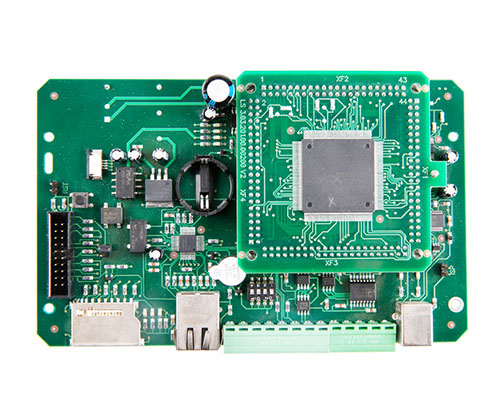
Because irrigation controllers are often installed outdoors, PCB design must consider environmental and electrical challenges.
3.1 High Reliability Outdoor Design
Outdoor electronic systems may face:
- Humidity
- Temperature changes
- Dust
- Water exposure
PCB protection methods include:
- Conformal coating
- Waterproof enclosure design
- Corrosion-resistant surface finishes
These measures improve:
- Product lifetime
- Environmental resistance
- Operational stability
3.2 Wireless RF Circuit Design
Wireless communication performance depends heavily on PCB layout.
Important considerations include:
- Antenna placement
- RF trace impedance control
- Ground plane design
- Signal isolation
Poor RF design may result in:
- Reduced communication range
- Signal instability
- Increased power consumption
3.3 Low-Power Circuit Optimization
Many smart irrigation controllers rely on batteries or solar power.
The PCB design should optimize:
- MCU power consumption
- Sleep mode efficiency
- Power conversion efficiency
Design strategies include:
- Short power paths
- Efficient voltage regulation
- Low-power components
3.4 Sensor Signal Integrity
Sensor signals are often low-level analog signals that are sensitive to noise.
PCB design should consider:
- Analog and digital ground separation
- Short sensor signal routing
- Noise filtering circuits
This improves:
- Measurement accuracy
- System response reliability
3.5 Protection Circuit Design
Outdoor irrigation equipment requires protection against electrical disturbances.
Protection designs may include:
- ESD protection
- Surge protection
- Reverse polarity protection
- Overcurrent protection
These features reduce the risk of damage caused by:
- Lightning-induced surges
- Voltage fluctuations
- Incorrect connections
4. PCBA Manufacturing Considerations
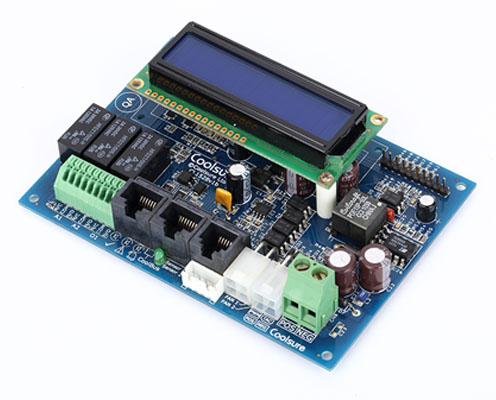
A high-performance irrigation controller PCBA requires careful manufacturing control.
4.1 Component Selection
Components should be selected according to:
- Operating temperature range
- Power consumption
- Reliability requirements
Industrial-grade components are often preferred for outdoor applications.
4.2 PCB Material Selection
Material selection depends on application requirements.
Common options include:
FR-4 PCB
Suitable for:
- Standard control circuits
- General electronic systems
Advantages:
- Cost-effective
- Mature manufacturing process
High-Tg FR-4 PCB
Suitable for:
- Temperature-variable environments
- Higher reliability applications
Advantages:
- Better thermal stability
- Improved mechanical reliability
RF Materials
For wireless communication modules, low-loss materials may be considered.
Advantages:
- Stable dielectric performance
- Improved RF transmission quality
4.3 SMT Assembly Process
Modern smart irrigation PCBAs typically use SMT technology.
Advantages include:
- High component density
- Compact design
- Automated production
- Improved consistency
Important manufacturing controls include:
- Solder paste inspection
- AOI inspection
- X-ray inspection
5. Challenges in Smart Irrigation Controller PCBA Development
5.1 Balancing Performance and Cost
Smart agricultural products often require:
- Reliable performance
- Competitive pricing
Engineers need to optimize:
- Component selection
- PCB structure
- Manufacturing process
5.2 Ensuring Long-Term Outdoor Reliability
Continuous exposure to environmental conditions requires:
- Moisture protection
- Thermal management
- Corrosion resistance
5.3 Maintaining Wireless Stability
Wireless communication can be affected by:
- PCB layout
- Antenna design
- Electromagnetic interference
Proper RF design and testing are essential.
6. Advantages of Using High-Performance PCBA Solutions
A well-designed PCBA provides smart irrigation controllers with:
Improved System Reliability
Stable circuits ensure:
- Accurate sensor readings
- Reliable irrigation control
- Long operating lifetime
Better Energy Efficiency
Optimized power circuits support:
- Battery operation
- Solar-powered systems
- Low-maintenance deployment
Enhanced Intelligent Control
Advanced PCBAs enable:
- Remote management
- Automated decision-making
- Data-driven irrigation strategies
7. Applications of Wireless Smart Irrigation PCBA Technology
Smart irrigation PCBAs are widely applied in:
Agricultural Fields
Applications:
- Crop irrigation management
- Precision farming systems
Greenhouses
Applications:
- Automated watering
- Environmental monitoring
Urban Landscaping
Applications:
- Park irrigation systems
- Smart garden management
Commercial Agriculture
Applications:
- Large-scale water management
Conclusion
The PCBA circuit board is the core control module of a wireless smart irrigation controller, integrating sensing, communication, power management, and actuator control functions.
To achieve reliable performance in outdoor agricultural environments, PCBAs must be designed with consideration for:
- Wireless signal integrity
- Low-power operation
- Environmental protection
- Sensor accuracy
- Manufacturing reliability
Through optimized PCB design and advanced PCBA manufacturing processes, smart irrigation controllers can provide more efficient water management solutions and support the development of intelligent agriculture.
