
What is a PTFE PCB?
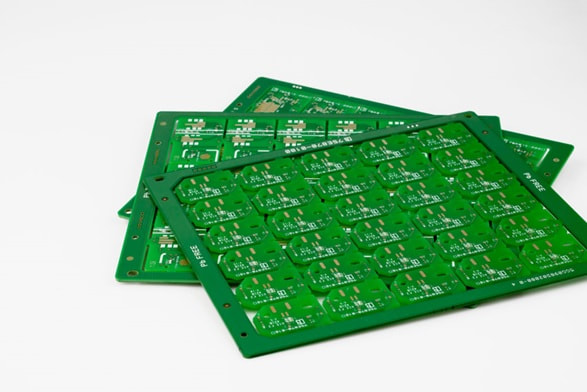
A PTFE PCB is a printed circuit board manufactured using Polytetrafluoroethylene (PTFE)-based materials, commonly known as Teflon. It is specifically designed for high-frequency and high-speed applications, where signal integrity and low loss are critical.
Compared to standard FR4, PTFE PCBs offer extremely low dielectric loss, stable electrical performance, and excellent thermal resistance, making them essential for RF and microwave circuit design.
Key Properties of PTFE PCB
PTFE materials are widely used in RF electronics due to their outstanding electrical characteristics:
1. Low Dielectric Constant (Dk)
Typically ranging from 2.0 to 2.6, ensuring consistent signal propagation and impedance control.
2. Ultra-Low Dissipation Factor (Df)
Minimizes signal loss, especially at high frequencies (>1 GHz).
3. Excellent Thermal Stability
Maintains performance under high operating temperatures and varying environments.
4. High Frequency Stability
Electrical properties remain stable across a wide frequency range.
5. Moisture Resistance
PTFE is highly resistant to humidity, ensuring long-term reliability.
PTFE PCB vs FR4
| Property | PTFE PCB | FR4 PCB |
|---|---|---|
| Dielectric Loss | Very Low | Higher |
| Frequency Range | High (>1 GHz) | Low–Medium |
| Signal Integrity | Excellent | Moderate |
| Cost | High | Low |
Conclusion:
FR4 is suitable for general electronics, while PTFE is required for high-frequency precision applications.
PTFE PCB vs Other RF Materials
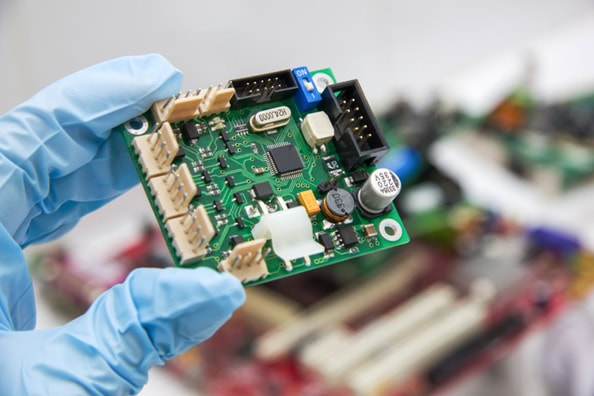
PTFE is often compared with other high-frequency materials:
PTFE vs Rogers Materials
- Similar RF performance
- Rogers offers easier processing
- PTFE can provide better flexibility in certain designs
PTFE vs Ceramic PCB
- PTFE → better for signal transmission
- Ceramic → better for heat dissipation
Applications of PTFE PCB
1. RF and Microwave Circuits
Used in amplifiers, filters, and antennas.
2. 5G Communication Systems
Supports high-frequency signal transmission with minimal loss.
3. Satellite Communication
Ensures stable signal performance over long distances.
4. Radar Systems
Critical for automotive radar and defense applications.
5. High-Speed Digital Circuits
Used in advanced computing and networking equipment.
Manufacturing Challenges
PTFE PCB is not easy to manufacture. Key challenges include:
- Soft material → difficult drilling and handling
- Poor adhesion → requires special surface treatment
- High thermal expansion → needs controlled lamination
- Specialized processing equipment required
When Should You Choose PTFE PCB?
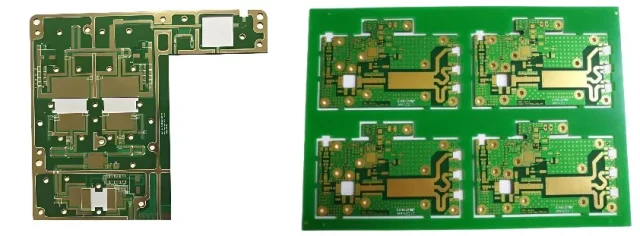
Choose PTFE PCB if your design involves:
- High-frequency signals (>1 GHz)
- Strict signal integrity requirements
- RF or microwave applications
- Low-loss transmission requirements
Avoid it if:
- Your design is cost-sensitive
- No high-frequency requirement
- Standard FR4 meets performance needs
Conclusion
PTFE PCB is a critical material for high-frequency and low-loss electronic applications, offering unmatched signal performance compared to traditional PCB materials.
For industries such as 5G, radar, and RF communication, PTFE remains one of the most reliable solutions when performance is the priority.
