
What Is a Rogers PCB?
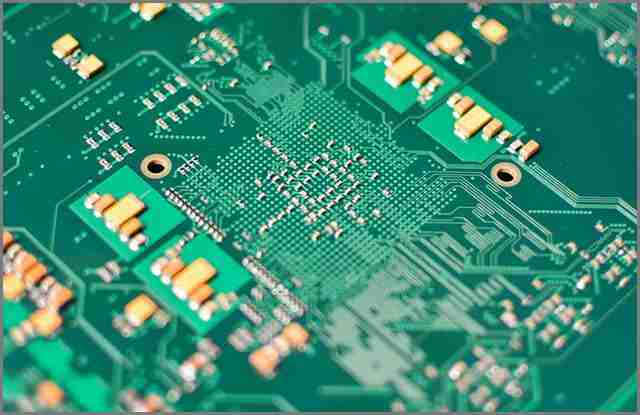
A Rogers PCB is a high-performance RF PCB manufactured using Rogers materials, which are engineered for low loss, stable dielectric properties, and high-frequency performance.
Unlike standard FR-4 boards, Rogers PCB materials are designed to maintain consistent electrical behavior at GHz and mmWave frequencies, making them ideal for RF and microwave applications.
Common Rogers material families used in Rogers PCB design include:
- RO4000 series (hydrocarbon ceramic)
- RO3000 series (PTFE-based)
- RT/duroid series (ultra-low loss)
In high-frequency systems, choosing a Rogers PCB often determines whether performance targets can be achieved.
Why Rogers PCB Materials Matter
The key advantage of a Rogers PCB lies in its material properties. Compared to standard FR-4, Rogers PCB materials offer:
- Low Dissipation Factor (Df):
Reduces signal loss in RF PCB applications - Stable Dielectric Constant (Dk):
Maintains impedance consistency across frequency and temperature - Low Signal Attenuation:
Critical for high-speed and RF trace performance - Excellent Thermal Stability:
Supports high-power RF and microwave designs - Low Moisture Absorption:
Ensures reliability in harsh environments
These characteristics make Rogers PCB the preferred choice for high-frequency and high-speed PCB design.
Rogers PCB vs FR-4: Key Differences
Understanding the difference between Rogers PCB and FR-4 PCB helps in making the right design decision:
| Property | Rogers PCB | FR-4 PCB |
|---|---|---|
| Loss (Df) | Very Low | Moderate to High |
| Dk Stability | High | Varies with frequency |
| Frequency Range | GHz to mmWave | Low to mid-frequency |
| Cost | Higher | Lower |
| Application | RF, 5G, radar | General electronics |
Key Insight:FR-4 is cost-effective, but Rogers PCB is performance-critical.
RF Design Considerations for Rogers PCBs
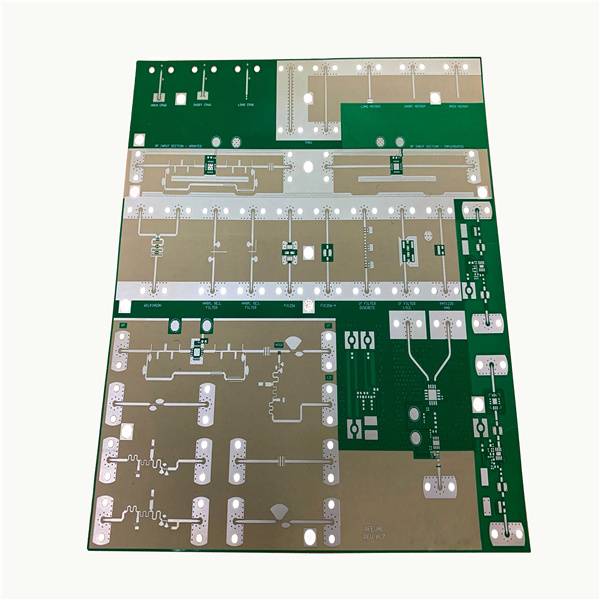
Using Rogers PCB materials requires proper RF design practices to fully realize their benefits:
1. Controlled Impedance Routing
Rogers PCB enables precise impedance control for RF traces and high-speed signals
2. Optimized Stack-Up Design
- Combine Rogers layers with FR-4 (hybrid stack-up)
- Balance cost and performance
3. Minimized Signal Loss
- Short RF trace routing
- Reduced via usage
4. Thermal Management
Rogers PCB materials support better heat dissipation in high-power RF systems
5. Surface Roughness Control
Use smooth copper to maximize low-loss performance
A Rogers PCB must be designed correctly—material alone does not guarantee performance.
When Should You Use a Rogers PCB?
A Rogers PCB is essential when performance requirements exceed FR-4 capabilities:
Use Rogers PCB when:
- Designing RF and microwave circuits
- Working with frequencies above 1 GHz
- Developing 5G and mmWave systems
- Building radar and satellite communication systems
- Requiring low-loss signal transmission
Avoid using Rogers PCB when:
- Frequency is low and loss is not critical
- Budget constraints are strict
- Standard FR-4 meets performance requirements
Smart engineering = use Rogers PCB only where it adds real value.
Cost Optimization: Hybrid Rogers PCB
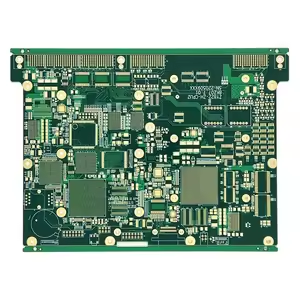
One of the most effective strategies is using a hybrid Rogers PCB stack-up:
- Rogers material for RF signal layers
- FR-4 for power and non-critical routing layers
Benefits:
- Reduced overall cost
- Maintained RF performance
- Improved manufacturability
This approach is widely used in commercial RF PCB designs.
Common Mistakes in Rogers PCB Design
Avoid these common errors when designing a Rogers PCB:
- Treating Rogers PCB like standard FR-4
- Ignoring impedance control in RF traces
- Overusing Rogers material across all layers
- Poor stack-up planning
- Not considering manufacturing constraints
These mistakes can eliminate the performance advantage of Rogers PCB.
Final Thoughts
Rogers PCBs are essential for modern high-frequency and RF PCB applications, providing low loss, stable electrical properties, and reliable performance.
However, successful Rogers PCB design depends on:
- Proper material selection
- Optimized RF trace design
- Balanced stack-up strategy
- Cost-performance trade-offs
At KKPCB, we provide Rogers PCB manufacturing and design support, helping customers achieve high-frequency performance with optimized cost and reliability.
