
What Is a Ceramic PCB?
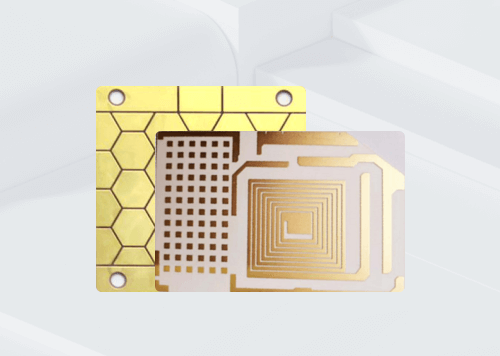
A Ceramic PCB is a printed circuit board built on a ceramic substrate rather than traditional epoxy glass (FR4). Ceramic materials provide exceptional thermal conductivity, high dielectric strength, and outstanding dimensional stability.
Unlike conventional PCBs that rely on thermal vias or heavy copper to manage heat, ceramic PCB transfers heat directly through the substrate, making it highly effective for high-power and high-temperature applications.
Why Ceramic PCB Is Critical in High-Power Designs
As electronic systems increase in power density, thermal management becomes a limiting factor. Excessive heat leads to:
-
Reduced component lifespan
-
Performance instability
-
Thermal stress and cracking
-
Reliability failures
Ceramic substrates address these risks through superior heat conduction and structural stability.
Common Types of Ceramic Substrates
1. Alumina (Al₂O₃)
-
Cost-effective
-
Good electrical insulation
-
Moderate thermal conductivity
-
Widely used in LED modules and power control boards
2. Aluminum Nitride (AlN)
-
Very high thermal conductivity
-
Low coefficient of thermal expansion (CTE) close to silicon
-
Ideal for high-power semiconductor modules
3. Silicon Nitride (Si₃N₄)
-
High mechanical strength
-
Excellent thermal shock resistance
-
Suitable for automotive and high-reliability environments
Material selection depends on power level, operating temperature, and reliability requirements.
Key Advantages of Ceramic PCB
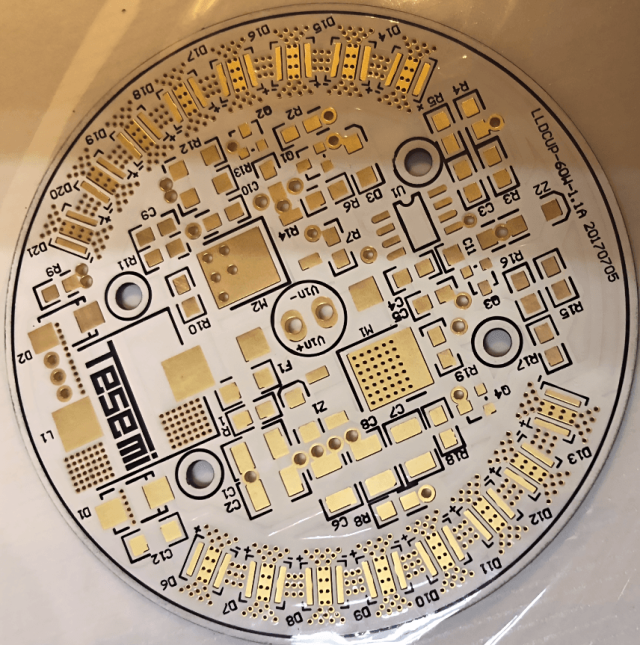
1. Superior Thermal Conductivity
Ceramic substrates can conduct heat several times more efficiently than FR4. This reduces junction temperature and improves long-term reliability in power modules.
2. Low Thermal Expansion
The CTE of ceramic materials is closer to semiconductor devices such as SiC and GaN, reducing mechanical stress during thermal cycling.
3. High Dielectric Strength
Ceramic PCB offers excellent electrical insulation, making it suitable for high-voltage systems and power electronics.
4. High Temperature Resistance
Ceramic substrates can operate at significantly higher temperatures compared to standard epoxy-based boards.
Manufacturing Technologies
Ceramic PCB fabrication may involve:
-
Direct Bonded Copper (DBC)
-
Active Metal Brazing (AMB)
-
Thick-film metallization
-
Thin-film deposition
-
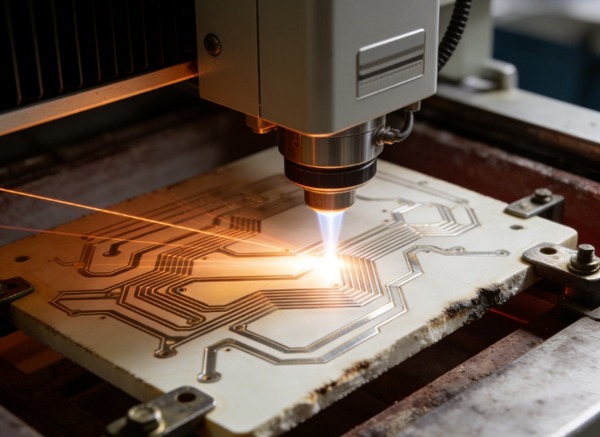
Laser processing
These processes ensure strong copper bonding and stable electrical performance.
Applications of Ceramic PCB
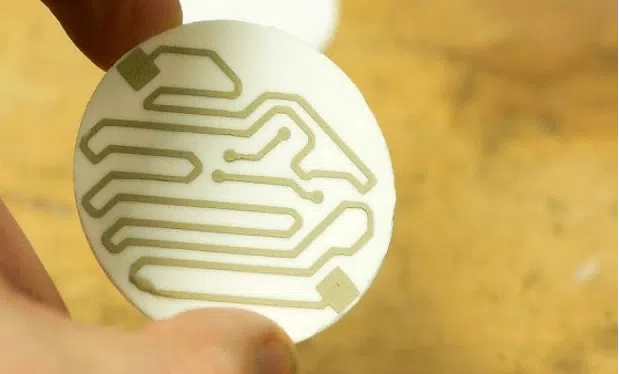
Ceramic PCBs are widely used in:
-
SiC and GaN power modules
-
IGBT modules
-
Automotive inverters
-
Motor drive systems
-
LED high-power lighting
-
Aerospace control electronics
-
Industrial power supplies
As power electronics move toward higher voltage and higher switching frequencies, ceramic substrates become increasingly important.
Ceramic PCB vs FR4 PCB
| Feature | FR4 PCB | Ceramic PCB |
|---|---|---|
| Thermal Conductivity | Low | High |
| Power Density Handling | Moderate | High |
| Temperature Resistance | Limited | Excellent |
| Mechanical Stability | Standard | Superior |
| Cost | Lower | Higher |
Ceramic PCB is typically chosen when thermal and reliability requirements outweigh cost considerations.
Conclusion
Ceramic PCB technology provides exceptional thermal performance, structural stability, and electrical insulation for high-power and high-reliability applications. As power densities continue to increase in automotive, industrial, and aerospace systems, ceramic substrates play a crucial role in ensuring safe and stable operation.
For advanced semiconductor modules and demanding thermal environments, ceramic PCB remains a key platform for efficient heat management and long-term durability.
