
Millimeter-wave (mmWave) systems operate at extremely high frequencies where dielectric stability, insertion loss, and impedance accuracy directly affect system performance. Selecting the right PCB material is critical. Taconic RF-35 PCB for mmWave applications is widely used in high-frequency RF designs due to its low loss characteristics, excellent mechanical stability, and manufacturing reliability.
Taconic RF-35 provides a balanced solution for mmWave systems requiring both performance and cost efficiency.
What Is Taconic RF-35 PCB?

Taconic RF-35 PCB is based on a ceramic-filled PTFE composite laminate engineered for RF, microwave, and mmWave applications. It offers stable electrical properties across a wide frequency range.
Key material properties include:
-
Dielectric constant (Dk) ≈ 3.5
-
Low dissipation factor (Df ≈ 0.0018 @ 10 GHz)
-
Excellent thermal and mechanical stability
-
Low moisture absorption
These properties make Taconic RF-35 PCB for mmWave suitable for demanding RF environments.
Why Choose Taconic RF-35 PCB for mmWave Applications?
Low Dielectric Loss at mmWave Frequencies
Taconic RF-35 minimizes signal attenuation, enabling cleaner signal transmission at mmWave bands.
Stable Dielectric Constant
Consistent Dk ensures reliable impedance control and predictable RF performance across operating conditions.
Manufacturing-Friendly PTFE Composite
Compared with pure PTFE materials, RF-35 offers improved dimensional stability and easier processing.
Cost-Performance Balance
Taconic RF-35 provides strong RF performance at a more competitive cost than ultra-low-Dk PTFE options.
Controlled Impedance Design with Taconic RF-35 PCB
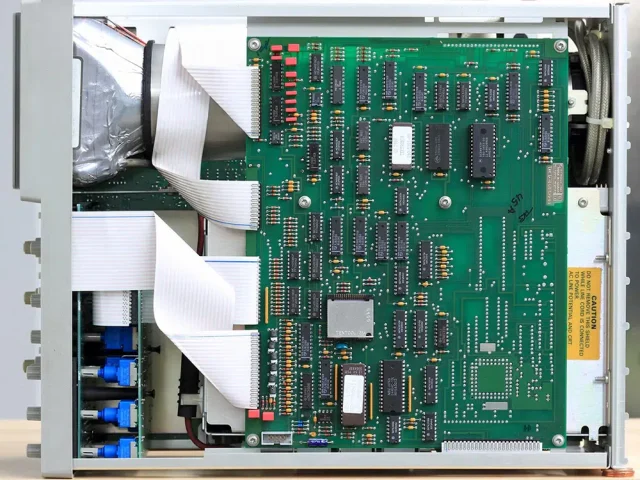
Accurate impedance control is essential for mmWave circuits. Manufacturing Taconic RF-35 PCB for mmWave requires:
-
Stackup simulation and impedance calculation
-
Precise dielectric thickness control
-
Fine-line etching and copper profile optimization
-
Controlled impedance fabrication (±5% or tighter)
-
TDR impedance verification
These steps ensure minimal reflection and optimal signal integrity.
Typical Taconic RF-35 PCB Stackups for mmWave
Common Taconic RF-35 PCB stackup options include:
-
2-layer RF signal and ground plane designs
-
Multilayer mmWave PCBs with dedicated RF layers
-
Hybrid stackups combining RF-35 with FR-4 or other RF materials
Hybrid stackups help balance performance, cost, and mechanical requirements.
Manufacturing Considerations for Taconic RF-35 mmWave PCBs

A professional mmWave PCB manufacturer must control:
-
Fine line width and spacing for high-frequency traces
-
Copper surface roughness to reduce conductor loss
-
Drilling and via plating for PTFE-based materials
-
Lamination pressure and temperature stability
These factors directly affect mmWave signal quality.
Applications of Taconic RF-35 PCB in mmWave Systems
Taconic RF-35 PCB for mmWave is widely used in:
-
5G mmWave communication modules
-
mmWave antennas and RF front-end modules
-
Automotive radar systems
-
High-frequency wireless backhaul
-
IoT and industrial sensing applications
These applications demand low loss and high reliability.
Choosing a Manufacturer for Taconic RF-35 PCB for mmWave
When selecting a supplier for Taconic RF-35 PCB for mmWave, consider:
-
Experience with Taconic RF materials
-
mmWave PCB fabrication and testing capability
-
Controlled impedance manufacturing expertise
-
Prototype-to-mass-production scalability
An experienced manufacturer ensures stable performance and production consistency.
Conclusion
Taconic RF-35 PCB for mmWave applications offers an excellent balance of low loss, stable dielectric properties, and manufacturability. With precise impedance control and RF-focused fabrication processes, Taconic RF-35 PCBs support reliable mmWave system performance across a wide range of applications.
Partnering with a professional high-frequency PCB manufacturer ensures your Taconic RF-35 mmWave designs meet both performance and production requirements.
