
What is a Taconic PCB?
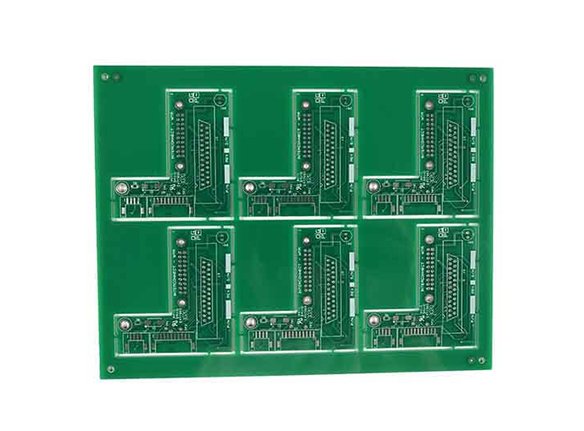
A Taconic PCB is a printed circuit board made using Taconic high-frequency laminates, engineered for minimal signal loss, stable dielectric constant (Dk), and superior thermal performance in RF, microwave, and high-speed digital applications.
Taconic materials, such as TLY, RF-35, and CER-10 series, are widely used where conventional FR-4 or standard laminates fail to maintain signal integrity. These laminates are optimized for:
-
Low dissipation factor (Df) to reduce signal attenuation
-
Stable dielectric constant over temperature and frequency
-
High thermal stability for reliable operation in harsh environments
Taconic PCBs are ideal for wireless communication, satellite systems, radar modules, and high-frequency measurement equipment.
Taconic PCB Design
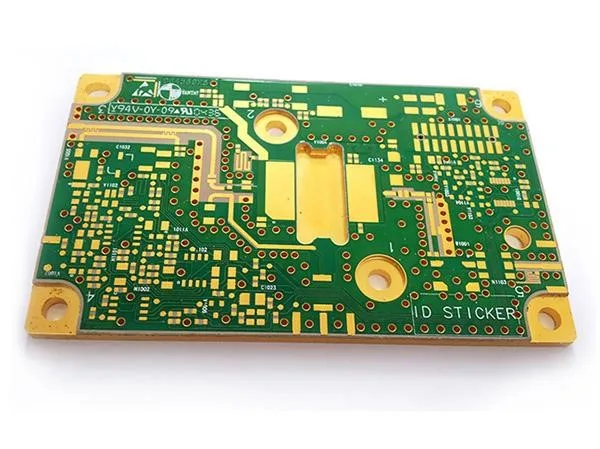
Designing Taconic PCBs requires careful consideration of high-frequency behavior, thermal performance, and mechanical stability:
-
Controlled Impedance Traces:
Maintaining precise impedance is critical for high-frequency applications. Taconic laminates allow engineers to design microstrip, stripline, and coplanar waveguides with predictable performance. -
Minimizing Signal Loss:
The low Df of Taconic materials reduces dielectric and conductor losses. Designers optimize trace geometry, via placement, and layer transitions to maintain signal integrity at GHz frequencies. -
Thermal Management:
High-speed circuits can generate significant heat. Taconic PCBs leverage their thermal stability and, when combined with thermal vias and copper pours, dissipate heat effectively to prevent hotspots. -
Layer Stack-Up Planning:
Multilayer stack-ups are carefully designed to separate RF signals, power planes, and grounding layers. Proper stack-up reduces crosstalk, electromagnetic interference (EMI), and maintains high-frequency performance. -
Material Selection:
Different Taconic laminates are chosen depending on frequency range, loss requirements, and environmental conditions. For example, TLY-5 is suitable for mmWave designs, while CER-10 offers mechanical robustness with low loss.
Manufacturing Considerations and QA

Fabricating Taconic PCBs requires specialized processes due to the material’s properties:
-
Precision Drilling and Plating: Laser or mechanical drilling ensures high-quality vias without cracking the substrate.
-
Controlled Lamination: Accurate temperature and pressure control preserves layer alignment and dielectric properties.
-
Surface Finishes: ENIG, hard-gold, or immersion silver finishes optimize solderability and RF performance.
-
Inspection and Testing:
-
Impedance verification ensures traces meet design specifications
-
Vector Network Analysis (VNA) measures return loss and insertion loss
-
AOI and X-ray inspections validate multilayer and via integrity
-
KKPCB uses these processes to consistently produce Taconic PCBs with reliable performance for demanding RF and microwave applications.
Applications of Taconic PCBs
Taconic PCBs are essential in high-frequency, high-performance electronics:
-
5G and Wireless Communication: Antennas, RF front-end modules, and base stations
-
Radar and Aerospace Electronics: Satellite transceivers and defense radar systems
-
High-Speed Networking: GHz-level routers, switches, and transmission systems
-
Test & Measurement Equipment: RF diagnostic and high-frequency instrumentation
-
Microwave Amplifiers and Filters: Maintaining low-loss signal paths for critical circuits
By combining advanced Taconic laminates, precise layout, thermal optimization, and stringent QA, KKPCB delivers high-performance Taconic PCBs capable of stable operation in RF, microwave, and high-speed digital systems.
