
Rogers PCB: High-Frequency PCB Materials for RF and Microwave Applications
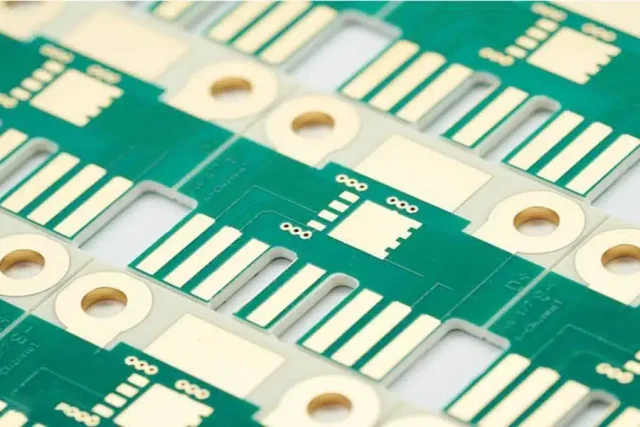
As wireless communication, radar systems, and high-frequency electronics continue to advance, traditional PCB materials such as standard FR-4 often struggle to meet performance requirements. Rogers PCB materials are specifically engineered to deliver superior electrical performance, low dielectric loss, and stable signal transmission at high frequencies.
Manufactured by Rogers Corporation, Rogers laminates are widely used in RF PCB design, microwave circuits, and high-frequency communication systems where signal integrity and low loss are critical.
What Is a Rogers PCB?
A Rogers PCB is a printed circuit board manufactured using Rogers high-frequency laminate materials instead of standard FR-4 substrates. These advanced laminates are designed to provide consistent dielectric properties, excellent thermal stability, and minimal signal loss at high frequencies.
Common Rogers PCB material families include:
-
RO4000 Series – cost-effective high-frequency laminates
-
RO3000 Series – PTFE-based materials for microwave applications
-
RT/duroid Series – ultra-low loss materials for aerospace and defense systems
-
RO4350B – one of the most widely used RF PCB materials
These materials enable engineers to design reliable high-frequency PCBs for demanding RF and microwave applications.
Key Advantages of Rogers PCB
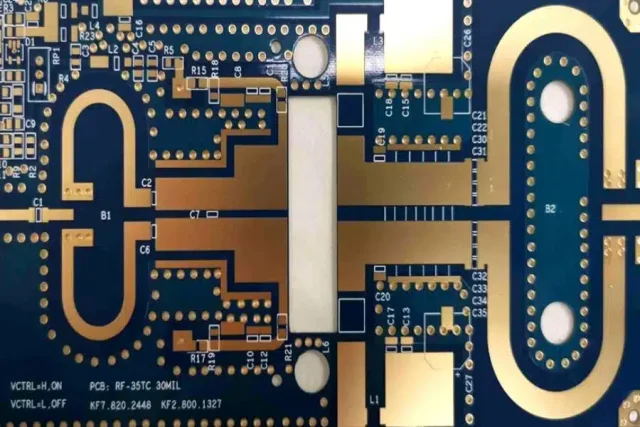
1. Low Dielectric Loss
Rogers PCB materials have a very low dissipation factor (Df), reducing signal attenuation in high-frequency circuits and improving transmission efficiency.
2. Stable Dielectric Constant
The dielectric constant (Dk) of Rogers laminates remains stable across a wide frequency and temperature range, ensuring accurate impedance control and predictable RF performance.
3. Excellent Thermal Stability
Rogers materials offer superior thermal performance compared to traditional PCB substrates, making them suitable for high-power RF circuits.
4. Improved Signal Integrity
Low signal loss and consistent electrical properties make Rogers PCBs ideal for applications requiring precise signal integrity and minimal distortion.
5. Compatibility with Multilayer PCB Designs
Rogers materials can be combined with FR-4 cores in hybrid multilayer PCB stackups, allowing cost-effective manufacturing while maintaining high-frequency performance.
Rogers PCB Stackup Design Considerations
Designing a Rogers PCB stackup requires careful attention to several key factors:
-
Controlled impedance trace design
-
Proper dielectric thickness selection
-
Copper foil surface roughness control
-
Hybrid stackup strategies combining Rogers and FR-4 materials
-
Accurate RF grounding and shielding design
These considerations help maximize the electrical performance of Rogers PCB materials while ensuring reliable manufacturing.
Applications of Rogers PCB
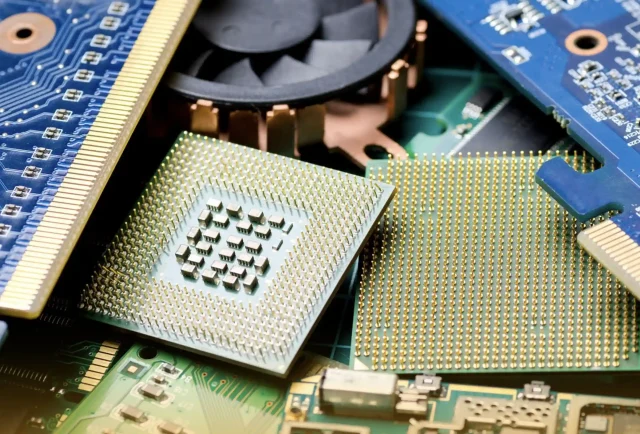
Due to their excellent electrical characteristics, Rogers PCBs are widely used in many high-frequency and RF applications, including:
-
5G communication infrastructure
-
Radar and aerospace systems
-
Satellite communication equipment
-
RF antennas and power amplifiers
-
Automotive radar (ADAS systems)
-
Wireless networking devices
In these systems, Rogers PCB technology ensures stable signal transmission and minimal energy loss at high frequencies.
Rogers PCB vs FR-4 PCB
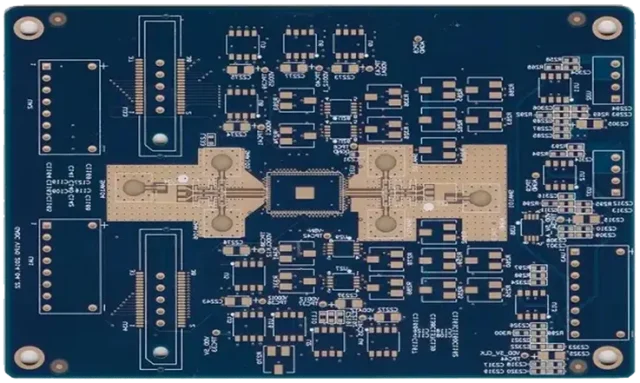
Compared with standard FR-4 materials, Rogers PCB laminates provide several advantages for RF and microwave circuits:
-
Lower signal transmission loss
-
More stable dielectric constant
-
Better high-frequency performance
-
Improved impedance control
However, Rogers materials typically have higher material costs, so they are often used selectively in high-frequency layers or hybrid PCB designs.
Conclusion
Rogers PCB technology plays a crucial role in modern RF and microwave electronics. With low dielectric loss, stable electrical properties, and excellent thermal performance, Rogers materials enable engineers to design high-frequency PCBs that meet the demanding requirements of wireless communication, radar systems, and advanced networking equipment.
As high-frequency technologies continue to evolve, Rogers PCB materials will remain a key foundation for reliable RF and microwave circuit design.
