
In the era of Industry 4.0, industrial automation systems rely heavily on high-performance printed circuit boards (PCBs) to enable intelligent control, real-time data processing, and reliable system operation. As the backbone of modern control systems, industrial automation PCBs must deliver exceptional reliability, durability, and electrical stability.
From programmable logic controllers (PLCs) to robotics and smart manufacturing equipment, PCBs for industrial automation are critical to ensuring efficient and uninterrupted operation.
The Role of PCBs in Industrial Control Systems
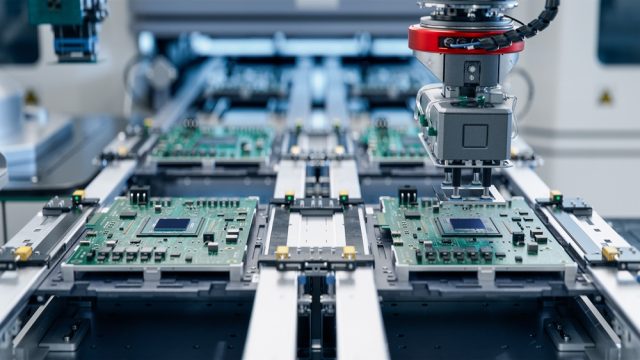
In industrial control systems, PCBs serve as the central platform for:
- Signal processing and communication
- Power distribution and control
- Sensor integration and data acquisition
- System monitoring and feedback
A well-designed industrial PCB ensures seamless coordination between hardware and software components.
Key Requirements for Industrial Automation PCBs
1. High Reliability in Harsh Environments
Industrial automation PCBs must operate reliably under:
- High temperatures
- Humidity and dust
- Mechanical vibration
Robust PCB design and manufacturing ensure long-term stability.
2. Strong Electrical Performance
Stable signal integrity and power integrity are essential for precise control.
- Noise reduction
- Stable signal transmission
- Efficient power distribution
3. Thermal Management Capability
Industrial systems often involve high power loads, requiring effective thermal management:
- Heat dissipation through copper planes
- Use of thermal vias
- High-performance materials
4. Mechanical Strength and Durability
Industrial PCBs must withstand mechanical stress:
- Reinforced board structures
- Thick substrates
- Secure component mounting
Types of PCBs Used in Industrial Automation
1. Multilayer PCBs
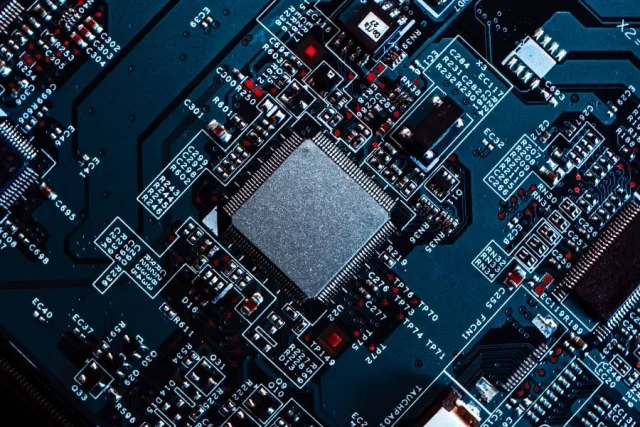
Multilayer PCBs are widely used for complex industrial control systems due to:
- High routing density
- Improved signal integrity
- Better EMI control
2. Metal Core PCBs (MCPCB)
Used in high-power applications for enhanced thermal performance.
3. High-Tg PCBs
Designed to withstand high temperatures and harsh environments.
4. Flexible and Rigid-Flex PCBs
Used in compact or dynamic systems requiring flexibility and space optimization.
Design Considerations for Industrial Automation PCBs
1. Robust PCB Layout Design
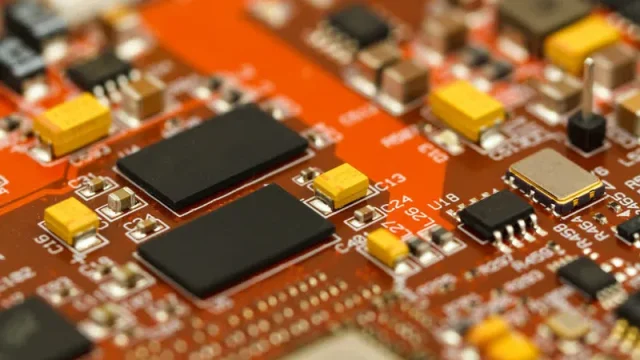
A reliable PCB layout is essential:
- Clear separation of power and signal circuits
- Proper grounding and shielding
- Optimized component placement
2. EMI/EMC Control
Industrial environments require strong EMI suppression:
- Ground planes
- Shielding techniques
- Controlled routing
3. Power Distribution Optimization
Stable power delivery networks (PDN) ensure:
- Low noise
- Consistent voltage supply
- Reliable system performance
4. Design for Manufacturability (DFM)
Applying DFM principles ensures:
- Efficient production
- Reduced defects
- Cost-effective manufacturing
Manufacturing and Quality Control
High-quality industrial PCB production involves:
- Precision PCB fabrication processes
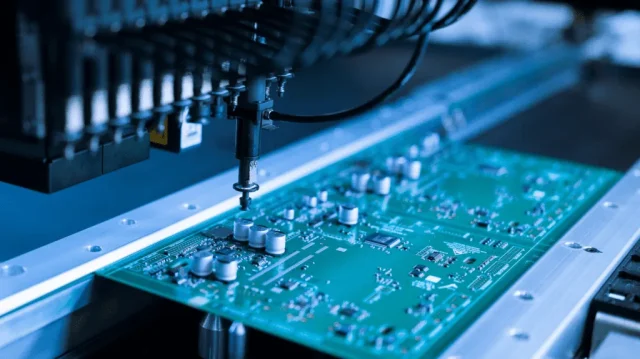
- Advanced SMT and through-hole assembly
- Comprehensive inspection and testing (AOI, X-ray, E-test)
Strict quality control ensures reliability in demanding environments.
Applications in Industrial Automation
PCBs for industrial automation are widely used in:
- Programmable Logic Controllers (PLC systems)
- Robotics and motion control systems
- Industrial sensors and monitoring systems
- Factory automation equipment
- Power control and distribution systems
These applications depend on reliable industrial PCB solutions.
Advantages of High-Quality Industrial PCBs
- Long-term reliability and durability
- Stable electrical performance
- Resistance to harsh environments
- Reduced maintenance and downtime
- Improved system efficiency
Conclusion: Building the Foundation of Smart Industry
PCBs for industrial automation are the foundation of modern control systems, enabling intelligent, efficient, and reliable industrial operations. By focusing on robust PCB design, high-quality materials, and precise manufacturing processes, engineers can develop industrial PCB solutions that meet the demanding requirements of modern automation systems.
As smart manufacturing continues to evolve, the importance of high-performance industrial automation PCBs will only continue to grow.
