
With the continuous development of industrial automation, intelligent manufacturing, and connected control systems, industrial equipment increasingly requires stable and reliable power management solutions.
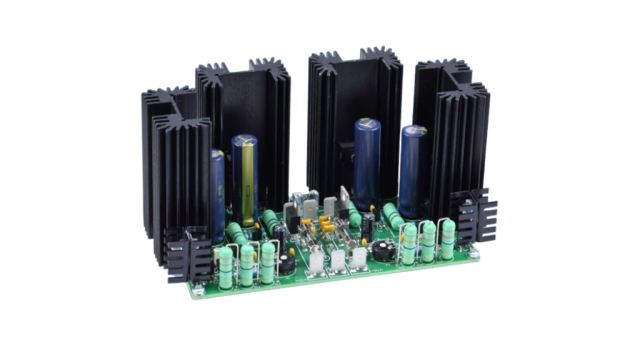
A voltage regulator module is a critical component in industrial automation systems, responsible for converting unstable input power into regulated voltage supplies for sensitive electronic circuits.
Unlike consumer electronics, industrial voltage regulator PCBAs must operate under demanding conditions, including:
- Long-term continuous operation
- Wide input voltage variations
- Electrical noise environments
- Temperature fluctuations
- High reliability requirements
The PCBA (Printed Circuit Board Assembly) serves as the foundation for integrating:
- DC/DC conversion circuits
- Voltage monitoring circuits
- Protection functions
- Control ICs
- Communication interfaces
This case study presents how KKPCB supported an industrial automation voltage regulator project through customized PCBA design and manufacturing optimization, improving power stability, thermal performance, and production reliability.
1. Project Background
A customer developing an industrial automation control system required a customized voltage regulator PCBA to provide stable power for:
- Industrial controllers
- Sensors
- Communication modules
- Embedded control units
The voltage regulator needed to convert fluctuating industrial power inputs into stable output voltages for different electronic subsystems.
The product requirements included:
- High conversion efficiency
- Stable voltage output
- Compact PCB structure
- Strong protection capability
- Reliable operation in industrial environments
During prototype validation, the customer encountered challenges related to power stability, thermal performance, and manufacturing consistency.
2. Key Challenges in Voltage Regulator PCBA Development
Challenge 1: Stable Voltage Output Under Variable Load Conditions
Customer Pain Point
Industrial automation systems often experience dynamic load changes.
The voltage regulator needed to maintain stable output despite:
- Sudden current changes
- Different operating modes
- External power fluctuations
Potential issues included:
- Output voltage deviation
- Control system instability
- Sensor measurement errors
The PCBA required optimized:
- Feedback routing
- Control loop layout
- Power filtering design
Challenge 2: Power Conversion Efficiency and Heat Management
Customer Pain Point
Voltage regulators generate heat during power conversion.
Efficiency losses from:
- MOSFET switching
- Inductor losses
- Semiconductor conduction losses
may result in:
- Higher operating temperature
- Reduced component lifetime
- Lower system reliability
The PCB design needed to improve:
- Thermal paths
- Copper distribution
- Component placement
Challenge 3: EMI/EMC Control in Industrial Environments
Customer Pain Point
Industrial automation equipment often operates near:
- Motors
- Inverters
- Relays
- High-power switching devices
These sources can introduce electromagnetic interference.
Potential effects included:
- Voltage ripple
- Control signal disturbance
- Communication errors
The PCBA required optimization of:
- Switching loop design
- Grounding strategy
- Filtering circuits
Challenge 4: High Reliability Protection Design
Customer Pain Point
Industrial voltage regulators must continue operating safely under abnormal conditions.
The design required protection against:
- Overvoltage
- Overcurrent
- Short circuit
- Reverse polarity
- Overtemperature
Reliable protection was essential to prevent:
- System shutdown
- Component damage
- Production interruptions
Challenge 5: Compact Integration and Manufacturing Feasibility
Customer Pain Point
The voltage regulator module needed to fit within limited equipment space while maintaining:
- Electrical performance
- Thermal reliability
- Assembly accessibility
Design challenges included:
- Dense component placement
- High-current routing
- Testing accessibility
3. KKPCB Engineering Support and Solutions
3.1 PCB Design Review and DFM Optimization
Before production, KKPCB engineering team conducted a comprehensive review covering:
- Circuit layout
- Component placement
- Manufacturing feasibility
- Testing requirements
Optimization included:
- Improved component arrangement
- Enhanced assembly accessibility
- Added test points
- Reduced production risks
This helped the customer move from prototype validation toward stable production.
3.2 Power Circuit Layout Optimization
For switching power circuits, PCB layout optimization focused on:
Shortening High-Current Loops
The design reduced:
- Current loop area
- Parasitic inductance
- Switching noise
Benefits included:
- Improved efficiency
- Better voltage stability
- Reduced EMI emissions
Optimizing Power and Ground Planes
The engineering team improved:
- Power distribution paths
- Ground return paths
- Signal reference stability
This enhanced:
- Circuit reliability
- Noise immunity
3.3 Thermal Management Improvement
To improve continuous operation capability, KKPCB optimized:
- Heat-generating component placement
- Copper area distribution
- Thermal via structures
- Heat dissipation paths
The improvements helped maintain:
- Lower operating temperature
- Better long-term reliability
- Improved component lifetime
3.4 Feedback Loop and Signal Integrity Optimization
Voltage regulation accuracy depends heavily on feedback signal quality.
The PCB design was optimized through:
- Shorter feedback traces
- Separation from noisy switching nodes
- Improved grounding reference
This helped improve:
- Output voltage accuracy
- Control response
- System stability
3.5 Protection Circuit Enhancement
The PCBA integrated protection optimization including:
- Input surge protection
- Overcurrent detection
- Output voltage monitoring
- Thermal protection
These improvements enhanced:
- Fault response capability
- System safety
- Equipment reliability
3.6 Communication Interface Optimization
For intelligent industrial power systems, communication functions may include:
- RS-485
- CAN bus
- Industrial monitoring interfaces
PCB improvements included:
- Interface protection
- Signal filtering
- Isolation design
This supported reliable communication with industrial controllers.
4. Manufacturing and Quality Control Process
PCB Fabrication
The industrial voltage regulator PCB required strict manufacturing control.
Key considerations included:
- Multilayer PCB structure
- High-Tg FR-4 material
- Copper thickness selection
- Electrical spacing requirements
Manufacturing control focused on:
- Layer alignment
- Copper consistency
- Hole reliability
SMT and THT Assembly
The PCBA combined:
SMT Components
Used for:
- Control ICs
- MOSFET drivers
- Sensing circuits
- Passive components
Through-Hole Components
Used for:
- Power connectors
- Large inductors
- High-current components
Advantages:
- Improved mechanical strength
- Better current handling capability
Inspection and Testing
Quality verification included:
SPI Inspection
Checking:
- Solder paste accuracy
- Printing consistency
AOI Inspection
Detecting:
- Component placement errors
- Solder defects
X-Ray Inspection
Used for:
- Hidden solder joints
- Complex power connections
Functional Testing
Validation included:
- Input voltage range
- Output voltage stability
- Load response
- Protection functions
- Thermal performance
5. PCB Technologies for Industrial Voltage Regulator Applications
5.1 Multilayer PCB
Advantages:
- Better power distribution
- Improved signal isolation
- Higher integration density
Applications:
- Industrial control modules
5.2 Heavy Copper PCB
Advantages:
- Higher current capability
- Improved thermal performance
Applications:
- High-power voltage regulators
5.3 High-Tg PCB
Advantages:
- Better thermal stability
- Improved reliability under temperature cycling
Applications:
- Industrial environments
5.4 Metal Core PCB
Advantages:
- Enhanced heat dissipation
Applications:
- High-power conversion systems
6. Applications of Similar Voltage Regulator PCBAs
Industrial Control Systems
Applications:
- PLC systems
- Automation controllers
- Factory equipment
Robotics Systems
Applications:
- Robot control modules
- Motion controllers
Industrial Sensors
Applications:
- Smart sensor nodes
- Monitoring equipment
Energy Management Systems
Applications:
- Power monitoring equipment
- Battery systems
7. Project Results
Through PCB design optimization and manufacturing support, the voltage regulator PCBA achieved:
- Improved voltage stability
- Enhanced thermal reliability
- Better EMI performance
- Improved production consistency
Validation results included:
- 98%+ first-pass production yield
- Reduced debugging time during production ramp-up
- Improved long-term operational stability
8. Key Engineering Insights
8.1 Voltage Regulator Performance Depends on PCB Layout
A reliable power supply design requires more than selecting suitable power components.
PCB layout directly affects:
- Efficiency
- Noise performance
- Thermal behavior
- Output stability
8.2 Power Electronics Require System-Level Optimization
Industrial voltage regulator PCBAs must balance:
- Electrical performance
- Thermal management
- Protection capability
- Manufacturing feasibility
8.3 Early DFM Review Reduces Production Risks
Prototype success does not always guarantee mass production reliability.
Early engineering review helps identify:
- Assembly challenges
- Testing limitations
- Reliability risks
before production scaling.
Conclusion
Industrial voltage regulator PCBAs are essential components for maintaining reliable operation in modern automation systems.
A successful solution requires comprehensive optimization of:
- Power conversion design
- Voltage regulation accuracy
- Thermal management
- EMI/EMC performance
- Manufacturing reliability
In this project, KKPCB supported the customer through PCB layout optimization, power integrity improvement, thermal design enhancement, protection circuit optimization, and manufacturing process control, helping transform a voltage regulator concept into a stable and production-ready industrial solution.
As industrial equipment continues moving toward higher integration and smarter operation, customized PCBA solutions will remain critical for achieving reliable power management and system performance.
