
Role in Test System
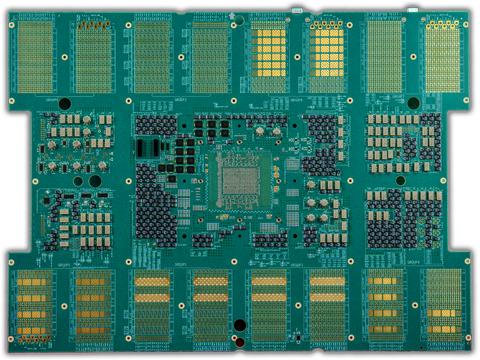
A Load Board PCB serves as the primary electrical interface between Automated Test Equipment (ATE) and the Device Under Test (DUT). While probe cards operate at the wafer level, load boards are typically used in package-level testing, where ICs are already packaged and mounted into sockets.
In a typical test setup, the load board is responsible for:
- Distributing signals from the tester to the DUT
- Providing stable power delivery
- Supporting test sockets and connectors
- Ensuring signal integrity during high-speed testing
This makes the load board not just a passive interconnect, but a performance-critical platform that directly affects test accuracy and throughput.
Design Architecture
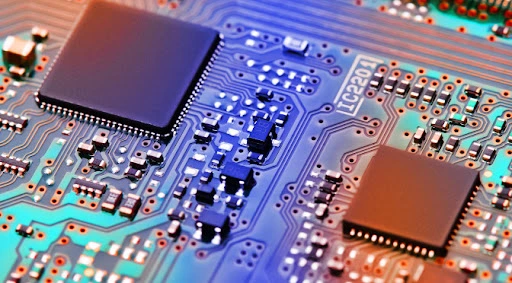
Load board PCB design is driven by both electrical performance and mechanical integration.
Key architectural features include:
- High Layer Count Stack-Ups:
Often 12–24+ layers to support dense signal routing, ground shielding, and power planes. - Socket-Centric Layout:
The design is typically centered around test sockets, requiring precise pad layouts and mechanical reinforcement. - Controlled Impedance Routing:
High-speed interfaces such as DDR, PCIe, or SerDes demand strict impedance control across traces. - Power Distribution Network (PDN):
Low-impedance power delivery is critical to prevent voltage drops during dynamic testing conditions. - Connector Integration:
High-density connectors link the load board to ATE systems, requiring reliable high-speed signal transmission.
This architecture ensures that the load board maintains stable electrical performance under complex test conditions.
Signal & Power Challenges
Load board PCBs must handle some of the most demanding electrical environments:
- High-Speed Signal Integrity:
Multi-gigabit signals require minimal insertion loss, low jitter, and controlled impedance paths. - Crosstalk & EMI Control:
Dense routing and high pin counts increase the risk of interference between adjacent signals. - Power Integrity (PI):
Fluctuations in voltage can lead to inaccurate test results, making PDN design critical. - Thermal Stress:
Continuous testing generates heat, which can affect both electrical performance and mechanical stability. - Repeatability:
Load boards must maintain consistent performance across thousands of test cycles.
These challenges mean that even minor PCB design flaws can result in false failures, reduced yield, or unstable test data.
Manufacturing Reality
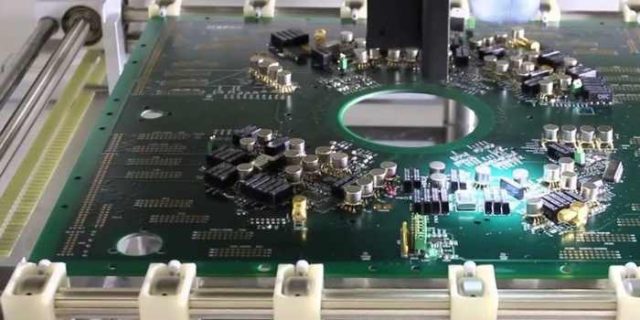
Producing load board PCBs requires advanced fabrication capabilities and strict quality control:
- High Layer Count Lamination:
Precise control is required to maintain flatness and layer alignment in complex stack-ups. - Fine Pitch Routing:
High pin-count devices require tight trace width and spacing tolerances. - Via Technologies:
Blind, buried, and microvias are used to optimize routing density and signal performance. - Surface Finishes:
ENIG or hard gold finishes are commonly used to ensure durability for repeated socket insertions. - Quality Assurance:
- Impedance and continuity testing
- X-ray inspection for via and layer integrity
- Thermal cycling and stress testing
- High-speed validation using TDR and VNA
At KKPCB, we ensure load board PCBs meet both electrical precision and mechanical durability requirements, enabling stable performance in production test environments.
When Should You Use a Load Board PCB?
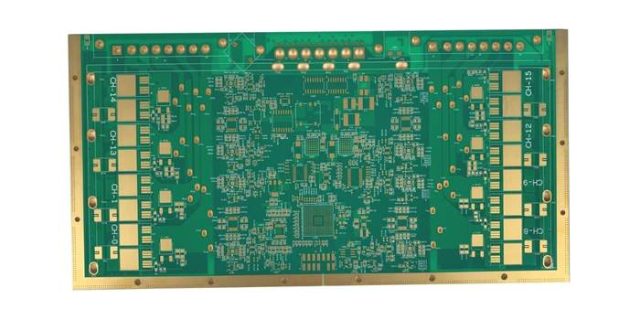
Load board PCBs are essential when testing packaged semiconductor devices under real operating conditions:
- Final Test (FT) in semiconductor production
- IC validation and characterization
- High-speed digital device testing (CPU, GPU, memory)
- RF and mixed-signal IC testing
- Burn-in and reliability testing setups
If your testing environment requires accurate, repeatable, and high-throughput validation, a well-designed load board PCB is critical.
Final Thoughts
Load board PCBs are more than interconnect platforms—they are core components of semiconductor test systems that directly impact measurement accuracy, yield, and production efficiency.
By combining high-layer-count design, optimized signal and power integrity, durable materials, and rigorous QA, KKPCB delivers Load Board PCBs that support reliable, high-performance semiconductor testing at scale.
