
With the increasing demand for intelligent infrastructure, underground monitoring systems, and industrial wireless communication, wireless relay modules have become essential for maintaining reliable signal transmission in challenging environments.
Tunnel applications present unique challenges compared with normal industrial environments. Electronic equipment installed in tunnels may face:
- High humidity
- Dust and contamination
- Temperature fluctuations
- Electromagnetic interference
- Limited maintenance accessibility
- Long-distance communication requirements
A tunnel wireless relay PCB must provide reliable signal forwarding and communication stability while operating continuously under harsh environmental conditions.
The PCBA (Printed Circuit Board Assembly) serves as the core platform integrating:
- Wireless communication circuits
- Signal amplification and relay functions
- Power management circuits
- Protection components
- Communication interfaces
This case study presents how KKPCB supported the development of a tunnel wireless relay PCB solution, addressing challenges related to environmental reliability, signal integrity, power stability, and manufacturing readiness.
1. Project Background
A customer developing a wireless communication system for underground tunnel applications required a customized relay PCB module to extend communication coverage and improve network reliability.
The wireless relay module was designed to receive and retransmit communication signals between distributed devices inside tunnels.
The application requirements included:
- Stable wireless signal transmission
- Long-term unattended operation
- Resistance to harsh environmental conditions
- Compact installation structure
- High reliability under continuous operation
The customer faced several challenges during prototype development, especially regarding RF performance, environmental protection, and production consistency.
2. Key Challenges in Tunnel Wireless Relay PCB Development
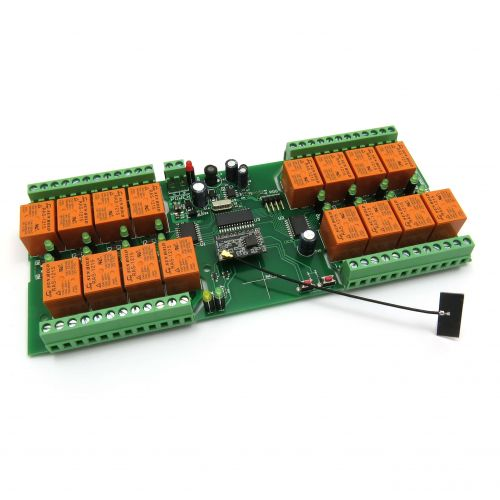
Challenge 1: Reliable Wireless Signal Transmission in Complex Environments
Customer Pain Point
Tunnel environments can significantly affect wireless communication due to:
- Concrete structures
- Metal equipment
- Long transmission distances
- Signal reflection and attenuation
Potential problems included:
- Reduced communication range
- Packet loss
- Signal instability
The PCB design needed to optimize:
- RF signal paths
- Antenna connection
- Grounding structure
- Noise control
Challenge 2: EMI/EMC Interference Control
Customer Pain Point
Industrial tunnels may contain various interference sources:
- Power cables
- Motor equipment
- Control systems
- Electrical switching devices
Electromagnetic interference could affect:
- Wireless communication quality
- Signal processing accuracy
- System stability
The PCBA required improved:
- RF isolation
- Filtering design
- Grounding strategy
- Shielding structure
Challenge 3: Harsh Environmental Reliability
Customer Pain Point
Tunnel equipment may operate under:
- High humidity
- Dust exposure
- Temperature variation
- Long maintenance cycles
The PCB needed to maintain reliability against:
- Moisture corrosion
- Insulation degradation
- Component aging
Design considerations included:
- PCB material selection
- Surface protection
- Component reliability
Challenge 4: Stable Power Supply Under Field Conditions
Customer Pain Point
Wireless relay nodes often require continuous operation.
Power instability may cause:
- Communication interruption
- System reset
- Reduced service reliability
The design required optimization of:
- Power conversion circuits
- Filtering
- Protection functions
Challenge 5: Compact Design and Manufacturing Feasibility
Customer Pain Point
Tunnel installation spaces are often limited.
The relay PCB needed to integrate:
- Wireless module
- Control circuit
- Power management
- Protection circuits
within a compact form factor.
Manufacturing challenges included:
- Component density
- Assembly reliability
- Testing accessibility
3. KKPCB Engineering Support and Solutions
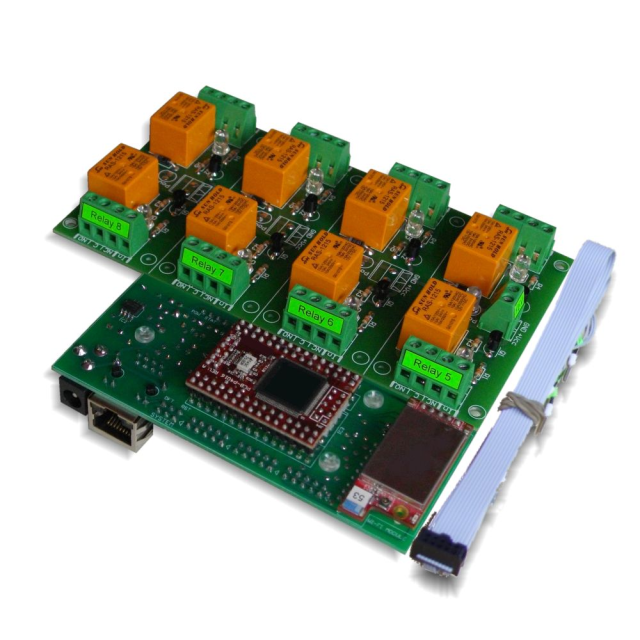
3.1 PCB Design Review and DFM Optimization
Before production, KKPCB engineering team performed a comprehensive review covering:
- PCB layout structure
- Component placement
- RF routing
- Manufacturing feasibility
Optimization included:
- Improved component arrangement
- Enhanced assembly accessibility
- Added test points
- Reduced production risks
This helped the customer achieve a smoother transition from prototype to production.
3.2 RF Signal Integrity Optimization
To improve wireless communication performance, PCB design optimization focused on:
RF Routing Improvement
The engineering team optimized:
- RF trace routing
- Signal path length
- Antenna interface design
This helped reduce:
- Signal loss
- Reflection issues
- Transmission instability
Grounding and Isolation Optimization
Improvements included:
- Better RF return paths
- Separation between RF and digital circuits
- Reduced interference coupling
These measures improved:
- Signal consistency
- Communication reliability
3.3 Power Management Optimization
The relay PCB power section was optimized through:
- Voltage regulation improvement
- Filtering circuit enhancement
- Protection circuit design
The improvements supported:
- Stable wireless operation
- Reduced power fluctuations
- Better system reliability
3.4 Environmental Reliability Enhancement
To improve performance in harsh tunnel environments, KKPCB considered:
PCB Material Selection
Factors included:
- Thermal stability
- Mechanical reliability
- Moisture resistance
Surface Protection
Potential solutions included:
- Protective coating
- Improved solder mask reliability
- Corrosion resistance considerations
Component Reliability
Selection focused on:
- Industrial-grade components
- Long-term operational stability
3.5 Communication Interface Optimization
For integration with industrial monitoring systems, PCB improvements included:
- Interface protection circuits
- Signal filtering
- Communication reliability enhancement
The solution supported stable communication between:
- Wireless relay nodes
- Monitoring terminals
- Control systems
4. Manufacturing and Quality Control Process
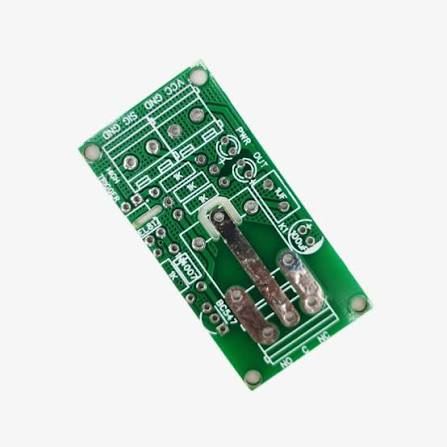
PCB Fabrication
The tunnel wireless relay PCB required strict manufacturing control.
Key considerations included:
- Multilayer PCB structure
- Signal isolation
- Surface finish quality
- Environmental reliability
Manufacturing controls included:
- Layer alignment
- Copper consistency
- Hole reliability
SMT Assembly
The assembly process included:
Solder Paste Printing
Ensuring:
- Accurate solder volume
- Stable fine-pitch assembly
Automated Component Placement
High-precision placement was applied for:
- Communication ICs
- Control components
- Passive devices
Reflow Soldering
Optimized thermal profiles ensured:
- Reliable solder joints
- Reduced component stress
Inspection and Testing
Quality verification included:
SPI Inspection
Checking:
- Solder paste printing accuracy
AOI Inspection
Detecting:
- Missing components
- Placement errors
- Solder defects
RF and Functional Testing
Validation included:
- Wireless transmission performance
- Signal stability
- Power consumption
- Communication reliability
5. PCB Technologies for Tunnel Wireless Relay Applications
5.1 Multilayer PCB
Advantages:
- Better signal separation
- Improved power distribution
- Higher circuit integration
Applications:
- Industrial wireless modules
5.2 High-Tg FR-4 PCB
Advantages:
- Improved thermal stability
- Better reliability under temperature variation
Applications:
- Harsh industrial environments
5.3 RF PCB Design
Advantages:
- Better high-frequency performance
- Reduced signal loss
Applications:
- Wireless relay systems
5.4 Conformal Coating Protection
Advantages:
- Improved moisture resistance
- Enhanced environmental durability
Applications:
- Underground and outdoor electronics
6. Applications of
Solutions
Tunnel Monitoring Systems
Applications:
- Underground communication networks
- Safety monitoring equipment
Industrial IoT Systems
Applications:
- Wireless sensor networks
- Remote monitoring nodes
Mining and Underground Equipment
Applications:
- Equipment communication
- Data transmission systems
Transportation Infrastructure
Applications:
- Railway tunnels
- Highway tunnel monitoring
7. Project Results
Through PCB design optimization and manufacturing support, the tunnel wireless relay PCB achieved:
- Improved wireless communication stability
- Enhanced environmental reliability
- Better power management performance
- Improved production consistency
Validation results included:
- 98%+ first-pass production yield
- Reduced debugging time during system integration
- Improved long-term operation reliability in harsh environments
8. Key Engineering Insights
8.1 Wireless Reliability Depends on PCB-Level RF Design
A stable wireless relay system requires careful optimization of:
- RF routing
- Antenna interface
- Grounding structure
- EMI control
8.2 Harsh Environments Require Additional Reliability Considerations
Industrial PCBAs must consider:
- Moisture protection
- Material reliability
- Component selection
- Long-term durability
8.3 Early DFM Review Improves Production Success
Prototype functionality does not always guarantee reliable mass production.
Early engineering review helps identify:
- Assembly risks
- Testing challenges
- Environmental reliability issues
before scaling production.
Conclusion
Tunnel wireless relay PCB solutions play an important role in maintaining reliable communication networks in harsh industrial environments.
A successful design requires comprehensive optimization of:
- RF signal integrity
- EMI/EMC performance
- Power stability
- Environmental protection
- Manufacturing reliability
In this project, KKPCB supported the customer through PCB design optimization, RF performance improvement, environmental reliability enhancement, and manufacturing process control, helping transform a wireless relay concept into a reliable industrial communication solution.
As infrastructure continues moving toward intelligent monitoring and connected systems, customized PCBA solutions will remain essential for enabling stable communication in challenging environments.
