
What is an Impedance Controlled PCB?
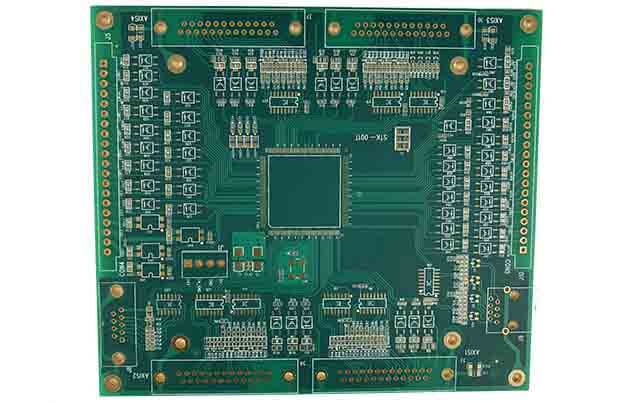
An Impedance Controlled PCB is a printed circuit board designed and manufactured to maintain a specific characteristic impedance for signal traces, ensuring consistent signal transmission.
In high-speed and RF designs, the PCB trace behaves like a transmission line. Without proper impedance control, signals can suffer from reflection, distortion, and loss.
An Impedance Controlled PCB is widely used in:
- High-speed digital systems
- RF and microwave circuits
- 5G communication hardware
- Data center and networking equipment
Why Impedance Controlled PCB is Critical
In modern electronics, signal integrity is a key requirement. An Impedance Controlled PCB helps:
- Minimize signal reflection
- Maintain waveform integrity
- Reduce crosstalk and EMI
- Improve overall system reliability
Characteristic Impedance Basics
Z0=LCZ_0 = \sqrt{\frac{L}{C}}Z0=CL
Where:
- Z0Z_0Z0 = characteristic impedance
- LLL = inductance per unit length
- CCC = capacitance per unit length
Common Impedance Types
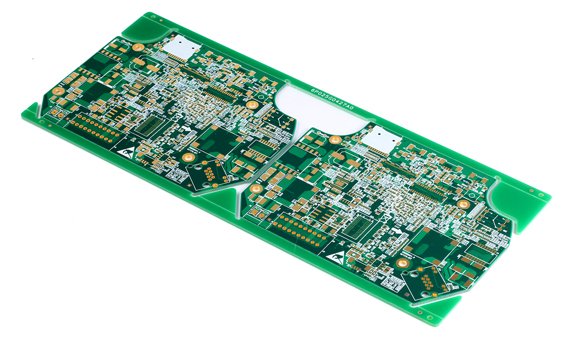
1. Single-Ended Impedance
- Typically 50Ω or 75Ω
- Used in RF and standard signal lines
2. Differential Impedance
- Typically 90Ω or 100Ω
- Used in high-speed interfaces (USB, Ethernet, etc.)
Transmission Line Structures
1. Microstrip
- Outer layer trace with ground plane below
- Easier to manufacture
2. Stripline
- Inner layer trace between two ground planes
- Better shielding and signal stability
3. Coplanar Waveguide (CPW)
- Ground on same layer
- Common in RF PCB designs
Key Factors Affecting Impedance Controlled PCB
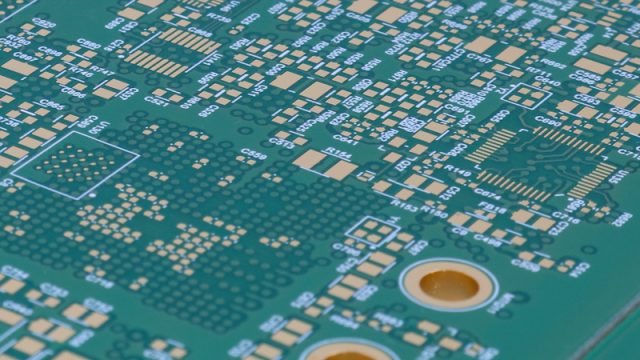
1. Trace Width
Wider trace → lower impedance.
2. Dielectric Thickness
Thicker substrate → higher impedance.
3. Dielectric Constant (Dk)
Higher Dk → lower impedance.
4. Copper Thickness
Affects effective trace geometry.
5. Surface Roughness
Impacts signal loss at high frequencies.
Impedance Relationship (Simplified)
Z0∝hεr⋅wZ_0 \propto \sqrt{\frac{h}{\varepsilon_r \cdot w}}Z0∝εr⋅wh
Applications of Impedance Controlled PCB
1. High-Speed Digital Systems
Servers, routers, and data center hardware.
2. RF & Microwave Circuits
Antennas, amplifiers, and RF modules.
3. 5G Communication
Base stations and high-frequency modules.
4. Automotive Electronics
ADAS and high-speed communication systems.
5. Consumer Electronics
High-speed interfaces in modern devices.
Manufacturing Requirements
Producing an Impedance Controlled PCB requires:
- Accurate stack-up design
- Tight dielectric thickness tolerance
- Precision etching for trace width
- Controlled plating processes
- Impedance testing (TDR)
Common Challenges
- Impedance variation across batches
- Material inconsistency
- Etching deviations
- Stack-up misalignment
How to Ensure Successful Impedance Controlled PCB
1. Define Impedance Requirements Early
Include impedance values in design specifications.
2. Work with Experienced Manufacturer
Ensure process capability matches design requirements.
3. Optimize Stack-Up
Collaborate on layer structure and material selection.
4. Validate with Testing
Use TDR or similar methods for verification.
When Do You Need an Impedance Controlled PCB?
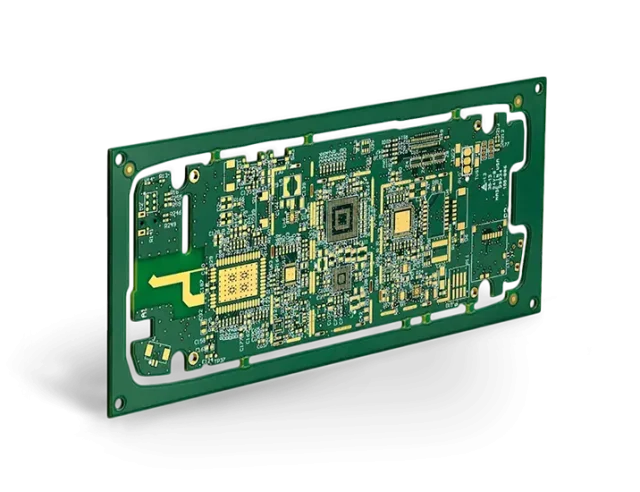
You need an Impedance Controlled PCB when:
- Signal speed is high
- Frequency exceeds 1 GHz
- Signal integrity is critical
- RF or differential signaling is involved
Conclusion
An Impedance Controlled PCB is essential for ensuring signal integrity, performance, and reliability in modern high-speed and RF electronic systems.By combining precise design, material selection, and manufacturing control, impedance-controlled PCBs enable stable and predictable signal behavior.
