
What Is an Aluminum Nitride PCB?
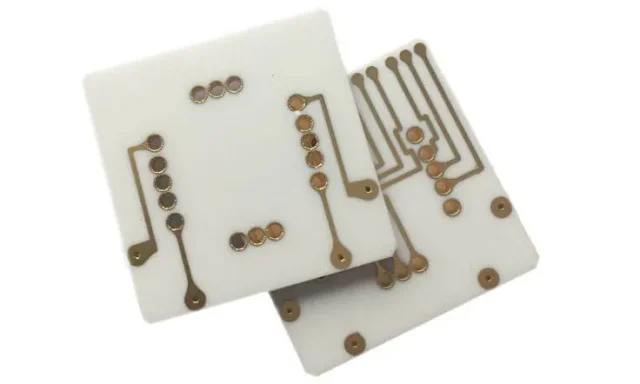
An Aluminum Nitride PCB (AlN PCB) is a ceramic-based printed circuit board manufactured using aluminum nitride substrate material. Aluminum nitride offers exceptionally high thermal conductivity combined with strong electrical insulation, making it ideal for high-power and high-reliability electronic systems.
Compared to standard FR4 or alumina substrates, AlN provides significantly better heat dissipation performance while maintaining mechanical stability and dielectric strength.
Why Aluminum Nitride Is Critical for Modern Power Electronics
As power density increases in modern electronic systems, thermal management becomes a design bottleneck. Excessive heat can lead to:
-
Reduced device efficiency
-
Thermal runaway
-
Premature component failure
-
Reliability degradation
Aluminum nitride addresses these challenges through superior heat spreading capability and stable thermal behavior.
Key Advantages of Aluminum Nitride PCB
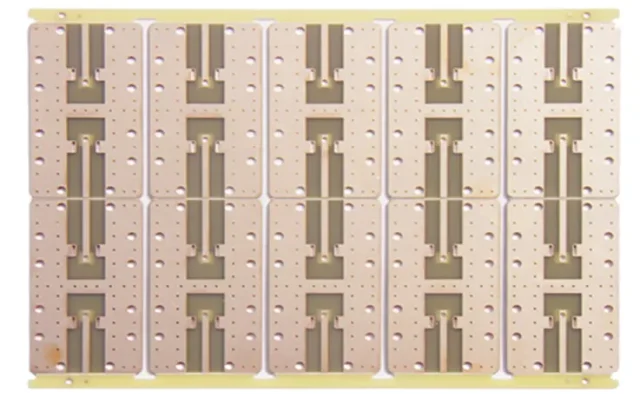
1. Very High Thermal Conductivity
AlN substrates typically offer thermal conductivity in the range of 150–180 W/m·K, significantly higher than:
-
FR4 materials
-
Standard alumina ceramic
This enables rapid heat transfer from power devices to heat sinks.
2. Low Coefficient of Thermal Expansion (CTE)
Aluminum nitride has a CTE close to silicon and SiC devices. This reduces:
-
Thermal stress
-
Delamination risk
-
Solder joint fatigue
-
Cracking during thermal cycling
This makes AlN PCB highly suitable for power semiconductor modules.
3. Excellent Electrical Insulation
Despite high thermal conductivity, AlN maintains strong dielectric strength, enabling safe operation in high-voltage environments.
4. High Temperature Stability
Aluminum nitride can withstand high operating temperatures, making it suitable for automotive, aerospace, and industrial systems.
Manufacturing Technologies
Aluminum Nitride PCBs are commonly produced using:
-
Direct Bonded Copper (DBC)
-
Active Metal Brazing (AMB)
-
Thick-film metallization
-
Thin-film deposition
These technologies ensure strong copper adhesion and stable long-term reliability.
Applications of Aluminum Nitride PCB
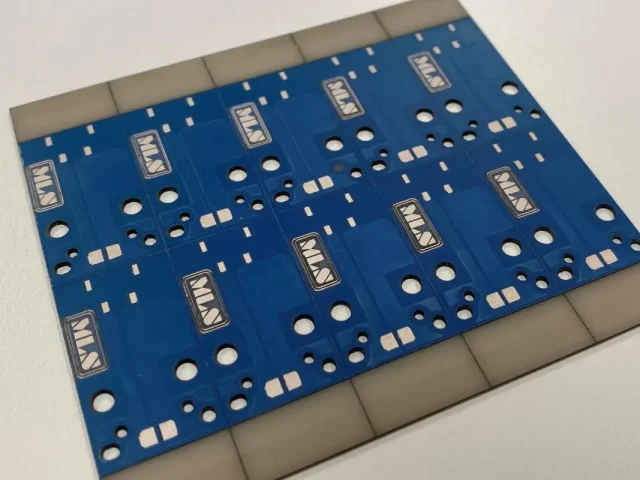
AlN PCBs are widely used in:
-
SiC power modules
-
GaN devices
-
IGBT modules
-
Automotive inverters
-
Motor drive systems
-
Electric vehicle power electronics
-
High-power LED modules
-
Aerospace control systems
As wide bandgap semiconductor devices become more common, the demand for AlN substrates continues to grow.
Aluminum Nitride PCB vs Alumina PCB
| Feature | Alumina PCB | Aluminum Nitride PCB |
|---|---|---|
| Thermal Conductivity | Moderate | Very High |
| CTE Matching to Silicon | Moderate | Excellent |
| Power Handling | Medium | High |
| Cost | Lower | Higher |
| Reliability Under Thermal Cycling | Moderate | Superior |
Aluminum nitride is typically selected for high-power and high-performance semiconductor modules.
Conclusion
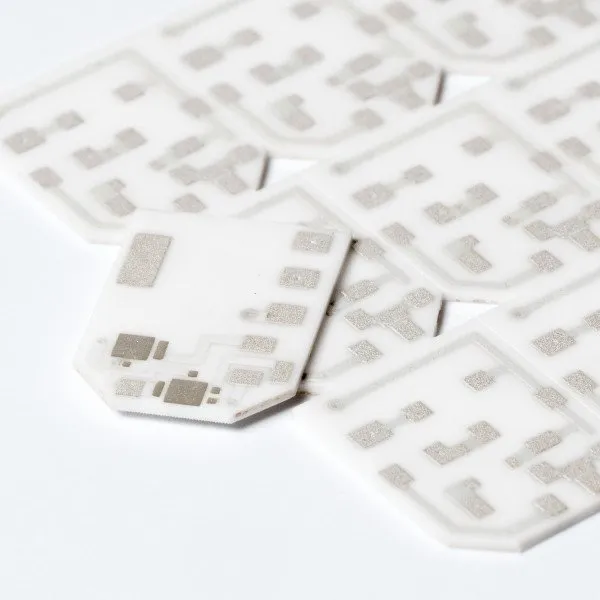
Aluminum Nitride PCB technology provides a powerful solution for advanced power electronics requiring efficient heat dissipation and mechanical stability. With high thermal conductivity and strong dielectric properties, AlN substrates support the increasing demands of SiC, GaN, and high-voltage power systems.
For high-power density applications where thermal management is critical, Aluminum Nitride PCB remains one of the most effective substrate solutions available.
