
What Is an Alumina PCB?
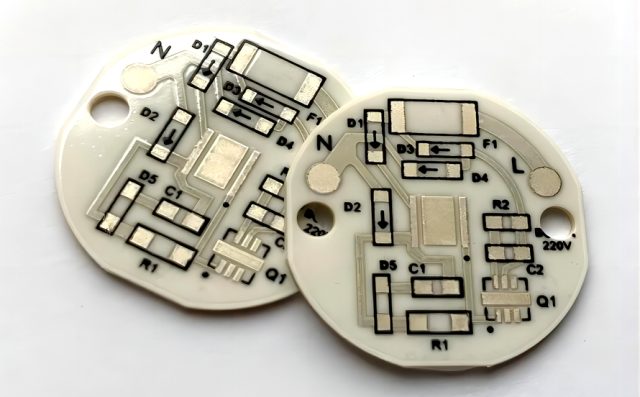
An Alumina PCB is a printed circuit board that uses aluminum oxide (Al₂O₃) ceramic as the substrate. Known for its high thermal conductivity, excellent electrical insulation, and mechanical stability, alumina PCB is widely applied in power electronics, high-frequency devices, LED modules, and industrial automation systems.
Compared to traditional FR4 or other PCB materials, alumina PCB provides superior heat dissipation and stability, making it ideal for high-temperature and high-power applications.
Key Advantages of Alumina PCB
1. High Thermal Conductivity
Alumina substrates can efficiently transfer heat from components to the PCB, reducing hotspots and improving the reliability of high-power devices. Typical thermal conductivity ranges from 18 W/m·K to 30 W/m·K, which is significantly higher than standard FR4.
2. Excellent Electrical Insulation
Alumina offers high dielectric strength (10–15 kV/mm), making it suitable for high-voltage and high-frequency applications. This ensures minimal leakage and stable signal performance in sensitive circuits.
3. Mechanical and Thermal Stability
-
High coefficient of thermal expansion (CTE) matching with mounted components
-
Resistance to warping under thermal cycling
-
Stable mechanical structure under vibration
These properties make alumina PCB ideal for industrial, automotive, and aerospace applications.
4. High-Frequency and Low-Loss Performance
Alumina PCB maintains signal integrity in RF, microwave, and high-frequency circuits due to its stable dielectric constant and low loss at high frequencies. It is commonly used in:
-
RF modules
-
Wireless communication devices
-
Satellite and aerospace electronics
5. Power and LED Applications
Alumina PCB is widely applied in power modules, LED lighting, and thermal management systems, where:
-
High current density requires thick copper layers
-
Heat dissipation is critical for efficiency
-
Electrical insulation is required between high-power tracks
Design Considerations
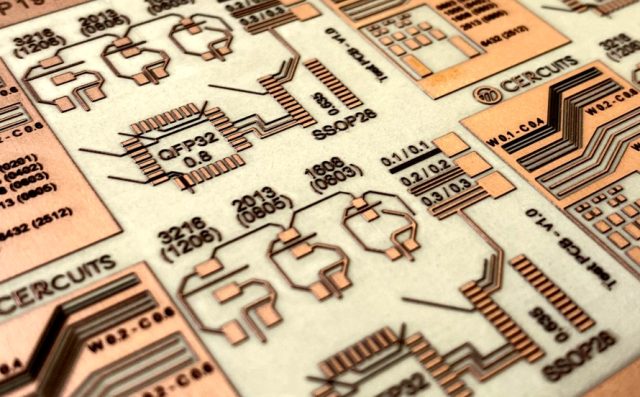
Designing an alumina PCB requires attention to:
-
Copper thickness for high-current paths
-
Substrate thickness for mechanical strength
-
Thermal vias to improve heat spreading
-
Surface finish compatible with soldering or wire bonding
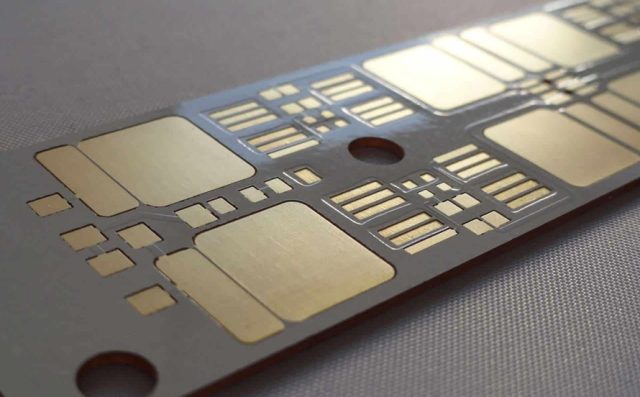
Manufacturing alumina PCB demands precision due to the brittle nature of ceramic substrates.
Applications of Alumina PCB
-
Power electronics modules
-
High-power LED lighting
-
RF and microwave devices
-
Industrial automation controllers
-
Aerospace and satellite electronics
-
Medical devices requiring high thermal stability
Alumina PCB ensures reliable operation in environments where traditional materials may fail.
Alumina PCB vs Standard PCB
| Feature | Standard FR4 PCB | Alumina PCB |
|---|---|---|
| Thermal Conductivity | ~0.3 W/m·K | 18–30 W/m·K |
| Dielectric Strength | Moderate | High |
| High-Frequency Stability | Limited | Excellent |
| Thermal Expansion | Higher | Low, matched to components |
| Mechanical Strength | Standard | High |
| Cost | Low | Higher |
Alumina PCB is chosen when thermal management, electrical insulation, and long-term reliability are critical.
Conclusion
Alumina PCB provides high thermal conductivity, strong electrical insulation, and mechanical stability, making it ideal for industrial, power, and high-frequency applications. By combining precise layout, thick copper paths, and optimized thermal design, alumina PCBs ensure reliable operation under high temperature, high current, and harsh environmental conditions.
For advanced electronics in power, automotive, aerospace, and RF systems, alumina PCB is a premium solution for performance and reliability.
