With the continuous development of industrial automation, intelligent manufacturing, and high-performance robotic systems, industrial robots require increasingly efficient, reliable, and precise power control solutions.
The power electronics system is one of the most critical parts of an industrial robot, directly affecting:
- Motor drive performance
- Motion accuracy
- Energy efficiency
- System reliability
Among various power semiconductor technologies, IGBT (Insulated Gate Bipolar Transistor) remains widely used in industrial motor drives due to its advantages in:
- High voltage capability
- High current handling
- Excellent switching performance
- Strong thermal reliability
However, the performance of an IGBT-based robotic control system depends not only on the semiconductor device itself but also on the surrounding PCB and PCBA design, including:
- Gate driver circuits
- Power distribution
- Thermal management
- Signal integrity
- Electrical isolation
This case study introduces how KKPCB supported an industrial robotics power control project through PCBA design optimization and manufacturing expertise, helping improve system reliability and production readiness.
1. Project Background

A customer developing an industrial robotic control system required a reliable PCBA solution for an IGBT-based motor drive module.
The control system was designed to manage high-power motors used in robotic joints and motion platforms.
The PCBA needed to support:
- IGBT switching control
- Gate drive signal transmission
- Power monitoring
- Protection functions
- Communication with the main controller
The product requirements included:
- High-current operation
- Fast switching response
- Stable thermal performance
- Long-term industrial reliability
During prototype validation, the customer encountered several challenges related to power switching stability, electrical noise, and manufacturing optimization.
2. Key Challenges in IGBT Control PCBA Development
Challenge 1: Gate Drive Signal Stability
Customer Pain Point
The IGBT gate driver circuit directly affects switching performance.
During high-power operation, unstable gate signals could lead to:
- Increased switching losses
- Excessive heat generation
- Reduced efficiency
- Potential device damage
The PCBA needed to optimize:
- Gate drive signal paths
- Return current loops
- Isolation design
Challenge 2: High-Current Power Routing
Customer Pain Point
Industrial robotic systems require high current delivery to motor modules.
PCB design challenges included:
- Current carrying capability
- Voltage drop control
- Copper thickness selection
- Power loop optimization
Poor power routing could result in:
- Excessive heat
- Power loss
- Reduced system efficiency
Challenge 3: Thermal Management
Customer Pain Point
During continuous robotic operation, IGBT modules generate significant heat.
The PCBA needed to effectively manage:
- Switching losses
- Conduction losses
- Heat accumulation
Potential risks included:
- Component temperature rise
- Reduced service life
- System instability
Challenge 4: High Voltage Isolation and Safety
Customer Pain Point
IGBT-based power systems involve high-voltage circuits combined with low-voltage control signals.
The design required reliable isolation between:
- Power stage
- Control circuits
- Communication interfaces
Important considerations included:
- Creepage distance
- Clearance distance
- Isolation components
- PCB stack-up design
Challenge 5: EMI/EMC Control
Customer Pain Point
High-frequency switching operations generate electromagnetic interference.
Potential effects:
- Control signal disturbance
- Communication errors
- Sensor interference
The PCBA required optimization of:
- Grounding strategy
- Signal routing
- Filtering design
- Shielding structures
3. KKPCB Engineering Support and Solutions
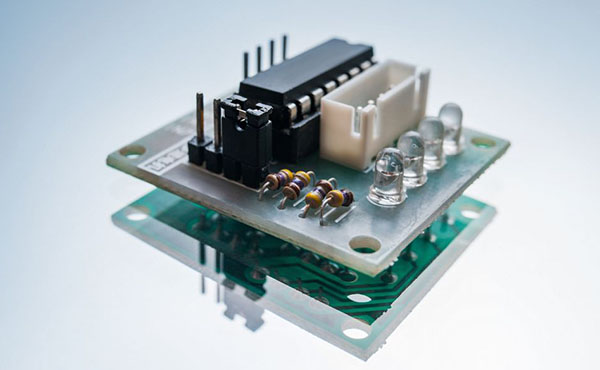
3.1 Power PCB Design Review and DFM Analysis
Before manufacturing, KKPCB engineering team performed a detailed review covering:
- PCB layout structure
- Power routing
- Component placement
- Manufacturing feasibility
The review identified potential risks related to:
- Thermal stress
- Assembly difficulty
- High-current paths
- Testing accessibility
Optimization suggestions helped improve production readiness.
3.2 Gate Driver Circuit Optimization
To improve IGBT switching reliability, the PCBA design was optimized through:
Shorter Gate Drive Loop
The design focused on:
- Reducing parasitic inductance
- Improving switching response
- Minimizing signal distortion
Improved Signal Return Path
Optimization included:
- Better grounding structure
- Reduced noise coupling
- Improved control signal integrity
Enhanced Isolation Design
The solution considered:
- Isolation components
- PCB spacing requirements
- High-voltage safety requirements
3.3 High-Current PCB Layout Optimization
For power distribution, the engineering team optimized:
- Copper thickness
- Power trace width
- Current paths
- Thermal copper areas
The improvements helped achieve:
- Lower voltage drop
- Reduced power loss
- Improved current handling capability
3.4 Thermal Management Improvement
Thermal optimization included:
- Heat-generating component placement
- Copper area enhancement
- Thermal via design
- Improved heat dissipation paths
This helped improve:
- Continuous operation stability
- Component lifetime
- System reliability
3.5 EMI/EMC Performance Optimization
To reduce switching noise, PCB design improvements included:
- Optimized grounding
- Power and signal separation
- Filtering components
- Reduced high-current loop areas
These measures improved:
- Control signal stability
- Communication reliability
- System performance
4. Manufacturing and Quality Control Process
PCB Fabrication
The IGBT control PCBA required strict manufacturing control, including:
- Multilayer PCB fabrication
- High-Tg material selection
- Heavy copper options where required
- Controlled impedance design for sensitive signals
Key manufacturing controls included:
- Layer alignment
- Copper thickness consistency
- Hole reliability
SMT and THT Assembly
Power electronics PCBAs often combine:
SMT Components
Used for:
- Driver ICs
- Control circuits
- Passive components
Through-Hole Components
Used for:
- High-current connectors
- Power components
- Mechanical reinforcement parts
Advantages:
- Strong mechanical reliability
- Better current capability
Inspection and Testing
Quality control included:
AOI Inspection
Checking:
- Component placement
- Solder quality
X-Ray Inspection
Used for:
- Hidden solder joints
- Power semiconductor connections
Electrical Testing
Verification included:
- Gate drive signals
- Power supply stability
- Protection functions
Functional Testing
Testing covered:
- Motor control response
- Switching performance
- Communication functions
5. Project Results
Through PCBA design optimization and manufacturing process improvement, the project achieved:
- Improved IGBT switching stability
- Enhanced thermal reliability
- Improved high-current performance
- Reduced production risks
Validation results included:
- 98%+ first-pass production yield
- Improved system stability during continuous operation
- Reduced debugging time during prototype-to-production transition
6. Key Engineering Insights
6.1 IGBT Performance Depends on Complete Power System Design
The IGBT device is only one part of the power system.
Overall performance also depends on:
- Gate driver design
- PCB layout
- Thermal management
- Power distribution
6.2 Power Electronics PCB Design Requires Multidisciplinary Optimization
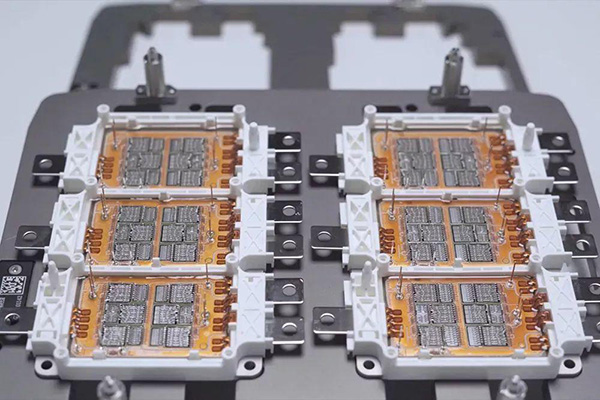
High-power PCBAs require simultaneous consideration of:
- Electrical performance
- Thermal behavior
- Mechanical reliability
- Manufacturing feasibility
6.3 Early Engineering Review Improves Production Readiness
Prototype functionality does not always guarantee reliable mass production.
Early DFM and design reviews help identify:
- Manufacturing risks
- Reliability issues
- Testing limitations
before production scaling.
7. Applications of Similar IGBT PCBA Solutions
Customized IGBT power PCBAs can support:
Industrial Robotics
Applications:
- Robot joint motor drives
- Servo control systems
- Motion control platforms
Industrial Automation Equipment
Applications:
- Motor controllers
- Inverter systems
- Factory automation equipment
Renewable Energy Systems
Applications:
- Solar inverters
- Energy storage converters
Electric Mobility Systems
Applications:
- Motor controllers
- Charging systems
- Power conversion modules
Conclusion
IGBT-based power electronics solutions are essential for high-performance industrial robotics and automation systems. However, achieving reliable operation requires more than selecting high-power semiconductor devices.
A successful IGBT control PCBA solution must address:
- Gate drive signal integrity
- High-current routing
- Thermal management
- High-voltage isolation
- EMI/EMC performance
- Manufacturing reliability
In this case study, KKPCB supported the development process through power PCB optimization, DFM analysis, thermal improvement, and manufacturing process control, helping transform an industrial robotics power control design into a reliable and production-ready solution.
As industrial automation continues evolving toward higher power density and smarter control, advanced PCBA solutions will remain a key factor in improving robotic system efficiency, precision, and reliability.