AGC Meteorwave® 4000 is an ultra-low-loss laminate and prepreg system developed for high-speed, high-layer-count printed circuit boards. With a typical dielectric constant of 3.3 at 10 GHz, a dissipation factor of 0.0024 at 10 GHz, a 200 °C Tg, excellent CAF resistance, and processing similar to other high-Tg materials, Meteorwave 4000 is designed for next-generation core routers, high-speed switches, cloud storage, supercomputers, automotive radar, and other systems where signal attenuation and reliability are critical. This guide summarizes the official data sheet, explains the electrical and thermal values, highlights fabrication considerations, and provides the complete PDF for online viewing and download.
1. What Is AGC Meteorwave 4000?
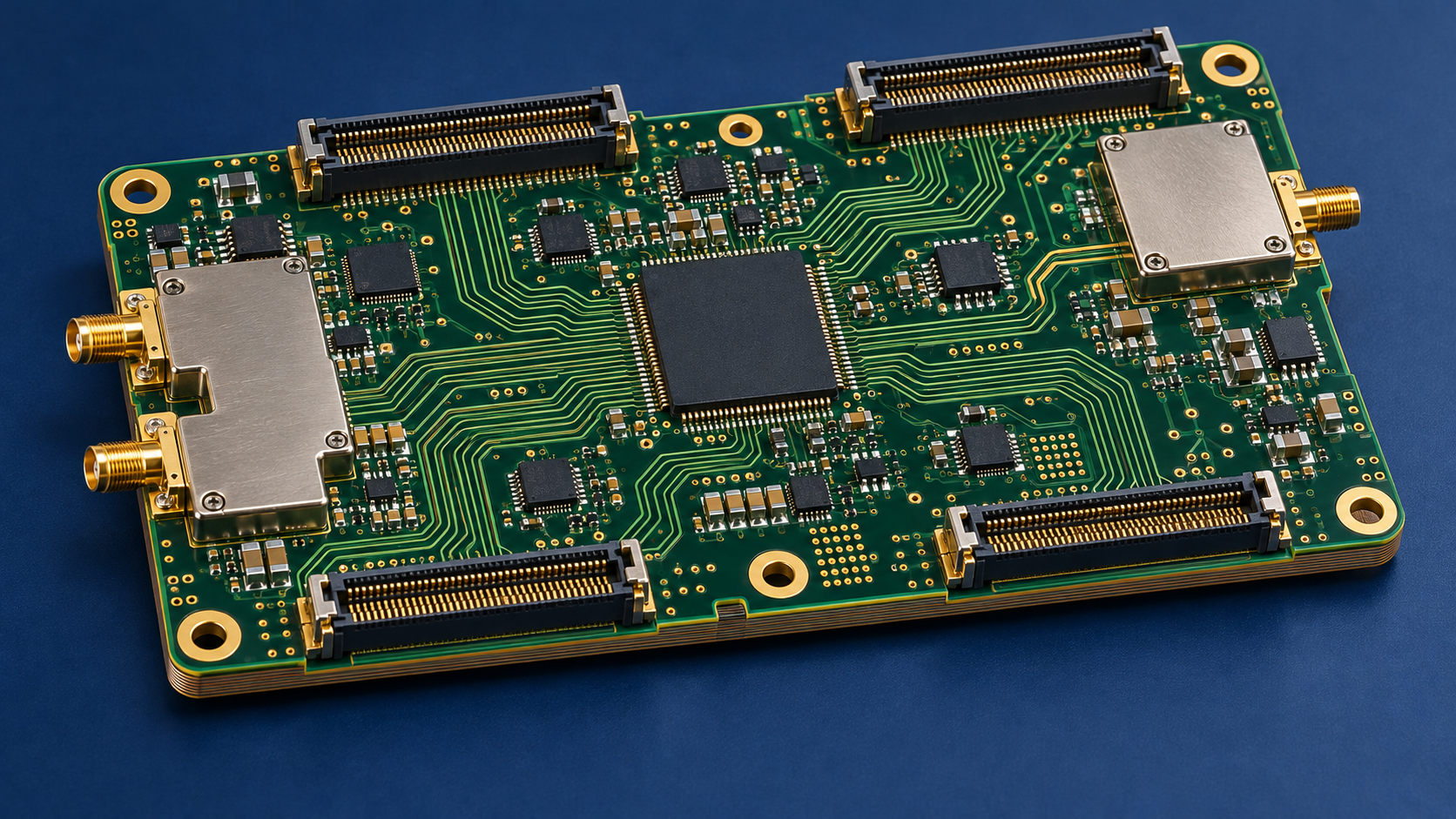
Meteorwave 4000 is a PPE-based ultra-low-loss material family supplied as Meteorwave 4000L laminate and Meteorwave 4000P prepreg. AGC positions the system for applications operating at 25 GHz and above as well as high-data-rate digital backplanes and line cards. Its low-loss resin system is reinforced with woven glass and is available in multiple constructions for multilayer stack-up design.
The product meets UL 94 V-0 and IPC-4101/102, with UL file number E36295. AGC also identifies lead-free assembly compatibility, good peel strength, low Z-axis expansion, strong interconnect-stress-test performance, and conductive anodic filament resistance as core reliability benefits.
Meteorwave 4000L laminate and 4000P prepreg
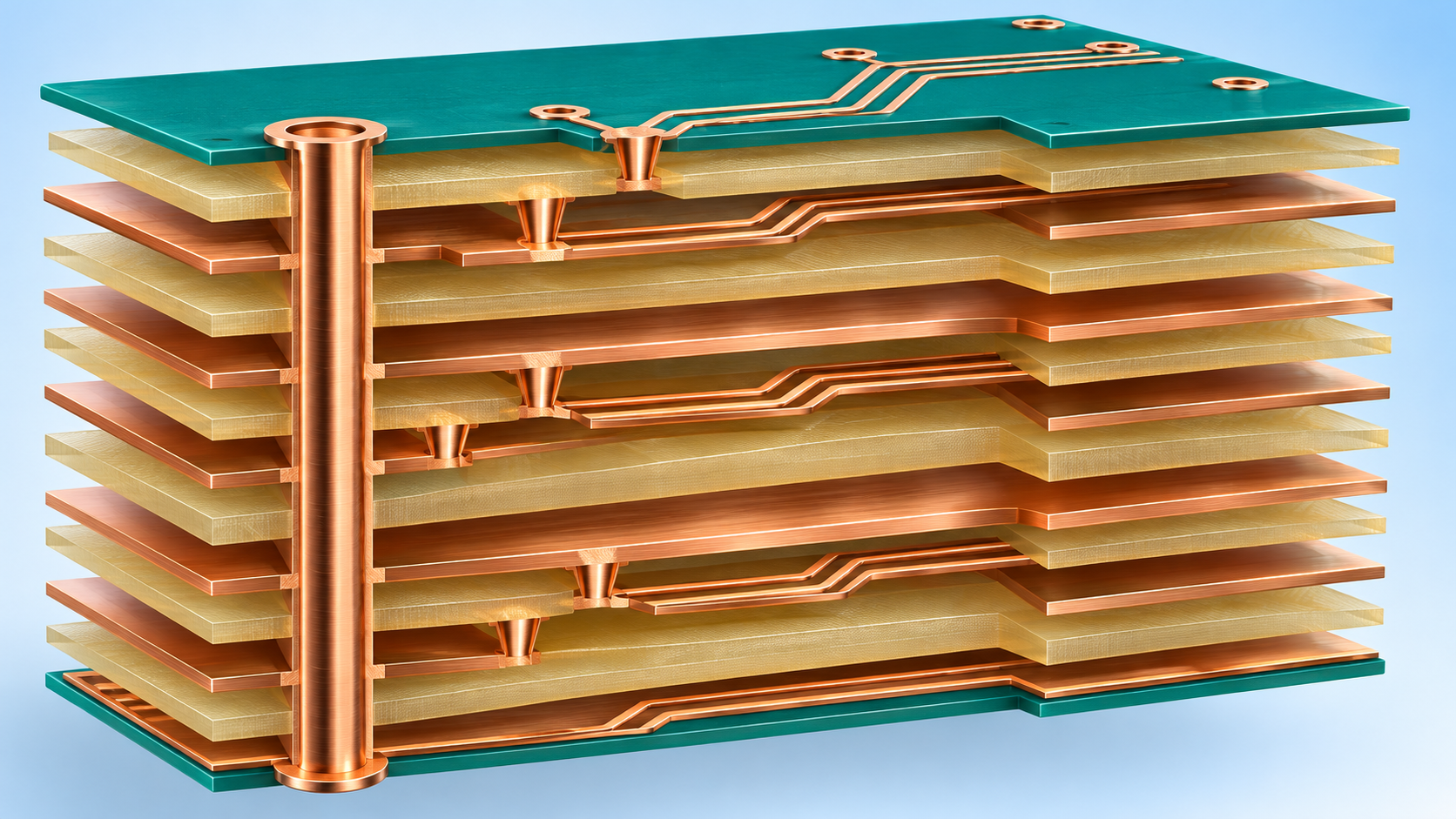
The L and P suffixes distinguish copper-clad laminate from matching prepreg. For a high-layer-count PCB, the final dielectric thickness and electrical model depend on the selected glass style, resin content, copper profile, press cycle, and manufacturing location. The stack-up should therefore be defined with the fabricator before impedance simulation and released fabrication drawings.
2. Meteorwave 4000 Key Specifications
The following typical values come from AGC’s official Meteorwave 4000 data sheet. They are useful for material selection and initial design work, but they are not guaranteed specification limits.
| Property | Condition | Typical value |
|---|---|---|
| Dielectric constant (Dk) | 2 GHz / 10 GHz | 3.4 / 3.3 |
| Dissipation factor (Df) | 2 GHz / 10 GHz | 0.0019 / 0.0024 |
| Glass transition temperature (Tg) | DMA, tan δ peak | 200 °C |
| Degradation temperature (Td) | TGA, 5% weight loss | 390 °C |
| Time to delamination (T300) | 300 °C | >120 minutes |
| Thermal conductivity | ASTM E1461 | 0.45 W/mK |
| X/Y CTE | -40 °C to +125 °C | 10 / 14 ppm/°C |
| Z-axis CTE, α1 / α2 | 50 °C to Tg / Tg to 260 °C | 55 / 260 ppm/°C |
| Z-axis expansion | 50 °C to 260 °C, 43% RC | 2.1% |
| Peel strength, 1 oz copper | IPC-TM-650 2.4.8 | 1.02 N/mm |
| Moisture absorption | IPC-TM-650 2.6.2.1 | 0.08 wt.% |
3. Understanding Dk and Df for High-Speed Design
The data sheet lists a typical Dk of 3.4 at 2 GHz and 3.3 at 10 GHz, while the typical Df changes from 0.0019 to 0.0024. These values make Meteorwave 4000 a candidate for long high-speed channels, high-frequency feed networks, and dense line cards where dielectric loss consumes a significant part of the channel budget.
AGC also publishes construction-specific dielectric tables at 2, 10, and 40 GHz. Those tables show that Dk and Df vary with glass style and resin content. For accurate impedance, delay, and insertion-loss prediction, designers should not apply one catalog number to every core and prepreg construction. KKPCB recommends locking the material construction, copper roughness, cured thickness, and test method before the final field-solver model.
4. Reliability and Processing Considerations
Meteorwave 4000 combines ultra-low-loss electrical performance with a high-Tg thermoset process. AGC states that it processes similarly to other high-Tg materials and recommends a full cure of more than 90 minutes at 216 °C and 400-500 psi. The official processing guide also emphasizes dry storage, inner-layer drying, controlled heat-up and cool-down rates, and appropriate oxide-alternative bonding treatment for signal-integrity circuits.
- CAF resistance: supports dense via fields and high-reliability multilayer designs after high-temperature reflow.
- Low Z-axis expansion: reduces thermomechanical stress on plated through holes during assembly and field temperature cycling.
- High thermal margin: 200 °C Tg, 390 °C Td, and more than 120 minutes T300 support lead-free assembly.
- Fabrication control: chemical desmear is preferred; drilling, desmear, lamination, and copper treatment should be qualified for the actual construction.
5. Meteorwave 4000 vs Conventional High-Speed PCB Materials
| Selection point | Meteorwave 4000 | Conventional high-speed laminate |
|---|---|---|
| Loss class | Ultra low loss | Varies by product family |
| Typical 10 GHz Dk / Df | 3.3 / 0.0024 | Must be checked for the selected grade |
| Reliability focus | Low Z expansion, CAF resistance, T300 >120 min | Construction dependent |
| Best fit | Long high-speed channels and high-layer-count systems | Shorter channels or less demanding loss budgets |
Material substitution should be approved by the designer. A lower-cost material may still satisfy a short channel, while Meteorwave 4000 can provide useful loss and reliability margin for long channels, higher Nyquist frequencies, dense via transitions, or demanding environmental requirements.
6. Building Meteorwave 4000 PCBs at KKPCB
Meteorwave 4000 is suitable for KKPCB’s high-frequency PCB and multilayer PCB manufacturing services. For a Meteorwave 4000 build, KKPCB can:
- Review the material callout, layer count, laminate/prepreg construction, and copper profile.
- Model controlled impedance using the agreed construction-specific Dk and pressed thickness.
- Plan lamination cycles, inner-layer drying, registration, drilling, desmear, and plating for high-layer-count reliability.
- Control differential-pair geometry, back-drill stubs, via transitions, connector launches, and reference-plane continuity.
- Support impedance coupons and coordinate insertion-loss or S-parameter testing when required.
See our high-frequency PCB capabilities and PCB materials pages for additional manufacturing information.
7. Typical Meteorwave 4000 Applications
- Next-generation core routers, high-speed Ethernet switches, and optical transport platforms.
- Cloud storage, supercomputers, accelerator interconnects, and high-performance computing hardware.
- 25 GHz-and-above infrastructure, millimeter-wave modules, and automotive radar.
- High-layer-count backplanes, daughtercards, line cards, and test platforms with strict insertion-loss budgets.
8. Download the AGC Meteorwave 4000 Data Sheet (PDF)
The official AGC Meteorwave 4000 laminate and prepreg data sheet is embedded below. It includes the full typical-values table, standards, reliability data, construction notes, and ordering information.
Download the Meteorwave 4000 Data Sheet (PDF)
Source: AGC Meteorwave 4000 product page. All rights to the data sheet belong to AGC Inc.; published values are typical and for reference only.
Frequently Asked Questions
Quick answers to common design and manufacturing questions about AGC Meteorwave 4000.
Quote Your Meteorwave 4000 PCB with KKPCB
Send your Gerber or ODB++ files, stack-up, data rate or operating frequency, impedance requirements, and test plan to KKPCB. Our engineers will review the Meteorwave 4000 construction before production. Contact KKPCB for a quote.