
What Is a UAV PCB?
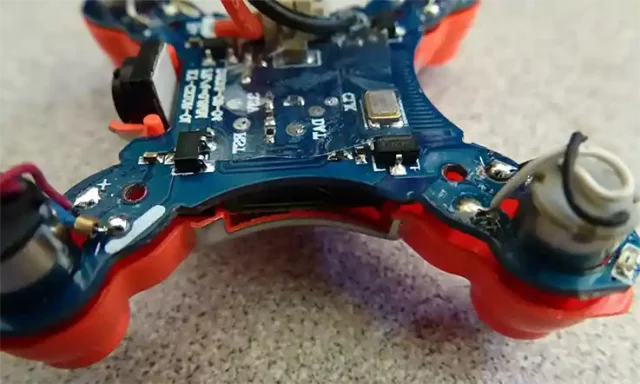
A UAV PCB is a specialized printed circuit board designed for unmanned aerial vehicles (UAVs), including drones used in commercial, military, and industrial applications.
UAV PCBs must support:
-
Flight control systems
-
High-frequency communication modules
-
GPS navigation and sensor integration
-
Power management for motors and actuators
They are engineered for lightweight, high reliability, and performance under vibration, temperature fluctuations, and environmental stress.
Key Design Considerations
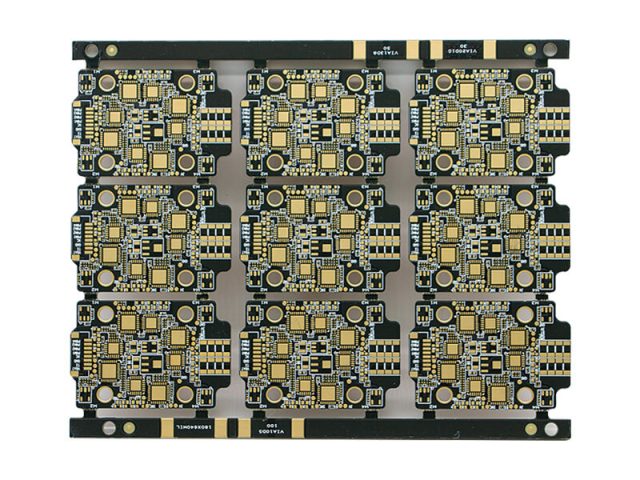
1. Lightweight and Compact Design
Weight is a critical factor in UAV performance. PCB designers optimize:
-
Thin and lightweight substrates
-
Compact multilayer routing
-
High-density component placement
This allows UAVs to maintain longer flight times and improved maneuverability without sacrificing functionality.
2. High-Frequency Communication Support
UAVs rely on RF communication for telemetry and remote control:
-
2.4 GHz / 5.8 GHz Wi-Fi or RF links
-
GPS L1/L2 frequency modules
-
5G or LTE-based UAV communication
PCB design must include:
-
Low-loss high-frequency laminates
-
Controlled impedance traces
-
Shielded RF routing
-
Minimal via stubs
This ensures stable, interference-free communication in dynamic flight conditions.
3. Multilayer and HDI Stack-Up
Modern UAV electronics integrate:
-
Flight control microcontrollers
-
Sensors (IMU, accelerometers, gyroscopes)
-
Camera or LiDAR interfaces
-
Power management ICs
Multilayer HDI PCBs enable:
-
Dense routing
-
Reduced cross-talk
-
Optimized ground and power planes
-
Reliable interlayer connections
This is essential for high-speed digital and analog signal integrity.
4. Thermal and Mechanical Management
UAV electronics often experience:
-
Motor-induced vibration
-
Solar or outdoor temperature swings
-
Continuous current draw from propulsion systems
UAV PCB design addresses this with:
-
Reinforced layers and high-TG materials
-
Thermal vias and copper planes for heat dissipation
-
Shock-resistant component placement
Reliable thermal and mechanical management ensures long-term operational stability.
5. Power Distribution and Noise Suppression
UAV PCBs must supply stable power to:
-
Flight controllers
-
RF modules
-
Sensors and actuators
Design strategies include:
-
Low-impedance power planes
-
Decoupling capacitor networks
-
EMI shielding for sensitive circuits
Proper PDN design minimizes voltage drops and signal interference during flight.
Applications of UAV PCB
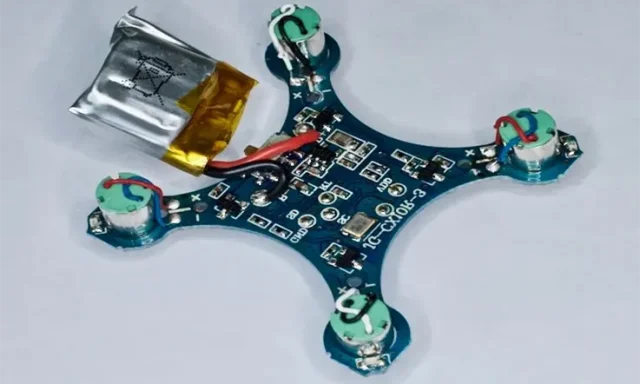
UAV PCBs are used in:
-
Commercial delivery drones
-
Agricultural monitoring UAVs
-
Surveillance and mapping drones
-
Military reconnaissance UAVs
-
Industrial inspection drones
High-density, high-frequency UAV PCBs enable reliable control, sensor data processing, and communication in compact aerial platforms.
UAV PCB vs Standard PCB
| Feature | Standard PCB | UAV PCB |
|---|---|---|
| Weight | Moderate | Lightweight optimized |
| Frequency Support | Low–Medium | High-frequency RF capable |
| Vibration Resistance | Standard | High (mechanical reinforcement) |
| Thermal Management | Basic | Advanced heat dissipation |
| Multilayer Complexity | 2–6 layers | 6–14+ layers |
UAV PCBs are designed to withstand harsh aerial conditions while maintaining signal integrity and power efficiency.
Conclusion
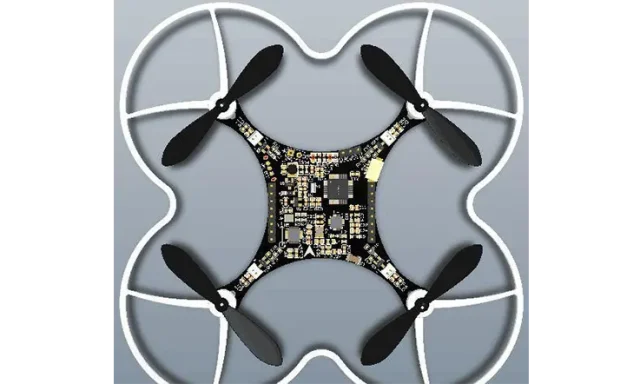
A UAV PCB is a high-performance, lightweight, and reliable platform for unmanned aerial vehicle electronics.
With multilayer HDI design, low-loss high-frequency routing, thermal and mechanical reinforcement, and optimized power delivery, UAV PCBs enable drones to perform precise flight control, real-time sensing, and stable wireless communication.
They are a critical component in both commercial and military UAV systems, supporting the growth of autonomous and semi-autonomous aerial technology.
