The Role of 5G IC Test PCB in Semiconductor Testing

With the rapid development of 5G communication technologies, semiconductor devices such as 5G baseband ICs, RF transceivers, power amplifiers, and mmWave front-end modules require increasingly advanced testing solutions to ensure electrical performance and production reliability.
A 5G IC Test PCB is a specialized semiconductor test board used in Automated Test Equipment (ATE) systems to provide the electrical interface between the device under test (DUT) and testing instruments.
Unlike conventional PCBs, 5G IC Test PCBs must support:
- High-frequency RF signal transmission
- Precise impedance control
- Low-loss electrical performance
- Stable power delivery
- Repeatable measurement results
As 5G devices move toward higher bandwidth, lower latency, and higher integration, even small variations in impedance, dielectric properties, or signal coupling can affect test accuracy, yield, and product validation efficiency.
Key Design Challenges of 5G IC Test PCBs
1. Controlled Impedance for RF and High-Speed Signal Accuracy
5G IC testing involves both high-speed digital interfaces and RF signal paths operating at sub-6 GHz and mmWave frequencies.
At these frequencies, impedance variation can cause:
- Signal reflection
- Transmission loss
- Timing errors
- Reduced measurement accuracy
To maintain stable RF performance, 5G IC Test PCBs require:
- Precise stack-up design
- Controlled trace geometry
- Accurate dielectric thickness control
- Impedance verification during manufacturing
A well-designed impedance-controlled PCB ensures consistent signal behavior throughout the testing process.
2. Low-Loss Materials and Hybrid Stack-Up Design
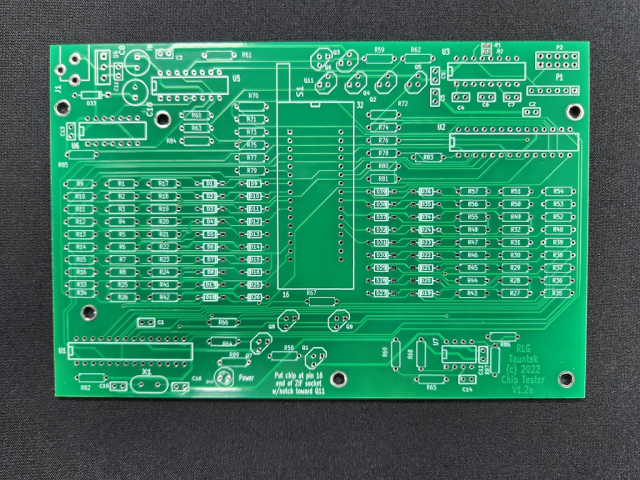
High-frequency signals are highly sensitive to dielectric loss and material variation.
Selecting appropriate PCB materials is critical for reducing signal attenuation and maintaining RF performance.
Common approaches include:
- Low-Dk and low-Df RF laminates
- High-Tg materials for thermal stability
- Hybrid stack-ups combining RF materials with FR-4 structures
Hybrid PCB designs allow engineers to integrate high-frequency RF circuits and digital control circuits within the same test platform while maintaining electrical performance and manufacturing feasibility.
3. Signal Integrity and EMI Control in High-Frequency Testing
As 5G ICs operate at higher frequencies and increased signal density, controlling electromagnetic interference (EMI) becomes a key challenge.
Potential issues include:
- RF coupling between channels
- Crosstalk
- Unstable return paths
- Signal degradation
Effective design strategies include:
- Optimized grounding structures
- Proper reference plane design
- Differential signal routing
- Shielding via structures
- Controlled layer assignment
These measures help maintain signal integrity and improve test repeatability.
4. High-Density Routing for Advanced 5G IC Packages
Modern 5G semiconductor devices often use advanced packages with high I/O counts and fine-pitch connections.
To support these requirements, 5G IC Test PCBs commonly utilize:
- HDI PCB technology
- Microvia structures
- Fine-line routing
- High-layer-count PCB designs
These technologies enable efficient signal fan-out while maintaining electrical performance and manufacturing reliability.
5. Power Integrity for Stable RF Testing
Stable power delivery is essential for accurate RF and high-speed IC measurements.
Power instability may introduce:
- Voltage fluctuation
- Additional noise
- Measurement deviation
- Test inconsistency
Reliable 5G IC Test PCB designs incorporate:
- Low-impedance power planes
- Optimized power distribution networks (PDN)
- Proper decoupling capacitor placement
- Short current return paths
These improvements ensure stable operating conditions during semiconductor testing.
Applications of 5G IC Test PCBs
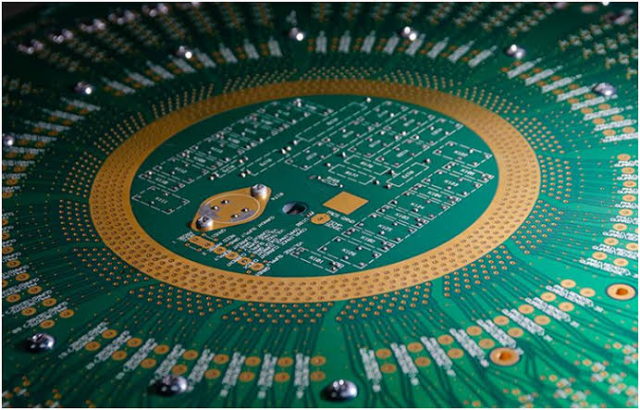
5G IC Test PCBs are widely applied in semiconductor validation and production testing, including:
- 5G baseband and modem IC testing
- RF transceiver validation
- Power amplifier testing
- mmWave front-end module evaluation
- Beamforming and antenna interface testing
- Automotive and industrial 5G semiconductor testing
These applications require high-frequency accuracy, electrical repeatability, and long-term testing reliability.
Manufacturing Requirements for Reliable 5G IC Test PCBs
Producing high-performance 5G IC Test PCBs requires advanced PCB manufacturing capabilities, including:
High-Frequency PCB Fabrication
- Low-loss RF laminate processing
- Hybrid stack-up manufacturing
- Controlled dielectric thickness
High-Density PCB Technology
- HDI fabrication
- Microvia reliability control
- Fine-line circuit manufacturing
Electrical Performance Verification
- Controlled impedance testing
- RF performance verification
- Signal integrity validation
Precision Manufacturing Control
- Accurate layer registration
- Fine-pitch processing
- Reliable surface finishing
- Prototype to volume production support
These manufacturing capabilities ensure consistent electrical performance throughout IC development, validation, and mass production stages.
Why 5G IC Test PCB Quality Matters
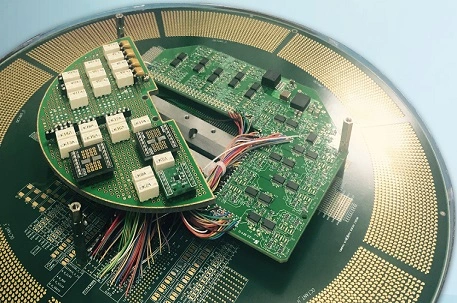
The performance of a test PCB directly influences semiconductor test accuracy and production efficiency.
Poor PCB performance may result in:
- Incorrect measurement results
- Increased debugging time
- Lower test yield
- Longer product validation cycles
A high-quality 5G IC Test PCB enables:
- Accurate RF and high-speed digital measurements
- Stable test conditions
- Improved test repeatability
- Higher production efficiency
Conclusion: Supporting Next-Generation 5G Semiconductor Testing
As 5G semiconductor devices continue evolving toward higher frequencies, greater integration, and more complex architectures, the requirements for IC test PCBs become increasingly demanding.
Through controlled impedance design, low-loss materials, HDI technology, signal integrity optimization, and precision manufacturing, advanced 5G IC Test PCBs provide the electrical performance and reliability required for accurate semiconductor testing.
Selecting an experienced 5G IC Test PCB manufacturer with strong RF PCB engineering capabilities helps semiconductor companies improve validation efficiency, reduce testing risks, and accelerate time-to-market.