The Role of High Speed IC Test PCB in Semiconductor Validation
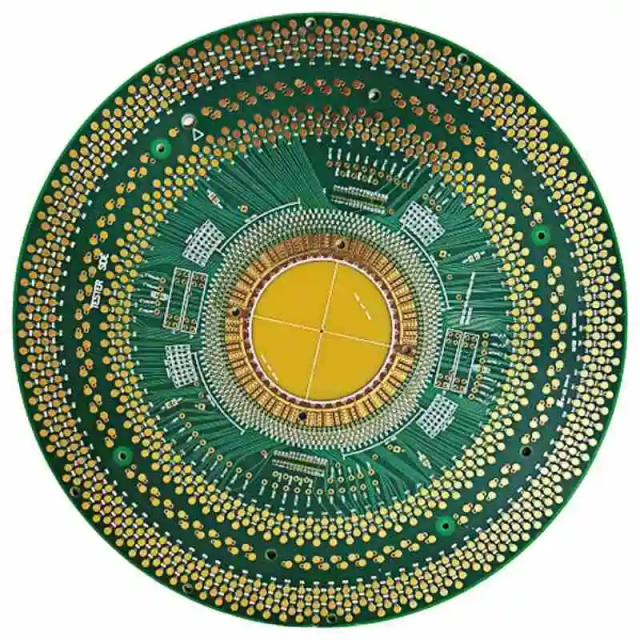
In advanced semiconductor testing, High Speed IC Test PCBs are critical components used in Automated Test Equipment (ATE) systems to evaluate integrated circuits operating at high data rates and fast switching speeds.
These specialized test boards provide the electrical interface between the semiconductor device and the testing platform, enabling accurate signal transmission, precise timing analysis, and stable power delivery during IC characterization, validation, and production testing.
As semiconductor technologies continue evolving toward higher bandwidth interfaces, including DDR, PCIe, SerDes, USB, HBM, and high-frequency RF applications, High Speed IC Test PCBs face increasingly demanding requirements in signal integrity, power integrity, impedance control, and manufacturing precision.
A well-designed High Speed IC Test PCB helps minimize measurement errors, reduce false failures, and ensure reliable semiconductor test performance.
Key Design Challenges of High Speed IC Test PCBs
1. Signal Integrity and Controlled Impedance Design
For high-speed semiconductor testing, maintaining signal integrity is one of the most critical design requirements.
High-frequency signals are highly sensitive to:
- Impedance mismatch
- Signal reflection
- Insertion loss
- Crosstalk
- Timing skew and jitter
To maintain stable signal performance, High Speed IC Test PCBs require:
- Precise controlled impedance routing
- Optimized stack-up structures
- Differential pair design
- Proper reference plane configuration
- Accurate trace geometry control
These design approaches ensure reliable signal transmission and accurate test measurements.
2. Low-Loss Materials and High-Frequency Routing
As signal speeds increase, dielectric loss and material characteristics become important factors affecting test accuracy.
High Speed IC Test PCBs often require:
- Low-loss laminate materials
- Stable dielectric properties
- Optimized high-frequency routing
- Reduced insertion loss structures
Selecting suitable materials helps maintain signal quality, preserve eye diagram performance, and support high-speed interface validation.
3. Power Integrity and Noise Management
High-speed ICs require stable and clean power delivery during testing. Power fluctuations can introduce measurement errors and affect device characterization.
Important considerations include:
- Optimized power distribution networks (PDN)
- Low-impedance power and ground planes
- Short current return paths
- Effective decoupling capacitor placement
A robust power integrity design reduces voltage noise, power-induced jitter, and test instability.
4. High-Density Routing for Advanced IC Packages
Modern high-speed ICs often use fine-pitch packages with large numbers of I/O connections, creating challenges in routing density and manufacturing feasibility.
Advanced PCB technologies such as:
- HDI structures
- Microvias
- Fine-line routing
- High-layer-count PCB designs
enable efficient fan-out while maintaining electrical performance.
5. Crosstalk and EMI/EMC Control
High-speed test environments are highly sensitive to unwanted coupling between signals.
Effective design strategies include:
- Optimized signal spacing
- Ground shielding structures
- Controlled return paths
- Proper layer assignment
- Differential signal routing
These measures reduce electromagnetic interference and improve measurement reliability.
Applications of High Speed IC Test PCBs
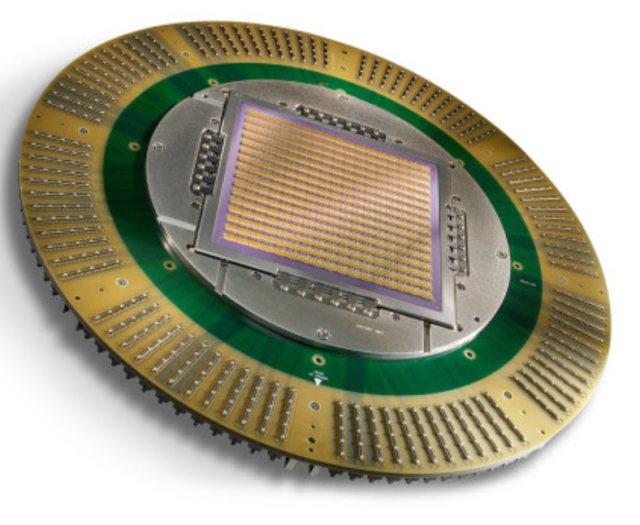
High Speed IC Test PCBs are widely used in semiconductor testing applications, including:
- High-speed digital IC validation
- Processor and computing semiconductor testing
- Memory interface testing (DDR, LPDDR, HBM)
- SerDes and high-bandwidth interface validation
- RF and mixed-signal IC testing
- Automotive semiconductor evaluation
- AI and data center semiconductor testing
These applications require extremely stable electrical performance, accurate measurements, and repeatable testing results.
Manufacturing Requirements for High Speed IC Test PCBs
Producing reliable High Speed IC Test PCBs requires advanced fabrication capabilities, including:
Electrical Performance Control
- Controlled impedance fabrication and verification
- Signal integrity testing
- Stable dielectric thickness control
- Low-loss material processing
High-Density PCB Manufacturing
- HDI technology and microvia fabrication
- Fine-line circuit manufacturing
- High-layer-count PCB construction
Precision Manufacturing
- Accurate layer registration
- Tight dimensional tolerance control
- Reliable via plating quality
- Consistent surface finish performance
These manufacturing capabilities ensure stable electrical performance from prototype validation through volume production.
Why High Speed IC Test PCB Quality Matters
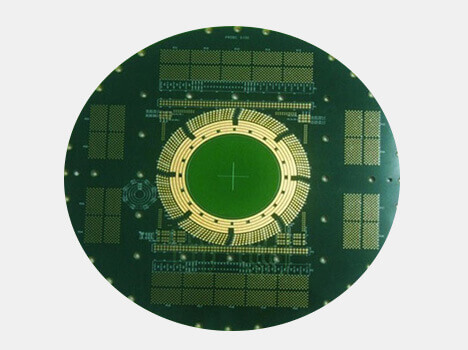
Any degradation in signal quality or power stability can directly affect semiconductor test accuracy.
Poor-quality High Speed IC Test PCBs may result in:
- Incorrect measurement results
- Increased debugging cycles
- Higher false failure rates
- Reduced production efficiency
A reliable High Speed IC Test PCB enables:
- Accurate timing and signal measurements
- Improved test repeatability
- Reduced testing uncertainty
- Stable high-volume production performance
Conclusion: Enabling Reliable Testing for Next-Generation ICs
High Speed IC Test PCBs provide the foundation for validating today’s most advanced semiconductor devices. Through controlled impedance design, low-loss materials, optimized power integrity, HDI technology, and precision manufacturing, these PCBs support accurate and repeatable semiconductor testing.
As IC performance continues advancing toward higher speeds and greater integration, selecting an experienced High Speed IC Test PCB manufacturer becomes essential for achieving reliable test results, improving production efficiency, and accelerating semiconductor development.