
Introduction: Why Duroid 6010 PCB Is a Cornerstone of High-Frequency Engineering
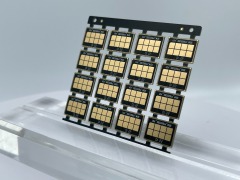
Rogers Duroid 6010 PCB is one of the most widely used materials for extreme high-frequency and microwave systems requiring exceptionally high dielectric constant and low loss.
With a Dk of approximately 10.2, the Duroid 6010 PCB platform enables dramatic circuit miniaturization, enhanced electromagnetic coupling, and stable RF behavior across microwave, radar, navigation, and aerospace communication systems.
In modern RF engineering, the Duroid 6010 PCB is not simply a substrate—it is a precision performance material engineered for mission-critical systems operating at GHz-level frequencies.
1. Material Science & Electromagnetic Properties of Duroid 6010 PCB
High Dielectric Constant (Dk ≈ 10.2)
The defining characteristic of Duroid 6010 PCB is its extremely high dielectric constant, enabling:
-
Reduced circuit size
-
Increased electrical length per unit area
-
Higher miniaturization for filters, antennas, couplers
Low Dissipation Factor (Df ≈ 0.0023 at 10 GHz)
A low Df ensures that Duroid 6010 PCB supports:
-
Low insertion loss
-
High Q-factor resonators
-
Stable microwave propagation
PTFE-Ceramic Composite Stability
As a PTFE-ceramic laminate, Duroid 6010 PCB offers:
-
Excellent temperature stability
-
Low moisture absorption
-
Ultra-stable electrical properties across wide frequency ranges
These properties make Duroid 6010 PCB a preferred choice for radar front ends, phased array antennas, and satellite communication modules.
2. Advanced RF Design Considerations for Duroid 6010 PCB
Because Duroid 6010 PCB operates in microwave and millimeter-wave systems, design precision is critical.
Key design rules for Duroid 6010 PCB:
-
Strict impedance control for microstrip, stripline, and grounded coplanar waveguide
-
Tight tolerance on copper thickness for predictable RF propagation
-
Controlled Dk variation across large-area RF layouts
-
Minimized conductor surface roughness to reduce RF losses
-
Accurate modeling using closed-form RF equations and 3D EM simulations
The high-Dk nature of Duroid 6010 PCB magnifies every deviation, making engineering accuracy essential.
3. Manufacturing Challenges and Precision Requirements
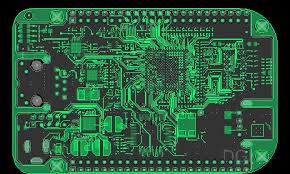
Producing a high-reliability Duroid 6010 PCB requires specialized RF manufacturing processes.
Key manufacturing considerations:
-
PTFE materials require plasma surface treatment for proper adhesion
-
Tight pressing and lamination control due to ceramic loading
-
Specialized via drilling and plating processes
-
Precise etching of narrow RF features (5–8 mil or smaller)
-
Smooth copper and controlled roughness for low RF loss
RF materials such as Duroid 6010 PCB cannot be processed like standard FR-4. Every step must be RF-engineered.
4. Where Duroid 6010 PCB Delivers the Strongest Performance
The elevated Dk and low loss properties of Duroid 6010 PCB make it ideal for:
High-frequency and microwave systems
-
X-band, Ku-band, and Ka-band applications
-
Narrow-band and wide-band RF modules
-
Low-loss microwave resonators
Radar and defense electronics
-
Phased array radar tiles
-
Radar front-end modules
-
Guidance system electronics
Aerospace and satellite communication
-
LEO/MEO/GEO satellite payload electronics
-
Microwave communication links
-
High-density RF antennas
Precision RF filters and couplers
-
Miniaturized microstrip filters
-
Directional couplers on high-Dk substrates
-
Resonant structures requiring ultra-stable Dk
Every system that requires compact size, stable RF behavior, and GHz-level low loss benefits from Duroid 6010 PCB.
5. Why KKPCB Excels in Duroid 6010 PCB Manufacturing

KKPCB supports high-precision fabrication for Duroid 6010 PCB, offering:
-
Rogers Duroid 6010 & 6010LM certified processing
-
Ultra-tight impedance control (±5%)
-
High-frequency etching accuracy for fine RF structures
-
RF stackup engineering and simulation support
-
Low-loss via plating and copper surface optimization
-
Full testing: TDR, Dk/Df verification, RF loss measurement
Our engineering ensures that every Duroid 6010 PCB meets the thermomechanical and RF performance requirements of critical aerospace, radar, and telecommunication systems.
Conclusion
In high-frequency engineering, Duroid 6010 PCB stands as a premium substrate for microwave and radar systems that demand high Dk, low loss, and exceptional electrical stability.
Its combination of PTFE-ceramic technology, RF precision, and predictable performance makes it ideal for next-generation aerospace, satellite, and defense platforms.
For companies designing advanced RF and microwave systems, partnering with a specialist in Duroid 6010 PCB manufacturing is essential to achieving consistent, high-frequency performance.
