
What is a 5G mmWave PCB?
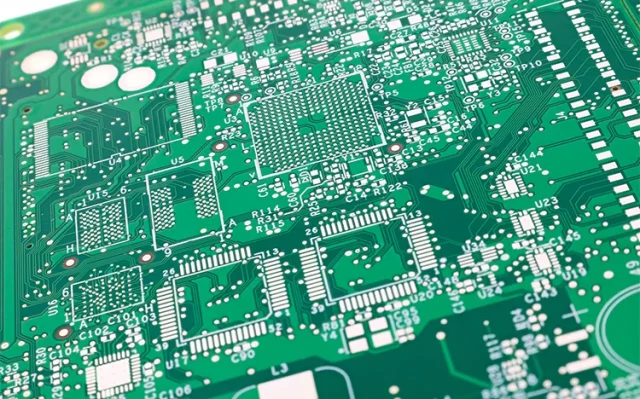
A 5G mmWave PCB is a high-frequency printed circuit board designed to operate in the millimeter wave (mmWave) frequency range, typically between 24 GHz and 100 GHz.
At these frequencies, the PCB is no longer just a carrier—it becomes a critical part of the RF system, directly impacting signal transmission, antenna performance, and overall system efficiency.
A 5G mmWave PCB is widely used in:
- 5G base stations
- mmWave antennas and modules
- phased array radar systems
- high-frequency communication devices
Why 5G mmWave PCB Design is Challenging
Designing a 5G mmWave PCB introduces significantly more complexity than standard RF PCB design:
- Signal loss increases dramatically with frequency
- Even minor impedance mismatch causes reflection
- Trace geometry directly affects signal behavior
- Material properties become highly frequency-dependent
Key Characteristics of 5G mmWave PCB
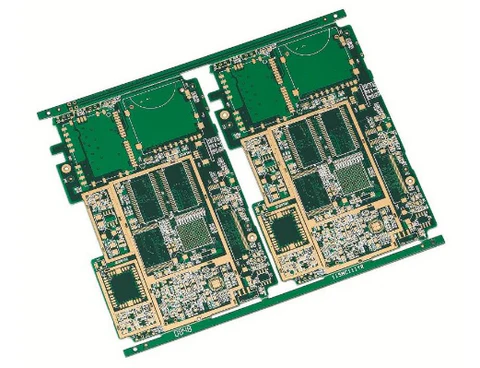
1. Ultra-Low Loss Requirement
A 5G mmWave PCB must minimize both dielectric loss and conductor loss to maintain signal strength over short distances.
2. Tight Impedance Control
Controlled impedance is critical in 5G mmWave PCB design to avoid signal reflection and degradation.
3. High Frequency Stability
Material dielectric properties must remain stable across mmWave frequencies.
4. Precision Trace Geometry
Trace width, spacing, and surface roughness must be tightly controlled in 5G mmWave PCB fabrication.
Material Selection for 5G mmWave PCB
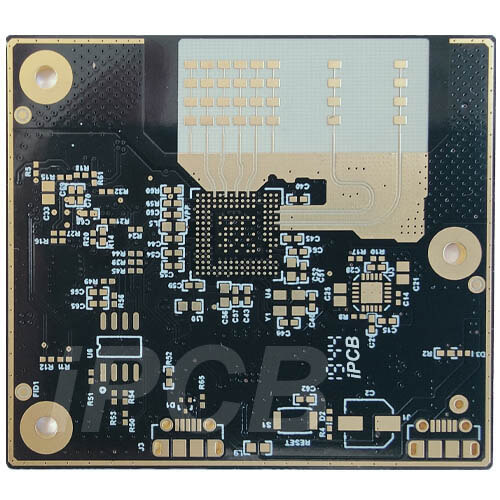
Material choice is one of the most critical factors in 5G mmWave PCB performance:
1. PTFE-Based Materials
- Extremely low dielectric loss
- Ideal for mmWave signal transmission
2. Advanced Hydrocarbon Ceramic Laminates
- Balance between performance and manufacturability
- Lower cost compared to pure PTFE
3. High-Frequency Laminates
- Stable Dk and low Df
- Suitable for 5G mmWave PCB production
Transmission Structures in 5G mmWave PCB
1. Microstrip
- Easier to manufacture
- Common in antenna feed structures
2. Stripline
- Better shielding
- Lower radiation loss
3. Coplanar Waveguide (CPW)
- Widely used in 5G mmWave PCB
- Supports compact RF layouts
Loss Mechanism in mmWave PCB
Total Loss=Dielectric Loss+Conductor Loss+Radiation Loss\text{Total Loss} = \text{Dielectric Loss} + \text{Conductor Loss} + \text{Radiation Loss}Total Loss=Dielectric Loss+Conductor Loss+Radiation Loss
At mmWave frequencies:
- Dielectric loss increases with frequency
- Conductor loss increases due to skin effect
- Radiation loss becomes significant
Design Guidelines for 5G mmWave PCB
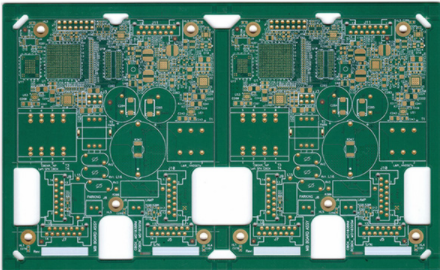
1. Minimize Trace Length
Shorter traces reduce attenuation significantly.
2. Use Smooth Copper
Low-profile copper reduces conductor loss.
3. Optimize Grounding
Continuous ground planes are essential.
4. Avoid Discontinuities
Reduce vias and transitions in RF paths.
5. Accurate Stack-Up Design
Layer structure directly affects impedance and loss.
Manufacturing Challenges
Producing a 5G mmWave PCB requires advanced process control:
- Ultra-precise impedance control
- Tight tolerance on dielectric thickness
- High accuracy etching for fine traces
- Consistent material performance
Applications of 5G mmWave PCB
1. 5G Base Stations
Core infrastructure for high-speed wireless communication.
2. Phased Array Antennas
Used in beamforming systems.
3. Automotive Radar
77 GHz radar systems rely on mmWave PCB.
4. Satellite Communication
High-frequency signal transmission systems.
5. Advanced Wireless Devices
mmWave modules in next-generation electronics.
Key Challenges in Mass Production
- Material consistency across batches
- Process repeatability at high frequency
- Yield control for fine geometry
- Maintaining performance in volume production
When Do You Need a 5G mmWave PCB?
You need a 5G mmWave PCB when:
- Operating frequency exceeds 24 GHz
- RF performance is critical
- Signal loss must be minimized
- System includes antennas or beamforming
