
Introduction: The Rise of the Internet of Things
The Internet of Things (IoT) is transforming how devices, systems, and people interact in the digital era. From smart homes to industrial automation, the IoT ecosystem connects billions of devices through the internet, enabling real-time data exchange, remote control, and intelligent decision-making.
As industries move toward digitalization and automation, understanding what the Internet of Things (IoT) is and how it works becomes essential for businesses and engineers alike.
What is the Internet of Things (IoT)?
The Internet of Things (IoT) refers to a network of physical devices embedded with sensors, software, and connectivity, allowing them to collect and exchange data over the internet.
These IoT devices can include:
- Smart home appliances
- Industrial machines
- Wearable devices
- Vehicles and transportation systems
- Environmental monitoring systems
The goal of the IoT is to create a connected environment where devices can communicate, analyze data, and automate processes with minimal human intervention.
How Does IoT Work?
A typical Internet of Things (IoT) system consists of four key components:
1. Sensors and Devices
Sensors collect real-world data such as temperature, humidity, motion, and pressure. These are the foundation of all IoT systems.
2. Connectivity
Collected data is transmitted via communication technologies such as:
- Wi-Fi
- Bluetooth
- Cellular networks (4G/5G)
- LPWAN (Low Power Wide Area Networks)
Reliable connectivity ensures seamless communication between IoT devices.
3. Data Processing
The data is processed either locally (edge computing) or in the cloud, where it is analyzed to generate insights or trigger actions.
4. User Interface
Users interact with the IoT system through apps, dashboards, or control panels, enabling monitoring and control of connected devices.
Key Benefits of the Internet of Things
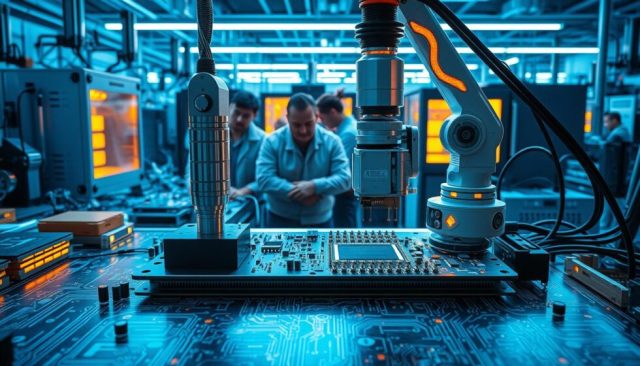
The Internet of Things (IoT) offers significant advantages across industries:
- Automation – Reduces manual work and increases efficiency
- Real-time monitoring – Enables instant decision-making
- Cost savings – Optimizes resource usage
- Improved safety – Detects risks and prevents failures
- Data-driven insights – Enhances business intelligence
These benefits make IoT technology a cornerstone of modern smart systems.
Applications of IoT Across Industries
The Internet of Things (IoT) is widely used in various sectors:
1. Smart Homes
Devices like smart thermostats, lighting systems, and security cameras improve convenience and energy efficiency.
2. Industrial IoT (IIoT)
In manufacturing, IoT systems enable predictive maintenance, equipment monitoring, and process automation.
3. Healthcare
IoT devices monitor patient health, track medical equipment, and improve remote healthcare services.
4. Automotive and Transportation
Connected vehicles use IoT technology for navigation, safety, and fleet management.
5. Agriculture
Farmers use IoT sensors for soil monitoring, irrigation control, and crop management.
Challenges in IoT Implementation
Despite its advantages, the Internet of Things (IoT) also faces several challenges:
- Security risks due to connected devices
- Data privacy concerns
- Complex system integration
- Scalability issues in large networks
Addressing these challenges is essential for successful IoT deployment.
The Role of PCB in IoT Devices
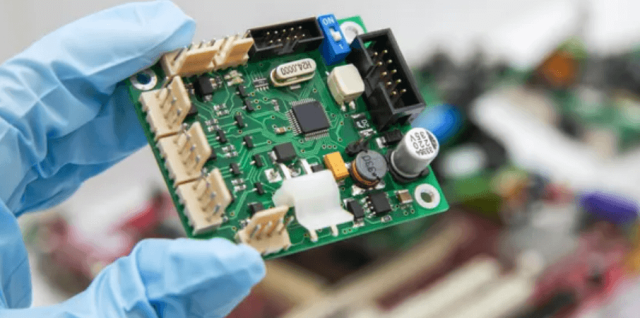
Behind every IoT device, there is a well-designed PCB (Printed Circuit Board) that integrates sensors, communication modules, and processing units. High-quality PCB design ensures:
- Stable signal transmission
- Efficient power management
- Compact and reliable device structure
As IoT devices become smaller and more powerful, advanced PCB technologies such as HDI PCBs and flexible PCBs are increasingly important.
Future Trends of the Internet of Things
The future of the Internet of Things (IoT) is driven by:
- 5G connectivity for faster communication
- Artificial Intelligence (AI) for smarter decision-making
- Edge computing for real-time processing
- Expansion of smart cities and Industry 4.0
These trends will continue to accelerate the growth of the IoT ecosystem.
Conclusion
The Internet of Things (IoT) is reshaping industries by connecting devices, enabling real-time data exchange, and driving intelligent automation. From smart homes to industrial systems, IoT technology is at the core of digital transformation.
Understanding what IoT is and how it works allows businesses and engineers to leverage its full potential and stay competitive in an increasingly connected world.
