
In modern industrial environments, the Smart Factory PCB has become the central hardware platform enabling intelligent automation, data-driven processes, and high-efficiency production lines. From robotics control systems to IIoT gateways and predictive-maintenance devices, the Smart Factory PCB is the critical foundation that supports real-time communication, robust power delivery, and mission-critical processing.
The shift toward interconnected factories depends heavily on advanced PCB design principles optimized for reliability, speed, and long-term industrial durability.
1. The Strategic Role of Smart Factory PCB in Intelligent Manufacturing
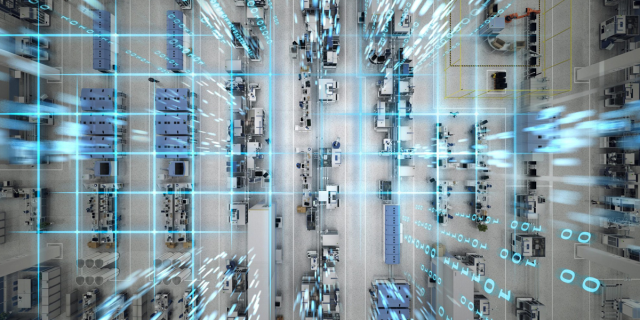
The Smart Factory PCB acts as the operational backbone for:
-
PLC and IPC industrial controllers
-
Sensor networks and IIoT monitoring devices
-
Autonomous mobile robots (AGV/AMR)
-
Machine vision and AI inspection modules
-
Predictive maintenance sensors
-
Industrial communication gateways
These systems require continuous uptime, stable signal behavior, and hardware that can withstand harsh industrial stress—everything from vibration and heat to electromagnetic noise.
2. Core Engineering Requirements of Smart Factory PCB
High-Reliability Industrial Design
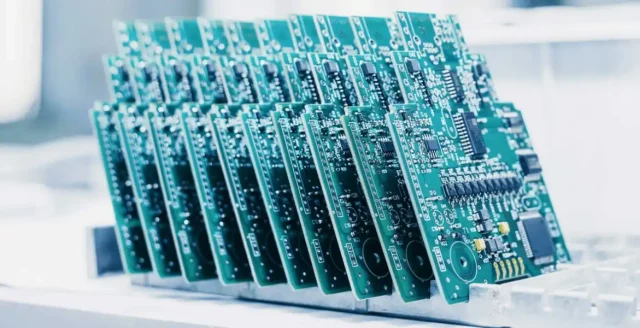
Smart Factory PCB engineering incorporates industrial-grade durability, including:
-
Wide-temperature materials
-
Thick-copper layers for long-life power delivery
-
Surge, ESD, and transient protection
-
Conformal coating for harsh environments
-
Reinforced mechanical structure for vibration resistance
PCB robustness directly influences factory productivity and equipment lifecycle.
High-Speed Communication for IIoT and Real-Time Control
A Smart Factory PCB typically integrates complex communication interfaces:
-
Gigabit Ethernet
-
EtherCAT
-
RS-485 / Modbus
-
CAN / CAN-FD
-
Industrial Wi-Fi or Sub-GHz wireless modules
Achieving reliable communication requires controlled impedance, optimized differential routing, and noise-isolated power domains.
Edge Computing and AI-Enhanced Industrial Processing
Smart Factory PCB design often supports:
-
High-performance MCU / MPU platforms
-
FPGA-based real-time processing
-
On-board AI inference accelerators
-
Deterministic timing for industrial control loops
Edge computing reduces latency and strengthens factory autonomy.
Safety, Isolation, and Redundancy Architecture
Because downtime has severe cost implications, Smart Factory PCB systems implement:
-
Galvanic isolation
-
Safety relays and redundant channels
-
Hot-swap and fault-tolerant power design
-
Hardware watchdog and diagnostic circuits
These ensure predictable and safe operation under all conditions.
3. Material Science for Smart Factory PCB Performance
Optimized material selection is essential for industrial stability:
-
High-Tg FR-4 for thermal endurance
-
PTFE / Rogers laminates for high-speed networking
-
Metal-based PCB for power modules
-
Ceramic PCB for heat-intensive subsystems
Material performance affects signal integrity, thermal response, and long-term reliability.
4. KKPCB Case Study — Multi-Layer Smart Factory PCB for Industrial Control
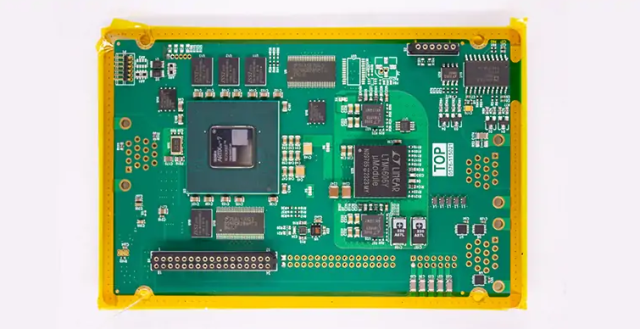
KKPCB recently delivered a 10-layer Smart Factory PCB for an industrial automation company focusing on:
-
High-density routing for modular PLC architecture
-
EtherCAT high-speed differential pairs
-
2–3 oz copper power management network
-
Edge AI computation footprint
-
24/7 long-term reliability verification
The Smart Factory PCB significantly improved system cycle time, reduced downtime, and enabled predictive-maintenance algorithms across the customer’s manufacturing line.
5. Reliability Validation for Smart Factory PCB
A Smart Factory PCB undergoes comprehensive industrial testing:
-
Thermal cycling
-
Vibration & shock stress
-
Humidity exposure
-
EMC/EMI compliance
-
Power surge and transient endurance
-
Long-duration operational burn-in
These ensure stability for long-term use in automated production environments.
Engineering Summary
The Smart Factory PCB is the technological core of future intelligent manufacturing. It supports:
-
Real-time automation
-
Industrial communication
-
Predictive maintenance
-
Edge AI processing
-
IIoT connectivity
-
Robotics integration
As factories evolve into fully connected, autonomous ecosystems, the engineering quality of the Smart Factory PCB becomes a key factor that determines production reliability and competitive capability.
KKPCB provides complete services for:
-
Smart Factory PCB design
-
High-reliability industrial PCB fabrication
-
PCBA for automation and IIoT applications
- Engineering consultation and technical support
