
What Is a Robotics PCB?
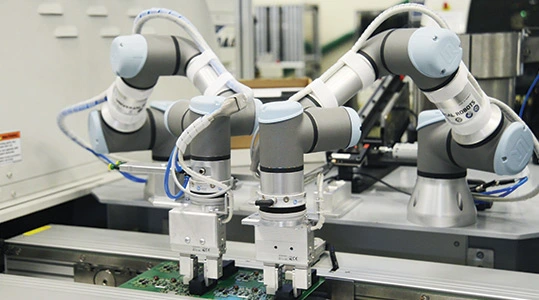
A Robotics PCB is a printed circuit board designed to support the control, sensing, communication, and power management functions of robotic systems. Unlike standard control boards, robotics PCBs must integrate multiple subsystems within limited space while maintaining electrical stability and mechanical durability. They serve as the electronic backbone of modern robotic platforms.
Core Functions of a Robotics PCB
Robotic systems typically require:
-
Motion control
-
Motor driver circuits
-
Sensor signal processing
-
Power distribution
-
Communication interfaces
-
Real-time computing
A robotics PCB integrates these functions into a compact and reliable architecture.
Key Design Requirements

1. Precision Motion Control Support
Robots depend on accurate motor control for positioning and movement.
PCB design must support:
-
High-current motor drivers
-
PWM signal stability
-
Low-noise control routing
-
Encoder feedback interfaces
Stable layout ensures precise movement control.
2. Power Distribution and High Current Handling
Robots often operate with multiple voltage rails:
-
Logic voltage (3.3V / 5V)
-
Motor supply voltage (12V / 24V / 48V)
-
Battery input
Thick copper layers and optimized power planes improve current handling and reduce voltage drop.
3. Sensor Integration Capability
Modern robots integrate multiple sensors:
-
IMU modules
-
LiDAR systems
-
Vision cameras
-
Force sensors
-
Proximity sensors
PCB routing must minimize noise and maintain signal integrity for accurate data processing.
4. Thermal Management
Motor drivers and power modules generate heat during continuous operation.
Thermal design techniques include:
-
Large copper pours
-
Thermal vias
-
Multilayer stack-ups
-
Heat sink mounting support
Effective heat dissipation extends product lifetime.
5. Vibration and Mechanical Stability
Robotics applications often experience:
-
Continuous vibration
-
Mechanical shock
-
Frequent movement
PCB design must ensure:
-
Reinforced mounting holes
-
Stable solder joints
-
Balanced stack-up to reduce warpage
Mechanical reliability is critical in industrial environments.
Types of Robotics PCBs
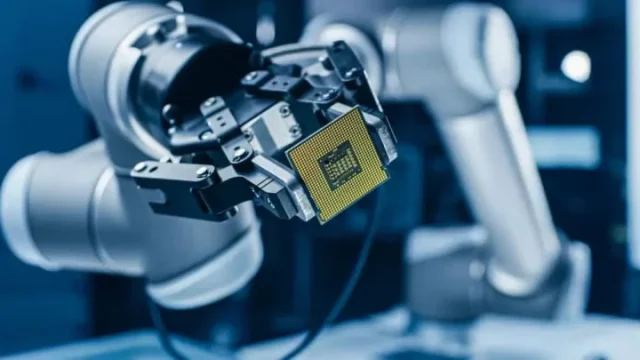
Depending on system architecture, robotics PCBs may include:
-
Multilayer control boards
-
HDI compact boards
-
Rigid-flex PCBs for articulated systems
-
Thick copper power boards
-
High-speed communication boards
Material selection depends on operating environment and performance requirements.
Applications of Robotics PCB
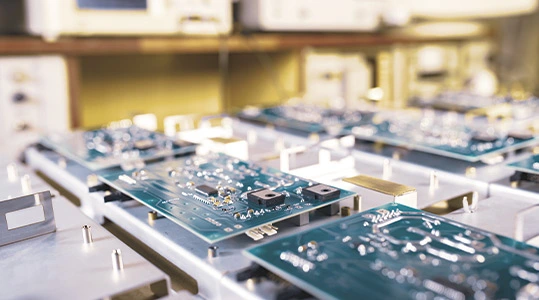
Robotics PCBs are widely used in:
-
Industrial robotic arms
-
Autonomous mobile robots (AMR)
-
Collaborative robots (cobots)
-
Service robots
-
Medical robotics systems
-
Agricultural robots
-
Warehouse automation platforms
As robotics technology evolves, PCB integration becomes increasingly complex.
Robotics PCB vs Standard Control PCB
| Feature | Standard Control PCB | Robotics PCB |
|---|---|---|
| Power Handling | Moderate | High |
| Sensor Integration | Limited | Extensive |
| Mechanical Stability | Moderate | High |
| Thermal Demand | Moderate | High |
| System Integration | Basic | Multi-functional |
Robotics PCBs must support dynamic operation and long-term reliability.
Conclusion
Robotics PCB technology enables intelligent motion control, stable power delivery, and accurate sensor integration in modern robotic systems. By combining high-current capability, robust mechanical design, and advanced multilayer structures, robotics PCBs provide a reliable foundation for industrial and autonomous platforms.
As automation and AI-driven robotics continue to expand, advanced PCB engineering remains essential for achieving precision, durability, and performance.
