
Robotics PCB: Powering Intelligent Automation with Precision and Reliability

As robotics technology rapidly advances across industrial, medical, logistics, and consumer sectors, the demand for highly reliable and performance-driven printed circuit boards continues to grow. A Robotics PCB serves as the control backbone of robotic systems, enabling motion control, sensor integration, communication, and power management within compact and often harsh operating environments.
From collaborative robots (cobots) in smart factories to autonomous service robots and UAV platforms, PCB design plays a critical role in ensuring system stability, precision, and long-term durability.
Key Requirements of Robotics PCBs
Robotics applications impose unique electrical and mechanical challenges. A well-designed Robotics PCB must address:
1. High Reliability Under Continuous Operation
Robots often operate 24/7 in manufacturing or logistics environments. PCBs must maintain stable performance under vibration, temperature variation, and electrical noise.
2. Power & Signal Integrity
Robotic systems combine high-current motor drivers with sensitive control circuits and communication modules. Proper layer stack-up, controlled impedance routing, and effective grounding strategies are essential to minimize EMI and signal interference.
3. Compact & High-Density Design
With increasing functional integration—motor control, AI processing, vision systems, wireless modules—HDI structures, microvias, and fine-pitch components are frequently required.
4. Thermal Management
Motor drivers and power modules generate significant heat. Heavy copper layers, thermal vias, and optimized copper distribution improve heat dissipation and extend service life.
5. Mechanical Robustness
Robotics PCBs must withstand vibration, shock, and movement. Reinforced solder joints, rigid-flex structures, and high-TG materials enhance mechanical stability.
Common Applications of Robotics PCBs
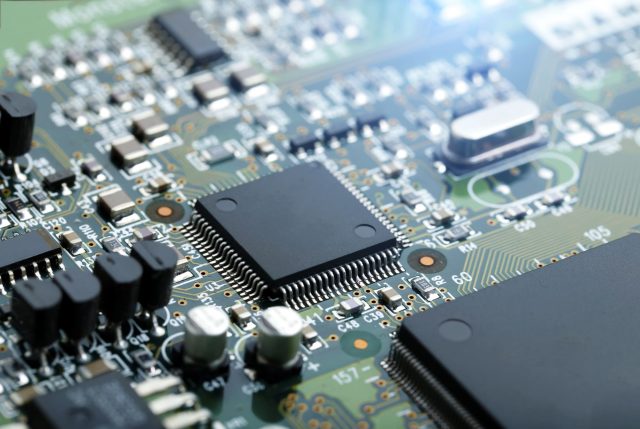
Robotics PCBs are widely used in:
-
Industrial robotic arms
-
Autonomous mobile robots (AMR)
-
Automated guided vehicles (AGV)
-
Medical robotic systems
-
UAV and drone control boards
-
AI vision and sensor fusion modules
Each application may require specific PCB material selections such as high-TG FR4, low-loss laminates, or heavy copper constructions depending on operating voltage and signal frequency.
Advanced PCB Technologies for Robotics
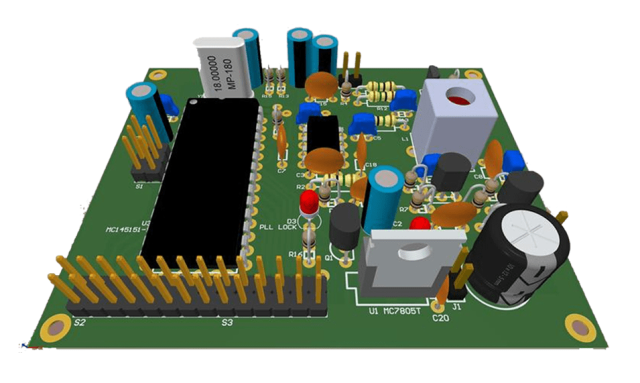
To meet evolving automation requirements, robotics PCBs often integrate:
-
Multilayer structures (6–16+ layers)
-
HDI and microvia technology
-
Controlled impedance routing
-
Heavy copper (2oz–6oz) for motor control
-
Rigid-flex PCB designs for moving parts
-
Surface finishes like ENIG for fine-pitch reliability
Strict quality control, including AOI, X-ray inspection, and functional testing, ensures performance consistency in mission-critical applications.
Why Quality Matters in Robotics PCB Manufacturing
Robotics systems demand high precision and zero-failure tolerance. A reliable PCB manufacturing partner ensures:
-
Accurate impedance control
-
Stable material performance
-
Tight dimensional tolerances
-
Strong process control for mass production
Whether for industrial automation upgrades or next-generation intelligent robots, high-performance Robotics PCBs enable smarter, faster, and more efficient systems.
