
What Is RO4350B PCB?
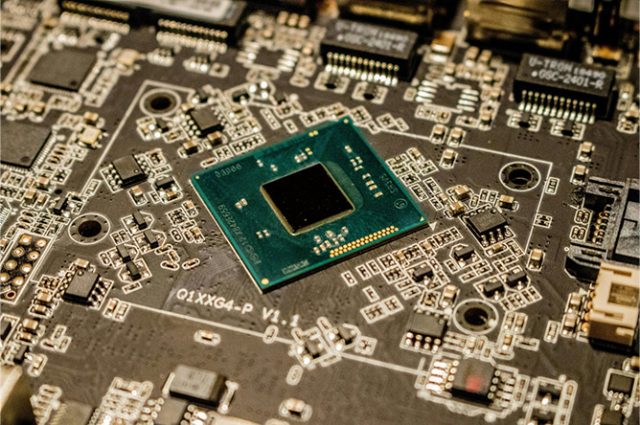
A RO4350B PCB is a high-frequency printed circuit board fabricated using Rogers RO4350B laminate, a hydrocarbon ceramic-filled material specifically designed for RF and microwave applications. RO4350B PCBs provide low dielectric loss, stable dielectric constant (Dk), and excellent thermal performance, making them a popular alternative to PTFE-based RF materials.
Compared with standard FR-4 PCBs, RO4350B PCBs offer better signal integrity, lower insertion loss, and more consistent RF performance, especially in high-frequency designs.
Key Properties of RO4350B PCB Material
Rogers RO4350B material offers several advantages for RF PCB applications:
-
Stable dielectric constant (Dk ≈ 3.48)
Ensures consistent impedance control across frequency ranges. -
Low dissipation factor (Df ≈ 0.0037 @ 10 GHz)
Minimizes signal loss in high-frequency circuits. -
Excellent thermal stability
Suitable for lead-free assembly processes. -
Low coefficient of thermal expansion (CTE)
Improves reliability of plated through holes. -
FR-4–like fabrication process
Allows RO4350B PCBs to be manufactured using standard PCB processes.
These properties make RO4350B PCB ideal for demanding RF designs.
RO4350B PCB Manufacturing Considerations
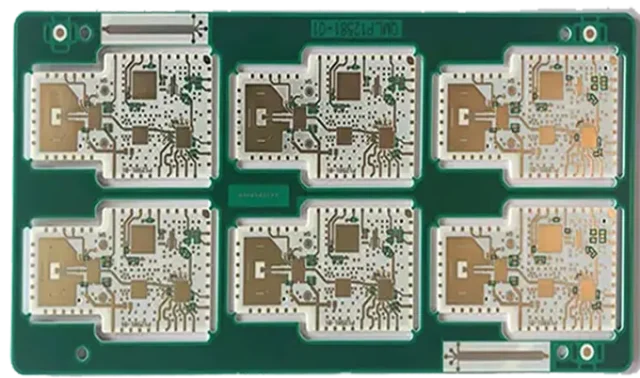
Manufacturing a RO4350B PCB requires experience with RF materials and impedance control:
-
Precise impedance control
Tight control of trace width, spacing, and dielectric thickness. -
High-precision etching
Ensures RF trace geometry accuracy. -
Surface roughness control
Smooth copper reduces conductor loss. -
Accurate layer registration
Critical for multilayer RO4350B PCBs. -
Impedance and electrical testing
Verifies RF performance before delivery.
Although RO4350B uses FR-4–compatible processes, RF-specific process control is essential.
Advantages of RO4350B PCB
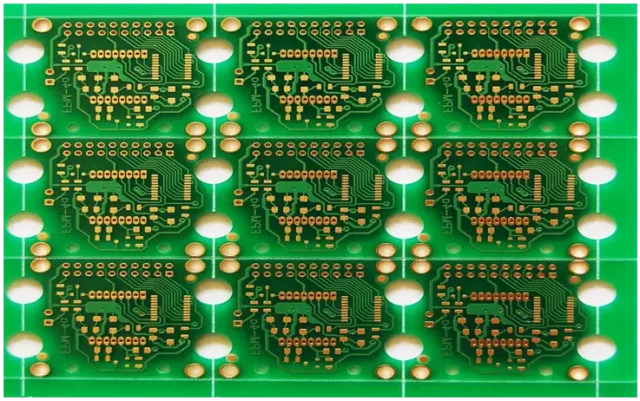
Using a RO4350B PCB provides multiple benefits:
-
Lower RF signal loss compared to FR-4
-
Excellent impedance stability
-
Cost-effective alternative to PTFE materials
-
Compatible with standard PCB fabrication
-
Reliable performance in high-frequency and microwave circuits
These advantages make RO4350B PCB a widely adopted solution in RF applications.
Applications of RO4350B PCB
RO4350B PCBs are commonly used in:
-
RF Test PCB and RF evaluation boards
-
Wireless communication systems (5G, Wi-Fi, LTE)
-
Microwave circuits and amplifiers
-
Automotive radar and ADAS modules
-
Aerospace and defense RF electronics
-
High-speed digital circuits requiring controlled impedance
RO4350B PCB is especially suitable for high-volume RF products requiring stable performance and reasonable cost.
RO4350B PCB vs FR-4 PCB
Compared to FR-4 PCBs, RO4350B PCBs offer:
-
Lower dielectric loss
-
More stable dielectric constant
-
Better RF signal integrity
-
Improved high-frequency performance
For RF and microwave designs, RO4350B PCB provides a significant performance advantage over standard FR-4.
Conclusion
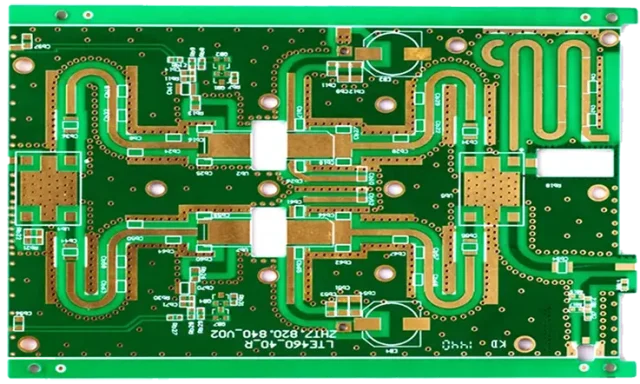
A RO4350B PCB is an excellent choice for high-frequency and RF applications requiring low loss, stable impedance, and reliable thermal performance. With FR-4–like processing compatibility and superior RF characteristics, RO4350B PCBs bridge the gap between standard FR-4 and high-cost PTFE materials.
Choosing an experienced RO4350B PCB manufacturer ensures accurate impedance control, consistent RF performance, and reliable production quality.
