
Material selection is one of the most important decisions in PCB development. As electronic products continue evolving toward higher power density, higher frequency operation, and increased reliability requirements, engineers must carefully evaluate whether traditional PCB materials or advanced substrate technologies are suitable for specific applications.
Among various PCB substrate solutions, multilayer FR4 PCBs and ceramic PCBs are two commonly considered options.
Multilayer FR4 PCBs remain the mainstream choice for most electronic applications due to their balanced electrical performance, mechanical strength, and cost efficiency. Meanwhile, ceramic PCBs provide superior thermal conductivity, high-temperature resistance, and long-term stability for demanding environments.
Understanding the differences between these two PCB technologies helps engineers select the right material according to:
- Electrical performance requirements
- Thermal management needs
- Operating environment
- Manufacturing feasibility
- Cost considerations
1. Overview of Multilayer FR4 PCB Substrate Material
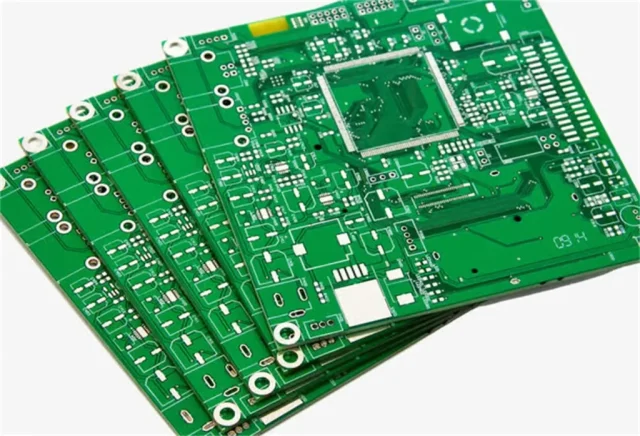
1.1 What Is FR4 Material?
FR4 is a widely used PCB substrate material composed mainly of:
- Fiberglass reinforcement
- Epoxy resin system
It provides a stable mechanical structure and reliable electrical insulation for multilayer PCB fabrication.
Due to its excellent balance between performance and cost, FR4 has become the standard material for many electronic products.
1.2 Structure of Multilayer FR4 PCB
A typical multilayer FR4 PCB consists of:
- Copper layers
- Prepreg layers
- Core materials
- Solder mask
- Surface finish
Multiple conductive layers are laminated together to provide:
- Increased routing capability
- Power and ground plane integration
- Improved signal control
Common multilayer FR4 structures include:
- 4-layer PCB
- 6-layer PCB
- 8-layer PCB
- High-layer-count PCB
2. Advantages of Multilayer FR4 PCB
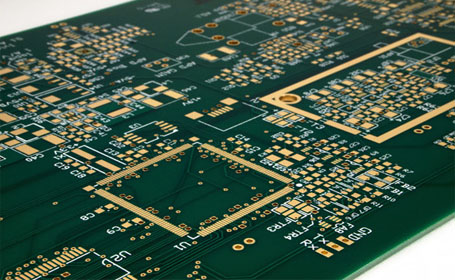
2.1 Excellent Design Flexibility
FR4 multilayer PCBs support complex circuit designs with:
- Multiple signal layers
- Dedicated power planes
- Ground planes
- High-density routing
This makes them suitable for:
- Industrial control boards
- Communication equipment
- Consumer electronics
- Medical devices
2.2 Cost-Effective Manufacturing
FR4 materials are widely available and compatible with mature PCB manufacturing processes.
Advantages include:
- Large-scale production capability
- Stable supply chain
- Lower manufacturing cost
This makes FR4 the preferred solution for many commercial applications.
2.3 Good Electrical Performance
Modern FR4 materials can support:
- High-speed digital signals
- Controlled impedance design
- Multilayer signal routing
Advanced low-loss FR4 materials can also be used for applications requiring improved signal integrity.
2.4 Mechanical Reliability
FR4 provides:
- Good mechanical strength
- Dimensional stability
- Easy assembly compatibility
It performs well in many standard operating environments.
3. Overview of Ceramic PCB
3.1 What Is Ceramic PCB?
Ceramic PCB uses ceramic materials as the insulating substrate instead of traditional organic materials.
Common ceramic materials include:
- Alumina (Al₂O₃)
- Aluminum Nitride (AlN)
- Silicon Nitride (Si₃N₄)
Ceramic substrates are designed for applications requiring:
- High thermal conductivity
- High-temperature resistance
- Excellent electrical insulation
3.2 Ceramic PCB Structure
A ceramic PCB generally consists of:
- Copper conductive layer
- Ceramic dielectric layer
- Copper base or conductive pattern layer
Common manufacturing technologies include:
- Direct Bonded Copper (DBC)
- Active Metal Brazing (AMB)
- Thick film technology
4. Advantages of Ceramic PCB
4.1 Superior Thermal Performance
The biggest advantage of ceramic PCB is heat dissipation.
Compared with FR4, ceramic materials provide significantly higher thermal conductivity.
Benefits include:
- Faster heat transfer
- Lower component temperature
- Improved system reliability
This makes ceramic PCB suitable for:
- Power semiconductor modules
- High-power LED systems
- EV power electronics
4.2 High Temperature Resistance
Ceramic materials maintain stable properties under high-temperature conditions.
Advantages include:
- Reduced thermal degradation
- Better reliability under harsh environments
- Longer product lifetime
4.3 Excellent Electrical Insulation
Ceramic substrates provide:
- High dielectric strength
- Stable electrical performance
They are widely used in:
- High-voltage systems
- Power electronics
- RF applications
4.4 Low Thermal Expansion
Ceramic materials have thermal expansion characteristics closer to semiconductor materials.
This helps reduce:
- Mechanical stress
- Solder fatigue
- Package reliability issues
5. FR4 PCB vs Ceramic PCB Comparison
| Feature | Multilayer FR4 PCB | Ceramic PCB |
|---|---|---|
| Substrate Material | Fiberglass + epoxy resin | Ceramic material |
| Thermal Conductivity | Moderate | Excellent |
| High Temperature Resistance | Good | Excellent |
| Electrical Insulation | Good | Excellent |
| Mechanical Strength | High | High but brittle |
| Manufacturing Cost | Lower | Higher |
| Design Flexibility | Excellent | Limited |
| Weight | Lower | Higher |
| High-Power Capability | Moderate | Excellent |
| Mass Production Capability | Mature | More specialized |
6. Application Comparison
6.1 Applications Suitable for Multilayer FR4 PCB
FR4 multilayer PCBs are commonly used in:
Communication Equipment
Examples:
- Network devices
- Wireless communication systems
- IoT products
Requirements:
- High-density routing
- Signal integrity control
- Cost efficiency
Industrial Control Systems
Applications include:
- PLC controllers
- Automation equipment
- Monitoring systems
Advantages:
- Reliable performance
- Flexible design
- Easy production
Medical Electronics
FR4 PCBs are used in:
- Monitoring devices
- Diagnostic equipment
- Control systems
Requirements:
- Stable electrical performance
- Manufacturing consistency
6.2 Applications Suitable for Ceramic PCB
Ceramic PCBs are preferred in:
Power Electronics
Applications:
- IGBT modules
- SiC power devices
- Power converters
Key requirements:
- High thermal conductivity
- High voltage insulation
Automotive Electronics
Applications:
- EV power systems
- Motor control modules
- Battery management systems
Advantages:
- Thermal reliability
- Environmental durability
RF and Microwave Systems
Ceramic materials provide:
- Stable dielectric characteristics
- Low signal loss
Applications:
- RF modules
- Microwave circuits
- High-frequency devices
7. PCB Design Considerations When Selecting Materials
7.1 Thermal Requirements
Engineers should evaluate:
- Heat generation
- Cooling methods
- Operating temperature
High-power applications may require ceramic solutions.
7.2 Electrical Performance
Important factors include:
- Dielectric constant
- Loss tangent
- Signal frequency
High-frequency applications may require specialized materials.
7.3 Mechanical Requirements
Consider:
- Vibration
- Shock
- Thermal cycling
FR4 provides flexibility, while ceramic provides higher thermal stability.
7.4 Manufacturing Capability
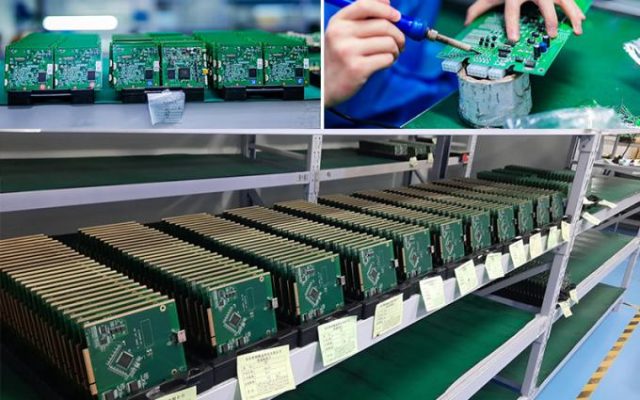
Material selection should consider:
- Fabrication process
- Assembly requirements
- Production volume
A technically suitable material must also be manufacturable.
8. Future Development Trends
With increasing demand for:
- Electric vehicles
- High-power semiconductor systems
- 5G communication
- Advanced industrial equipment
PCB materials are continuously evolving.
Future trends include:
- Low-loss FR4 materials
- Advanced ceramic substrates
- Hybrid PCB structures
- Improved thermal management solutions
The combination of traditional PCB technology and advanced substrate materials will support next-generation electronic products.
Conclusion
Multilayer FR4 PCBs and ceramic PCBs each provide unique advantages for different electronic applications.
FR4 remains the dominant PCB material due to its excellent balance of cost, reliability, and design flexibility. Ceramic PCB technology provides superior thermal performance and reliability for high-power and extreme-environment applications.
The correct material choice depends on a comprehensive evaluation of:
- Electrical requirements
- Thermal conditions
- Mechanical constraints
- Manufacturing feasibility
- Product lifecycle expectations
By selecting the appropriate PCB substrate material, engineers can achieve better performance, higher reliability, and optimized product development.
